Dominguez-Gomez Paula, Zingaro Alberto, Baldo-Canut Laura, Balzotti Caterina, Darpo Borje, Morton Christopher, Vázquez Mariano, Aguado-Sierra Jazmin
ELEM Biotech S.L., Pier 07, Via Laietana, 26, Barcelona, 08003, Spain.
University Pompeu Fabra, Carrer de Tànger, 122-140, Barcelona, 08018, Spain.
NPJ Digit Med. 2024 Dec 26;7(1):380. doi: 10.1038/s41746-024-01370-8.
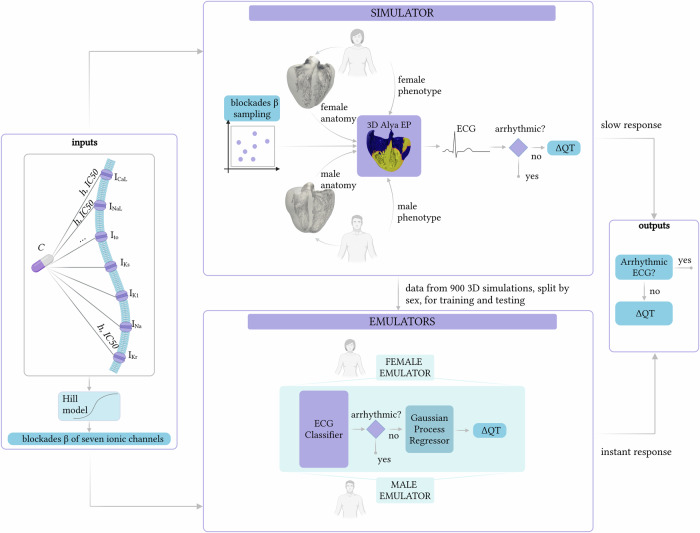
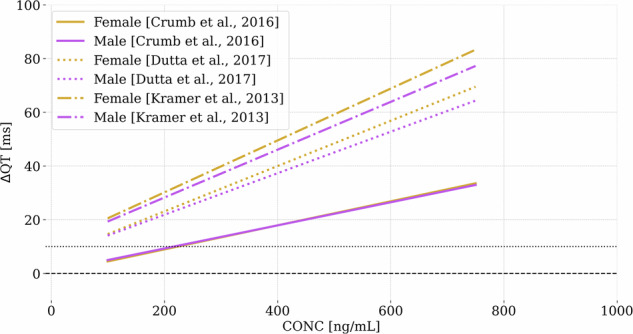
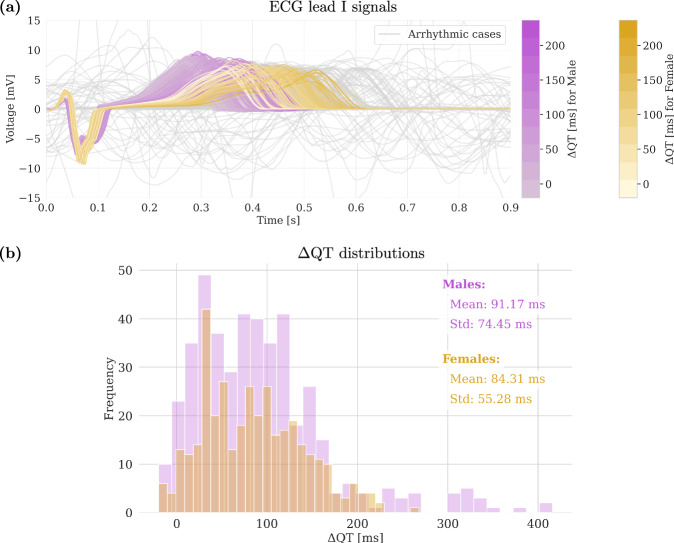
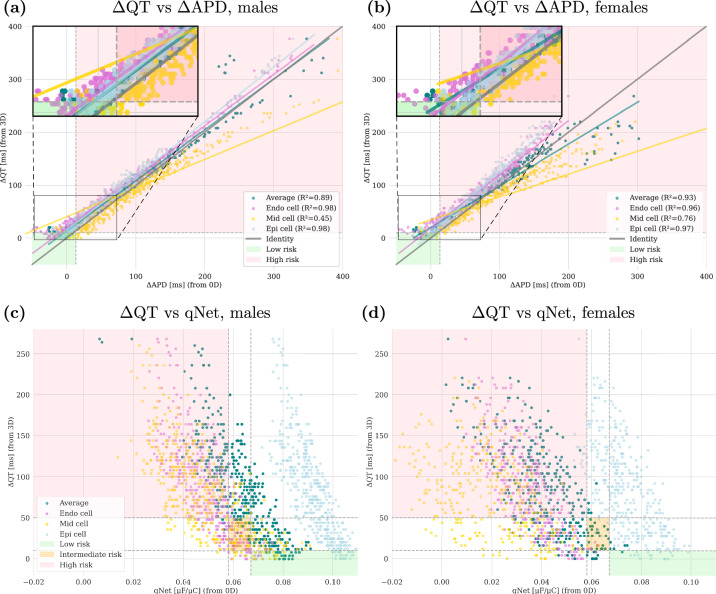
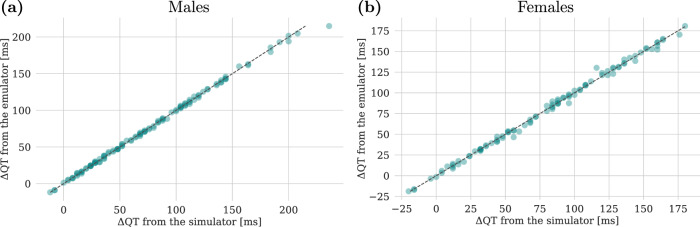
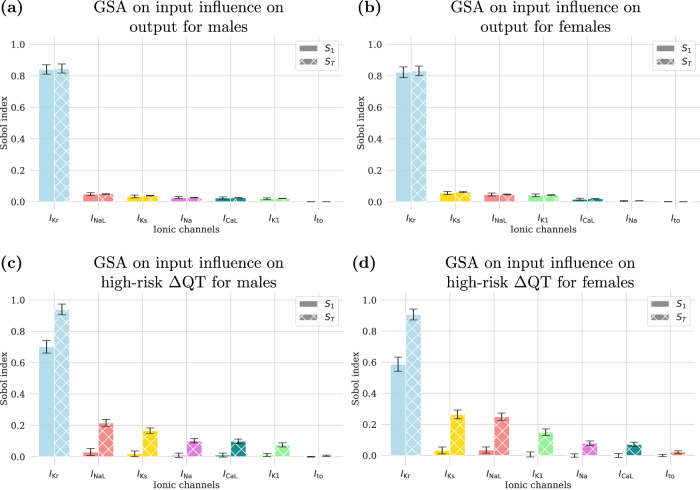
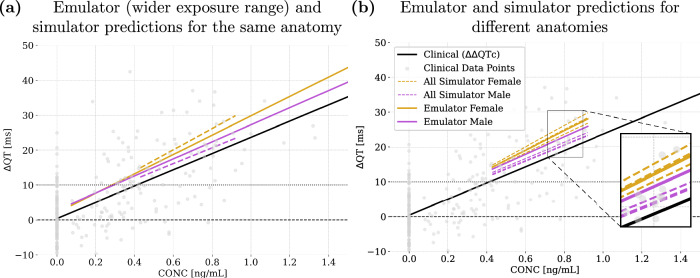
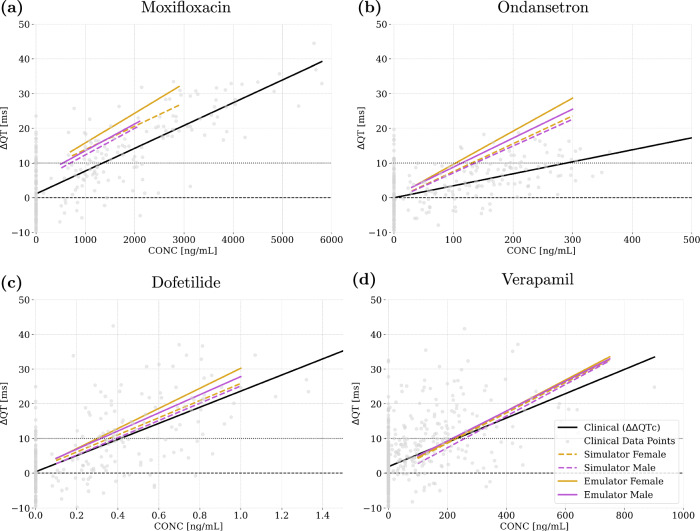
In silico trials for drug safety assessment require many high-fidelity 3D cardiac simulations to predict drug-induced QT interval prolongation, which is often computationally prohibitive. To streamline this process, we developed sex-specific emulators for a fast prediction of QT interval, trained on a dataset of 900 simulations. Our results show significant differences between 3D and 0D single-cell models as risk levels increase, underscoring the ability of 3D modeling to capture more complex cardiac responses. The emulators demonstrated an average error of 4% compared to simulations, allowing for efficient global sensitivity analysis and fast replication of in silico clinical trials. This approach enables rapid, multi-dose drug testing on standard hardware, addressing critical industry challenges around trial design, assay variability, and cost-effective safety evaluations. By integrating these emulators into drug development, we can improve preclinical reliability and advance the practical application of digital twins in biomedicine.
用于药物安全性评估的计算机模拟试验需要进行许多高保真的三维心脏模拟,以预测药物引起的QT间期延长,而这在计算上通常是令人望而却步的。为了简化这一过程,我们开发了针对特定性别的模拟器,用于快速预测QT间期,并在包含900次模拟的数据集上进行了训练。我们的结果表明,随着风险水平的增加,三维模型和零维单细胞模型之间存在显著差异,这突出了三维建模捕捉更复杂心脏反应的能力。与模拟相比,模拟器的平均误差为4%,从而能够进行高效的全局敏感性分析,并快速复制计算机模拟临床试验。这种方法能够在标准硬件上进行快速、多剂量的药物测试,解决了围绕试验设计、检测变异性和具有成本效益的安全性评估等关键行业挑战。通过将这些模拟器整合到药物开发中,我们可以提高临床前的可靠性,并推动数字孪生在生物医学中的实际应用。