Saiz Juan-Carlos, Martín-Acebes Miguel A, Bueno-Marí Rubén, Salomón Oscar D, Villamil-Jiménez Luis C, Heukelbach Jorg, Alencar Carlos H, Armstrong Paul K, Ortiga-Carvalho Tania M, Mendez-Otero Rosalia, Rosado-de-Castro Paulo H, Pimentel-Coelho Pedro M
Department of Biotechnology, Instituto Nacional de Investigación y Tecnología Agraria y AlimentariaMadrid, Spain.
Departamento de Investigación y Desarrollo (I+D), Laboratorios LokímicaValencia, Spain.
Front Microbiol. 2017 Aug 22;8:1554. doi: 10.3389/fmicb.2017.01554. eCollection 2017.
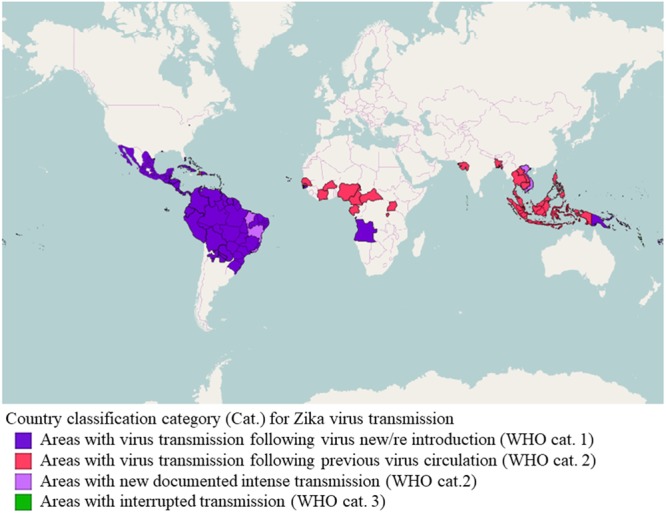
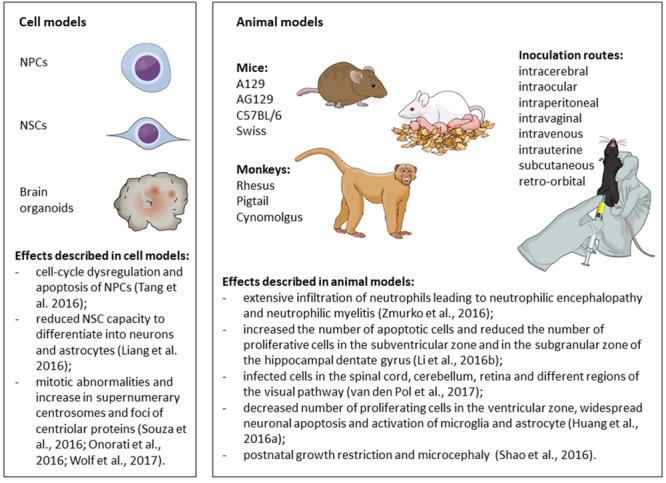
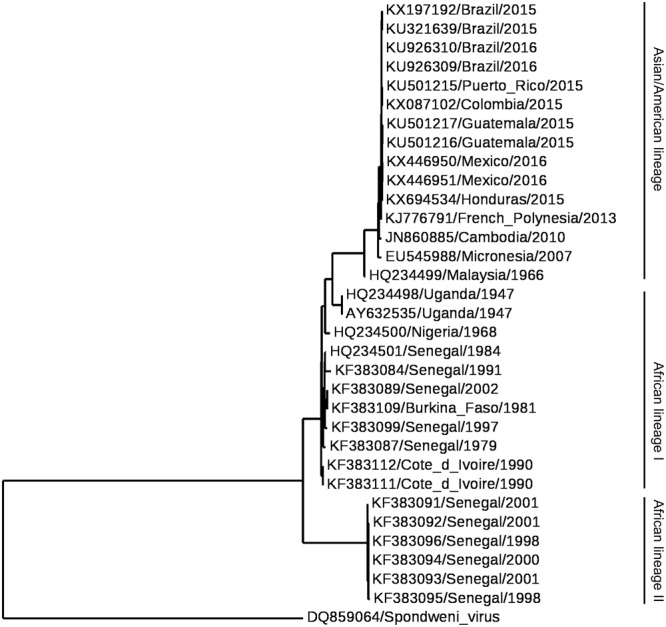
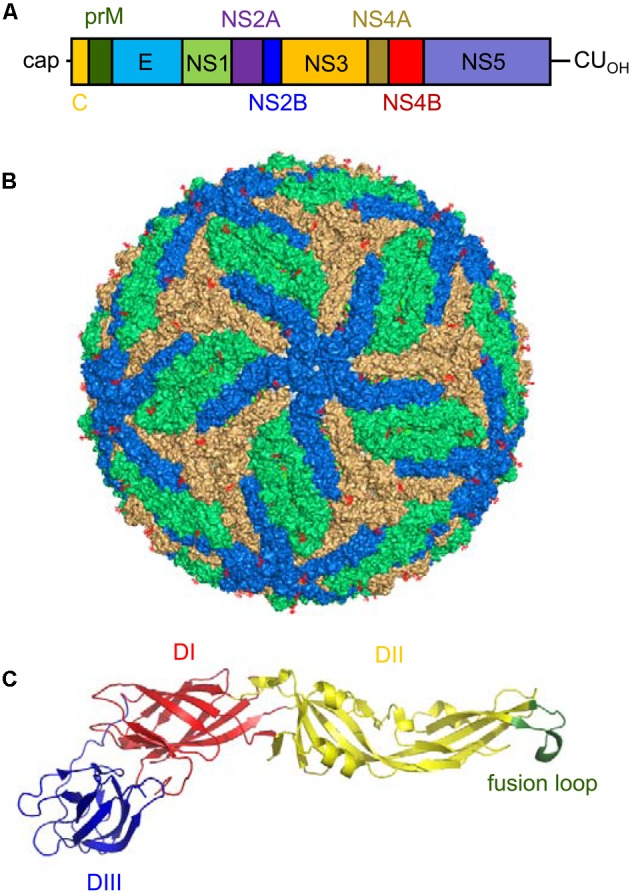
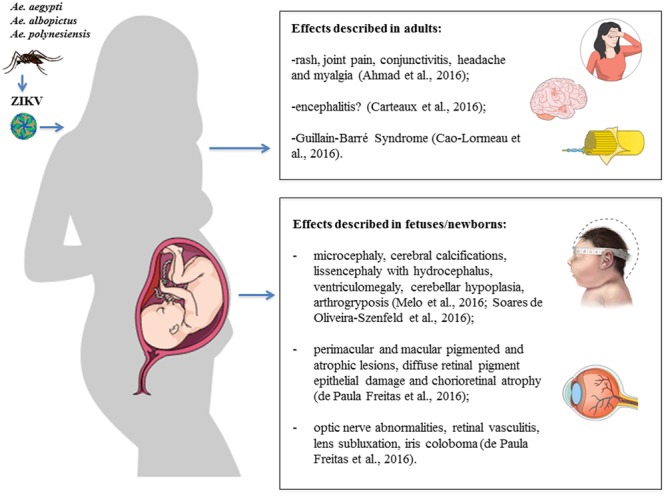
Zika is a viral disease transmitted mainly by mosquitoes of the genus In recent years, it has expanded geographically, changing from an endemic mosquito-borne disease across equatorial Asia and Africa, to an epidemic disease causing large outbreaks in several areas of the world. With the recent Zika virus (ZIKV) outbreaks in the Americas, the disease has become a focus of attention of public health agencies and of the international research community, especially due to an association with neurological disorders in adults and to the severe neurological and ophthalmological abnormalities found in fetuses and newborns of mothers exposed to ZIKV during pregnancy. A large number of studies have been published in the last 3 years, revealing the structure of the virus, how it is transmitted and how it affects human cells. Many different animal models have been developed, which recapitulate several features of ZIKV disease and its neurological consequences. Moreover, several vaccine candidates are now in active preclinical development, and three of them have already entered phase I clinical trials. Likewise, many different compounds targeting viral and cellular components are being tested in and in experimental animal models. This review aims to discuss the current state of this rapidly growing literature from a multidisciplinary perspective, as well as to present an overview of the public health response to Zika and of the perspectives for the prevention and treatment of this disease.
寨卡病毒病是一种主要由伊蚊属蚊子传播的病毒性疾病。近年来,其地理范围不断扩大,从赤道亚洲和非洲的一种地方性蚊媒疾病,转变为在世界多个地区引发大规模疫情的流行性疾病。随着近期寨卡病毒(ZIKV)在美洲爆发,该疾病已成为公共卫生机构和国际研究界关注的焦点,特别是因为它与成人神经疾病有关,以及在孕期接触ZIKV的母亲所生胎儿和新生儿中发现的严重神经和眼科异常。在过去三年里发表了大量研究,揭示了病毒的结构、传播方式及其对人体细胞的影响。现已开发出多种不同的动物模型,这些模型概括了ZIKV疾病的若干特征及其神经学后果。此外,目前有几种候选疫苗正处于积极的临床前开发阶段,其中三种已进入I期临床试验。同样,许多针对病毒和细胞成分的不同化合物正在体外和实验动物模型中进行测试。本综述旨在从多学科角度讨论这一快速增长的文献的现状,并概述对寨卡病毒的公共卫生应对措施以及该疾病的预防和治疗前景。