Ikejezie Juniorcaius, Shapiro Craig N, Kim Jisoo, Chiu Monica, Almiron Maria, Ugarte Ciro, Espinal Marcos A, Aldighieri Sylvain
MMWR Morb Mortal Wkly Rep. 2017 Mar 31;66(12):329-334. doi: 10.15585/mmwr.mm6612a4.
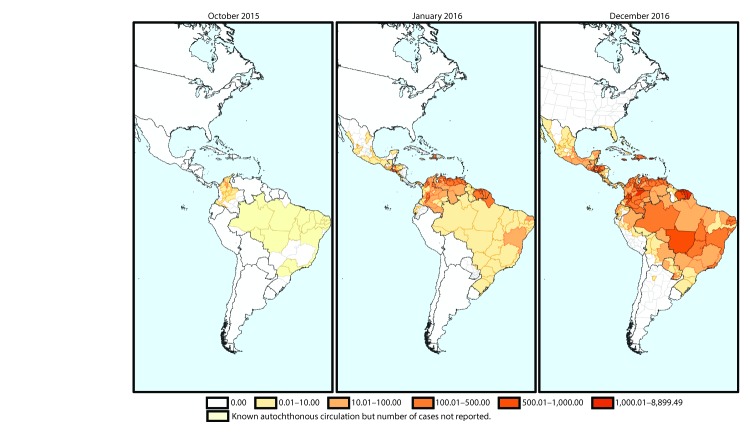
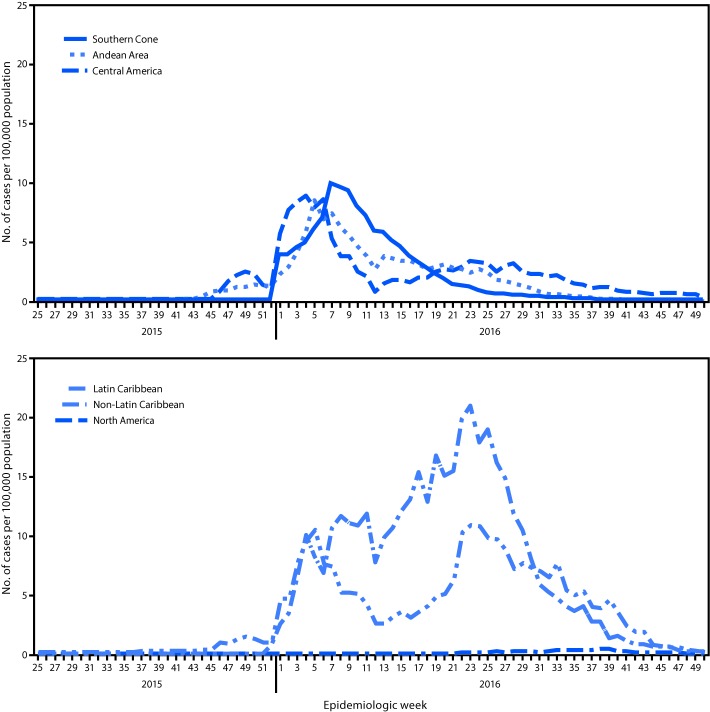
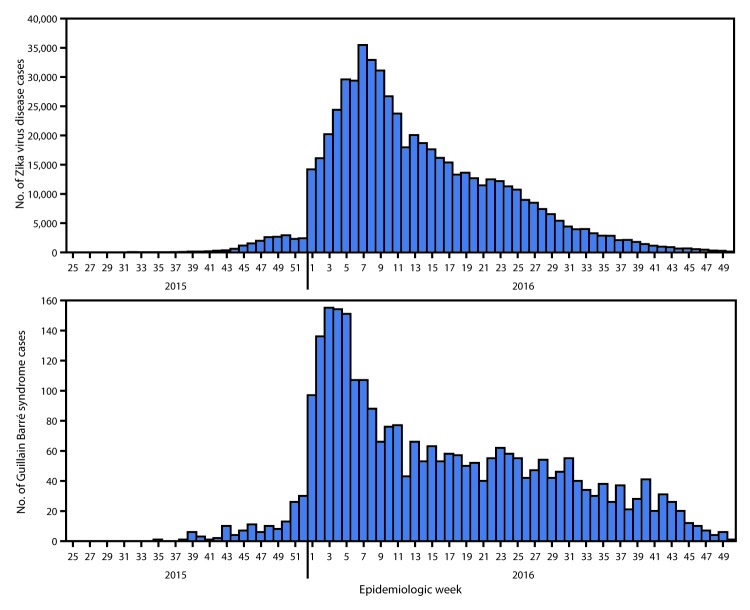
Zika virus, a mosquito-borne flavivirus that can cause rash with fever, emerged in the Region of the Americas on Easter Island, Chile, in 2014 and in northeast Brazil in 2015 (1). In response, in May 2015, the Pan American Health Organization (PAHO), which serves as the Regional Office of the Americas for the World Health Organization (WHO), issued recommendations to enhance surveillance for Zika virus. Subsequently, Brazilian investigators reported Guillain-Barré syndrome (GBS), which had been previously recognized among some patients with Zika virus disease, and identified an association between Zika virus infection during pregnancy and congenital microcephaly (2). On February 1, 2016, WHO declared Zika virus-related microcephaly clusters and other neurologic disorders a Public Health Emergency of International Concern.* In March 2016, PAHO developed case definitions and surveillance guidance for Zika virus disease and associated complications (3). Analysis of reports submitted to PAHO by countries in the region or published in national epidemiologic bulletins revealed that Zika virus transmission had extended to 48 countries and territories in the Region of the Americas by late 2016. Reported Zika virus disease cases peaked at different times in different areas during 2016. Because of ongoing transmission and the risk for recurrence of large outbreaks, response efforts, including surveillance for Zika virus disease and its complications, and vector control and other prevention activities, need to be maintained.
寨卡病毒是一种通过蚊子传播的黄病毒,可引发皮疹伴发热,于2014年在智利复活节岛、2015年在巴西东北部出现在美洲地区(1)。作为回应,2015年5月,作为世界卫生组织(WHO)美洲区域办事处的泛美卫生组织(PAHO)发布了加强寨卡病毒监测的建议。随后,巴西研究人员报告了吉兰-巴雷综合征(GBS),此前在一些寨卡病毒病患者中已被确认,并确定了孕期寨卡病毒感染与先天性小头畸形之间的关联(2)。2016年2月1日,WHO宣布与寨卡病毒相关的小头畸形聚集病例及其他神经系统疾病为国际关注的突发公共卫生事件。* 2016年3月,PAHO制定了寨卡病毒病及相关并发症的病例定义和监测指南(3)。对该地区各国提交给PAHO或发表在国家流行病学公报上的报告进行分析发现,截至2016年底,寨卡病毒传播已扩展到美洲地区的48个国家和领土。2016年期间,不同地区报告的寨卡病毒病病例在不同时间达到峰值。由于传播仍在继续且大规模疫情有复发风险,需要维持应对措施,包括对寨卡病毒病及其并发症的监测、病媒控制和其他预防活动。