Department of Molecular and Cell Biology, University of Connecticut, 91 North Eagleville Road, Storrs, CT 06269-3125, USA.
Department of Physiological Chemistry, Biomedical Center Munich, Ludwig-Maximilian University of Munich, 82152 Planegg-Martinsried, Germany.
Sci Adv. 2017 Sep 1;3(9):e1700532. doi: 10.1126/sciadv.1700532. eCollection 2017 Sep.
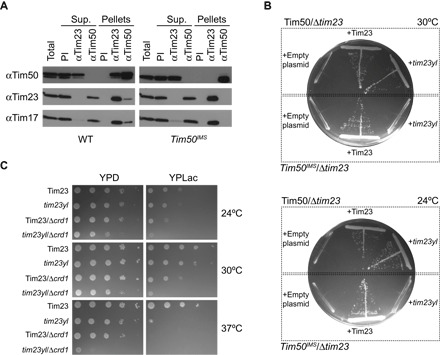
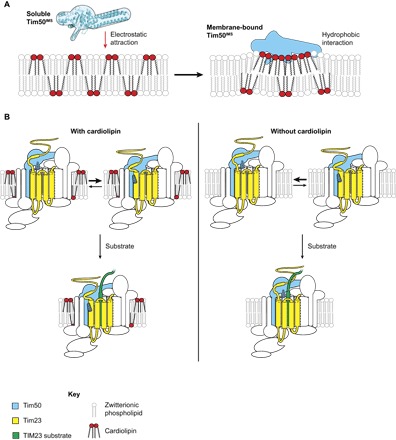
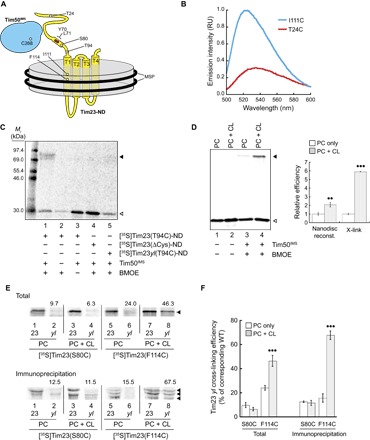
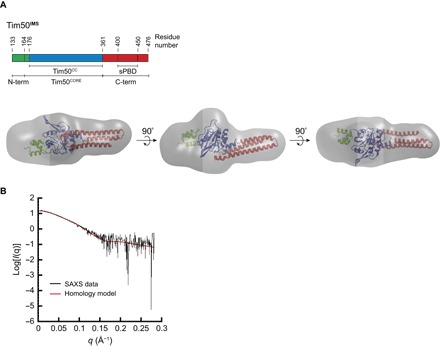
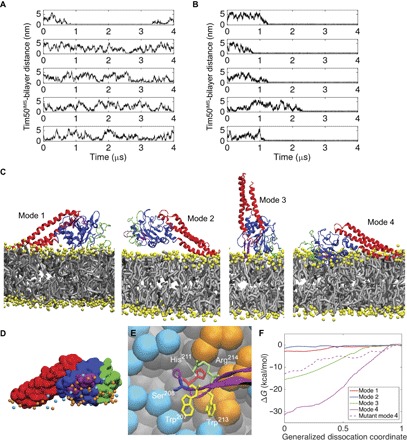
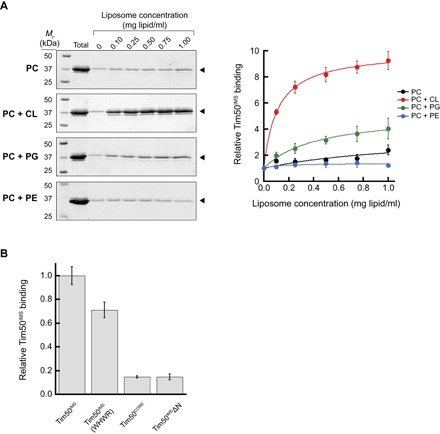
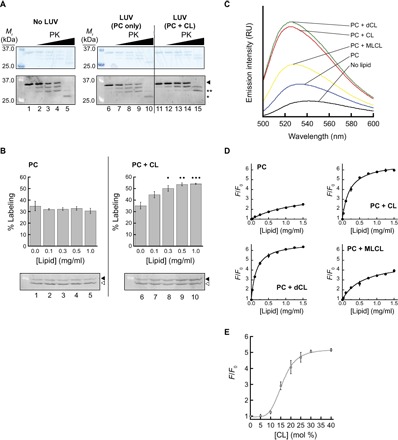
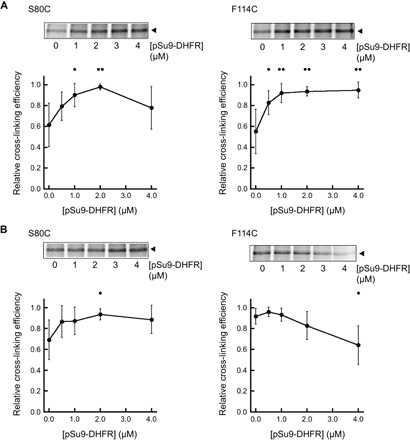
The phospholipid cardiolipin mediates the functional interactions of proteins that reside within energy-conserving biological membranes. However, the molecular basis by which this lipid performs this essential cellular role is not well understood. We address this role of cardiolipin using the multisubunit mitochondrial TIM23 protein transport complex as a model system. The early stages of protein import by this complex require specific interactions between the polypeptide substrate receptor, Tim50, and the membrane-bound channel-forming subunit, Tim23. Using analyses performed in vivo, in isolated mitochondria, and in reductionist nanoscale model membrane systems, we show that the soluble receptor domain of Tim50 interacts with membranes and with specific sites on the Tim23 channel in a manner that is directly modulated by cardiolipin. To obtain structural insights into the nature of these interactions, we obtained the first small-angle x-ray scattering-based structure of the soluble Tim50 receptor in its entirety. Using these structural insights, molecular dynamics simulations combined with a range of biophysical measurements confirmed the role of cardiolipin in driving the association of the Tim50 receptor with lipid bilayers with concomitant structural changes, highlighting the role of key structural elements in mediating this interaction. Together, these results show that cardiolipin is required to mediate specific receptor-channel associations in the TIM23 complex. Our results support a new working model for the dynamic structural changes that occur within the complex during transport. More broadly, this work strongly advances our understanding of how cardiolipin mediates interactions among membrane-associated proteins.
磷脂心磷脂介导驻留在能量守恒生物膜内的蛋白质的功能相互作用。然而,这种脂质发挥这种重要的细胞作用的分子基础还不是很清楚。我们使用多亚基线粒体 TIM23 蛋白转运复合物作为模型系统来解决心磷脂的这种作用。该复合物的蛋白质导入的早期阶段需要多肽底物受体 Tim50 与膜结合的通道形成亚基 Tim23 之间的特定相互作用。通过体内、分离的线粒体和简化的纳米尺度模型膜系统进行的分析表明,Tim50 的可溶性受体结构域以一种直接受心磷脂调节的方式与膜以及 Tim23 通道上的特定位点相互作用。为了深入了解这些相互作用的本质,我们获得了可溶性 Tim50 受体的第一个完整的基于小角度 X 射线散射的结构。利用这些结构见解,分子动力学模拟结合一系列生物物理测量证实了心磷脂在驱动 Tim50 受体与脂质双层的关联以及伴随的结构变化中的作用,突出了关键结构元素在心磷脂介导这种相互作用中的作用。总之,这些结果表明心磷脂是介导 TIM23 复合物中特定受体-通道相互作用所必需的。我们的结果支持了在运输过程中复合物内发生的动态结构变化的新工作模型。更广泛地说,这项工作大大提高了我们对心磷脂如何介导膜相关蛋白相互作用的理解。