Boonsiriseth Kiatanant, Chaimanakarn Sittipong, Chewpreecha Prued, Nonpassopon Natee, Khanijou Manop, Ping Bushara, Wongsirichat Natthamet
Department of Oral & Maxillofacial Surgery, Faculty of Dentistry, Mahidol University, Bangkok, Thailand.
Faculty of Odonto-Stomatology, University of Health Sciences of Cambodia (UHS), Cambodia.
J Dent Anesth Pain Med. 2017 Mar;17(1):29-35. doi: 10.17245/jdapm.2017.17.1.29. Epub 2017 Mar 27.
No study has compared lidocaine with articaine, each at a concentration of 4% and combined with epinephrine. The purpose of this study was to compare the effectiveness of 4% lidocaine with that of 4% articaine, with a concentration of 1:100,000 epinephrine added to each, in an inferior alveolar nerve block for surgery on impacted lower third molars.
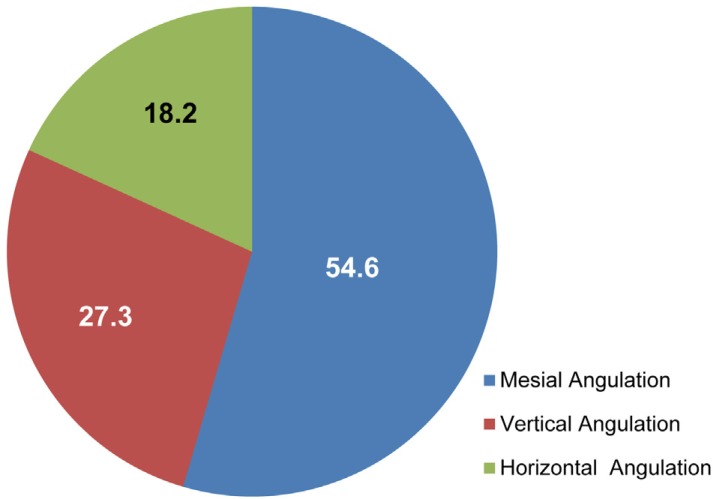
This study was conducted at the Faculty of Dentistry, Mahidol University in Bangkok, Thailand. The randomized, single-blind, comparative split-mouth study was carried out in patients with symmetrically impacted lower third molars, as identified on panoramic radiographs. Each patient underwent surgery for the removal of the lower third molars by the same surgeon under local anesthesia at two separate visits, 3 weeks apart. The onset and duration of local anesthesia, intra-operative pain, surgical duration, and number of additional anesthetics administered were recorded.
The subjective and objective onset of action for the local anesthetics showed statistically significant differences (P < 0.05). However, the intra-operative pain, surgical duration, duration of local anesthesia, and number of additional anesthetics administered did not show statistically significant differences.
The use of 4% articaine for the inferior alveolar nerve block was clinically more effective in the onset of subjective and objective anesthesia as compared with the use of 4% lidocaine. Based on the pain scores from the visual analogue scale, 4% lidocaine provided more analgesia during the procedure, and patients noted less intra-operative pain than with 4% articaine; however, the difference was not clinically significant.
尚无研究比较浓度为4%且均添加肾上腺素的利多卡因与阿替卡因。本研究的目的是比较添加浓度为1:100,000肾上腺素的4%利多卡因与4%阿替卡因在下牙槽神经阻滞用于拔除下颌阻生第三磨牙手术中的有效性。
本研究在泰国曼谷玛希隆大学牙科学院进行。对全景X线片显示有对称下颌阻生第三磨牙的患者开展随机、单盲、对照性半口研究。每位患者由同一位外科医生在局部麻醉下分两次就诊拔除下颌第三磨牙,两次就诊间隔3周。记录局部麻醉的起效时间和持续时间、术中疼痛、手术时长以及追加麻醉剂的数量。
局部麻醉药的主观和客观起效时间显示出统计学显著差异(P < 0.05)。然而,术中疼痛、手术时长、局部麻醉持续时间以及追加麻醉剂的数量未显示出统计学显著差异。
在下牙槽神经阻滞中,与使用4%利多卡因相比,使用4%阿替卡因在主观和客观麻醉起效方面临床效果更佳。根据视觉模拟量表的疼痛评分,4%利多卡因在手术过程中提供了更多镇痛效果,且患者术中疼痛比使用4%阿替卡因时轻;然而,差异无临床意义。