Global Health Programs, FHI 360, 359 Blackwell Street, Durham, NC, 27701, USA.
Averting Maternal Death & Disability, Columbia University, New York, NY, USA.
BMC Pregnancy Childbirth. 2017 Sep 7;17(1):295. doi: 10.1186/s12884-017-1479-1.
Understanding the magnitude and clinical causes of maternal and perinatal mortality are basic requirements for positive change. Facility-based information offers a contextualized resource for clinical and organizational quality improvement. We describe the magnitude of institutional maternal mortality, causes of death and cause-specific case fatality rates, as well as stillbirth and pre-discharge neonatal death rates.
This paper draws on secondary data from 40 low and middle income countries that conducted emergency obstetric and newborn care assessments over the last 10 years. We reviewed 6.5 million deliveries, surveyed in 15,411 facilities. Most of the data were extracted from reports and aggregated with excel.
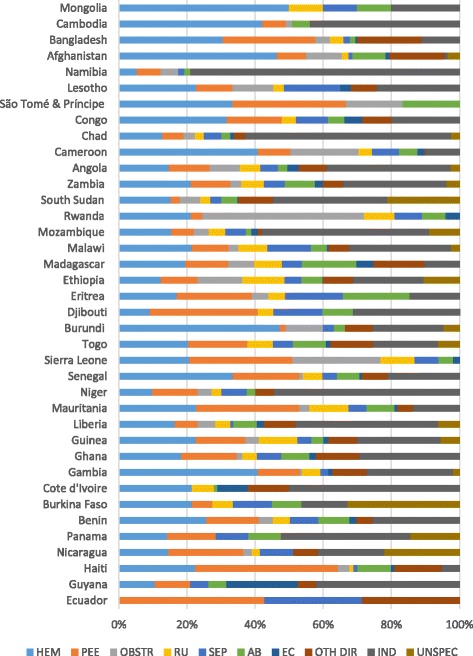
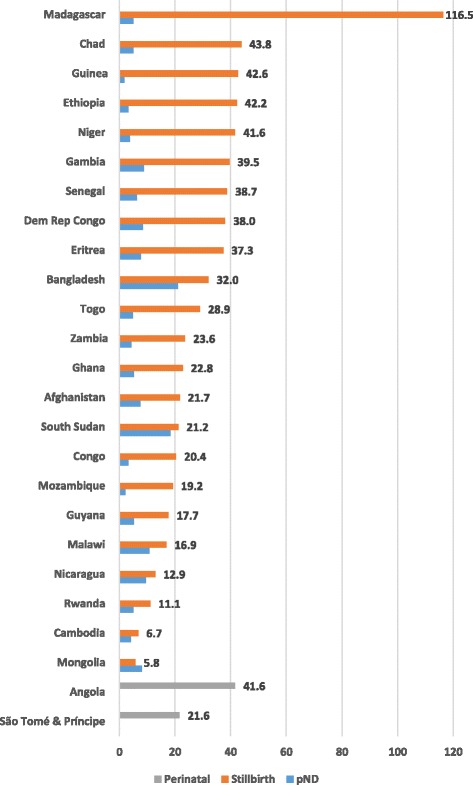
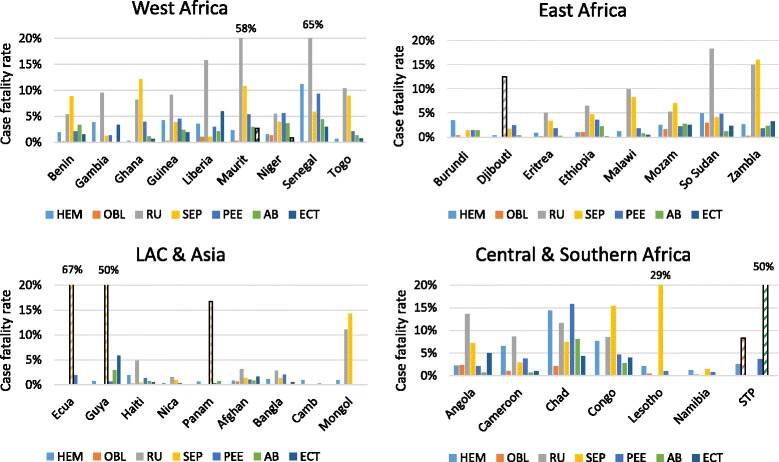
Hemorrhage and hypertensive diseases contributed to about one third of institutional maternal deaths and indirect causes contributed another third (given the overrepresentation of sub-Saharan African countries with large proportions of indirect causes). The most lethal obstetric complication, across all regions, was ruptured uterus, followed by sepsis in Latin America and the Caribbean and sub-Saharan Africa. Stillbirth rates exceeded pre-discharge neonatal death rates in nearly all countries, possibly because women and their newborns were discharged soon after birth.
To a large extent, facility-based findings mirror what population-based systematic reviews have also documented. As coverage of a skilled attendant at birth increases, proportionally more deaths will occur in facilities, making improvements in record-keeping and health management information systems, especially for stillbirths and early neonatal deaths, all the more critical.
了解孕产妇和围产儿死亡的规模和临床原因是积极变革的基本要求。基于机构的信息为临床和组织质量改进提供了一个背景化的资源。我们描述了机构孕产妇死亡率、死亡原因和特定病因的病死率,以及死产和出院前新生儿死亡率的规模。
本文借鉴了过去 10 年在 40 个中低收入国家进行紧急产科和新生儿护理评估的二级数据。我们回顾了 650 万次分娩,在 15411 家机构进行了调查。大部分数据是从报告中提取出来的,并使用 excel 进行了汇总。
出血和高血压疾病导致约三分之一的机构孕产妇死亡,间接原因导致三分之一(鉴于撒哈拉以南非洲国家间接原因比例较大)。所有地区最致命的产科并发症都是子宫破裂,其次是拉丁美洲和加勒比地区以及撒哈拉以南非洲地区的败血症。几乎所有国家的死产率都超过了出院前新生儿死亡率,这可能是因为妇女及其新生儿在出生后不久就出院了。
在很大程度上,基于机构的发现反映了基于人群的系统评价也记录的情况。随着熟练接生员接生覆盖率的增加,比例更多的死亡将发生在医疗机构,因此,记录保存和卫生管理信息系统的改进,尤其是对死产和早期新生儿死亡的改进,变得更加关键。