Institute for Biomechanics, ETH Zürich, Leopold-Ruzicka-Weg 4, 8093, Zurich, Switzerland.
Institute of Health and Biomedical Innovation, Queensland University of Technology, Brisbane, QLD, Australia.
Sports Med. 2017 Dec;47(12):2621-2639. doi: 10.1007/s40279-017-0780-5.
Golf is commonly considered a low-impact sport that carries little risk of injury to the knee and is generally allowed following total knee arthroplasty (TKA). Kinematic and kinetic studies of the golf swing have reported results relevant to the knee, but consensus as to the loads experienced during a swing and how the biomechanics of an individual's technique may expose the knee to risk of injury is lacking.
Our objective was to establish (1) the prevalence of knee injury resulting from participation in golf and (2) the risk factors for knee injury from a biomechanical perspective, based on an improved understanding of the internal loading conditions and kinematics that occur in the knee from the time of addressing the ball to the end of the follow-through.
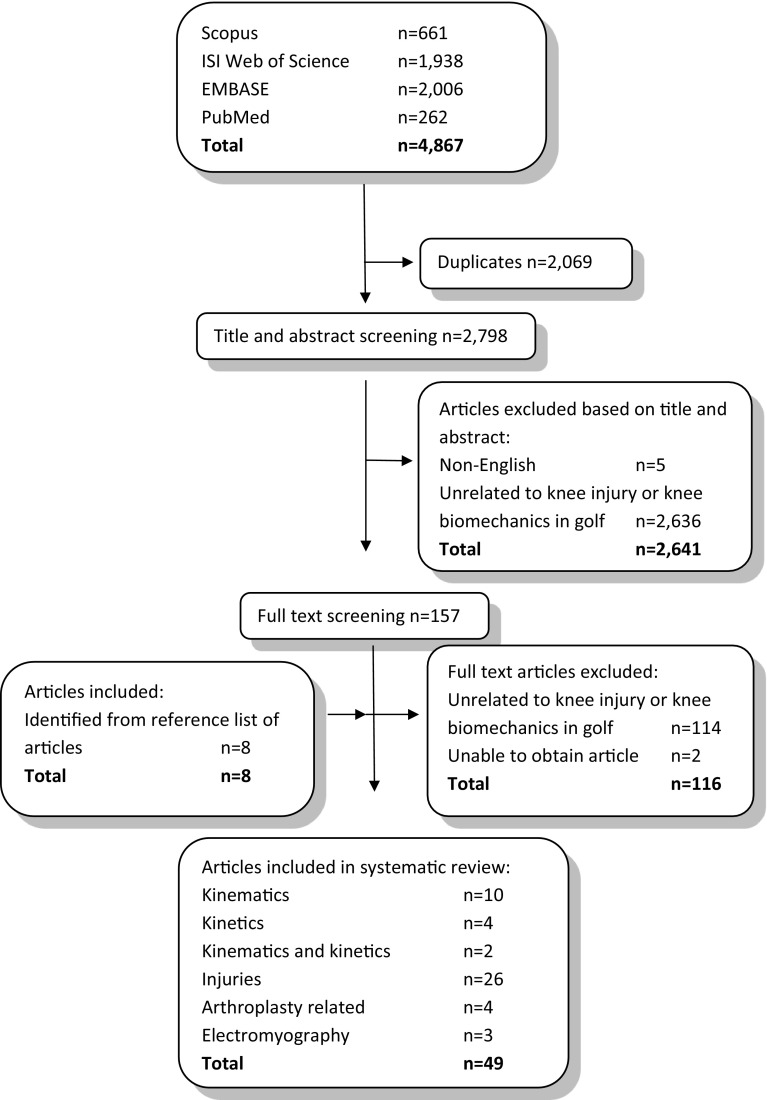
A systematic literature search was conducted to determine the injury rate, kinematic patterns, loading, and muscle activity of the knee during golf.
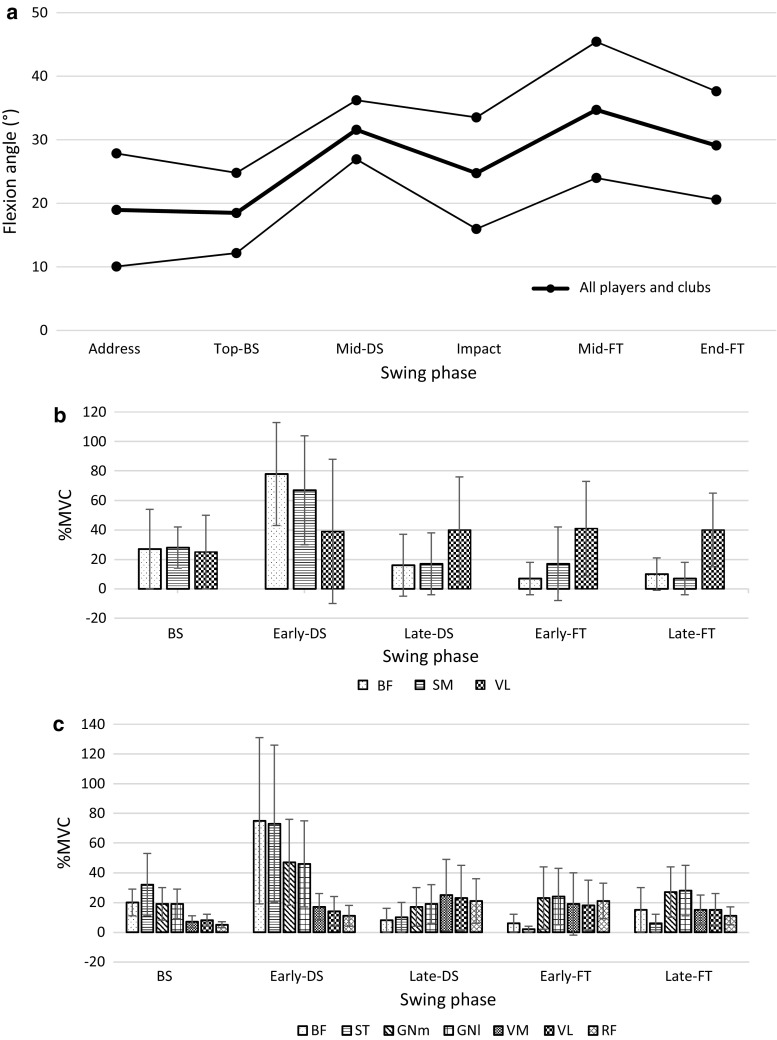
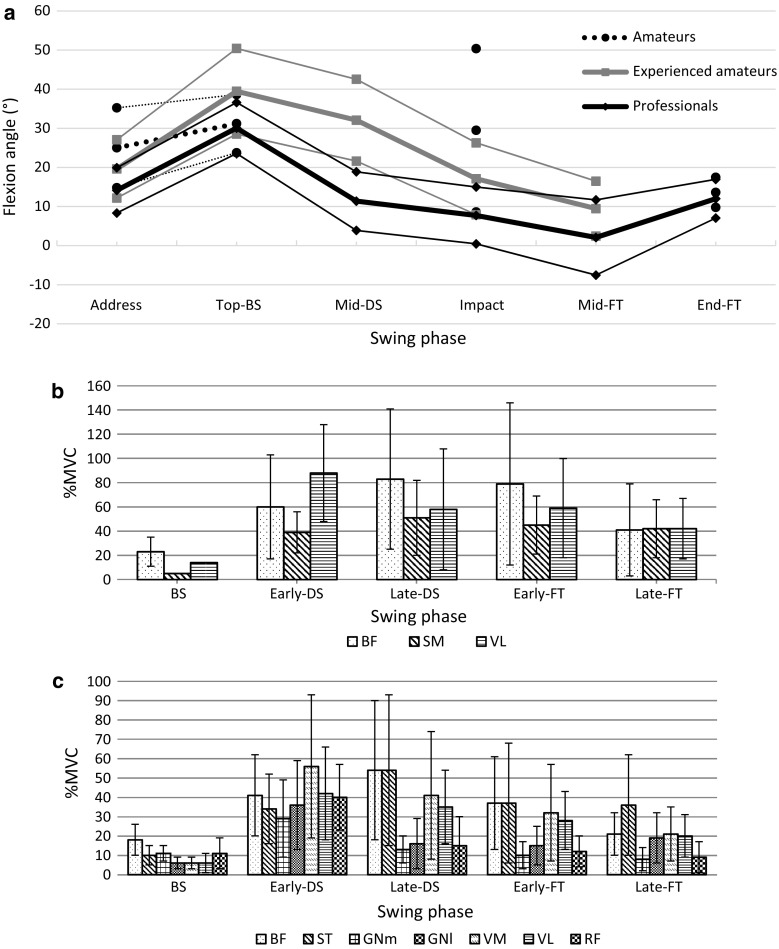
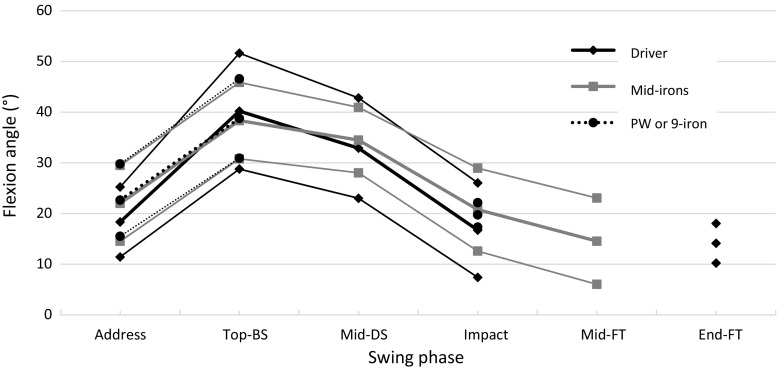
A knee injury prevalence of 3-18% was established among both professional and amateur players, with no clear dependence on skill level or sex; however, older players appear at greater risk of injury. Studies reporting kinematics indicate that the lead knee is exposed to a complex series of motions involving rapid extension and large magnitudes of tibial internal rotation, conditions that may pose risks to the structures of a natural knee or TKA. To date, the loads experienced by the lead knee during a golf swing have been reported inconsistently in the literature. Compressive loads ranging from 100 to 440% bodyweight have been calculated and measured using methods including inverse dynamics analysis and instrumented knee implants. Additionally, the magnitude of loading appears to be independent of the club used.
This review is the first to highlight the lack of consensus regarding knee loading during the golf swing and the associated risks of injury. Results from the literature suggest the lead knee is subject to a higher magnitude of stress and more demanding motions than the trail knee. Therefore, recommendations regarding return to golf following knee injury or surgical intervention should carefully consider the laterality of the injury.
高尔夫通常被认为是一种低冲击运动,对膝关节的损伤风险较小,通常在全膝关节置换术后(TKA)允许进行。高尔夫挥杆的运动学和动力学研究已经报道了与膝关节相关的结果,但对于挥杆过程中所承受的负荷以及个体技术的生物力学如何使膝关节面临受伤风险,尚未达成共识。
我们的目的是基于对从击球到随挥结束过程中膝关节内部受力情况和运动学的深入理解,确定(1)因参与高尔夫运动而导致的膝关节损伤的流行率,以及(2)从生物力学角度来看,导致膝关节损伤的危险因素。
系统地检索了有关高尔夫运动中膝关节损伤率、运动学模式、负荷和肌肉活动的文献。
在职业和业余高尔夫球手中,膝关节损伤的流行率为 3-18%,但与技能水平或性别无关;然而,老年球员受伤的风险更高。报道运动学的研究表明,先导膝承受着一系列复杂的运动,包括快速伸展和胫骨内旋的大幅度运动,这些情况可能对自然膝关节或 TKA 的结构构成风险。迄今为止,在高尔夫挥杆过程中,先导膝所承受的负荷在文献中的报道不一致。通过包括反向动力学分析和仪器化膝关节植入物在内的方法,计算和测量了从 100%到 440%体重的压缩负荷。此外,负荷的大小似乎与使用的球杆无关。
这是首次强调在高尔夫挥杆过程中膝关节负荷以及相关受伤风险方面缺乏共识的综述。文献结果表明,先导膝比随动膝承受更高的应力和更苛刻的运动。因此,关于膝关节受伤或手术干预后重返高尔夫的建议应仔细考虑受伤的侧别。