Oliveira da Silva Camila, Monte-Alto-Costa Andréa, Renovato-Martins Mariana, Viana Nascimento Filipe Jorge, Dos Santos Valença Samuel, Lagente Vincent, Pôrto Luís Cristóvão, Victoni Tatiana
Laboratório e Histocompatibilidade e Criopreservação, HLA/Universidade do Estado do Rio de Janeiro, Rio de Janeiro, RJ 20950-000, Brazil.
Laboratório de Reparo Tecidual, DHE/IBRAG/Universidade do Estado do Rio de Janeiro, Rio de Janeiro, RJ 20950-003, Brazil.
Int J Mol Sci. 2017 Sep 9;18(9):1940. doi: 10.3390/ijms18091940.
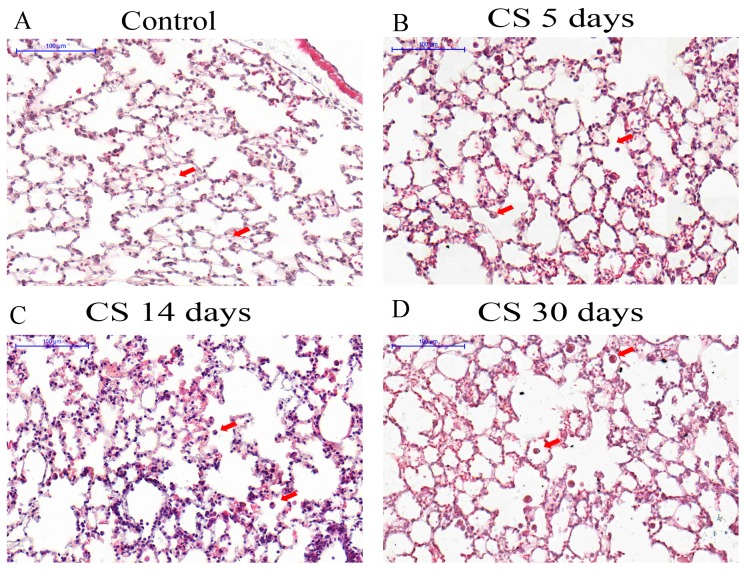
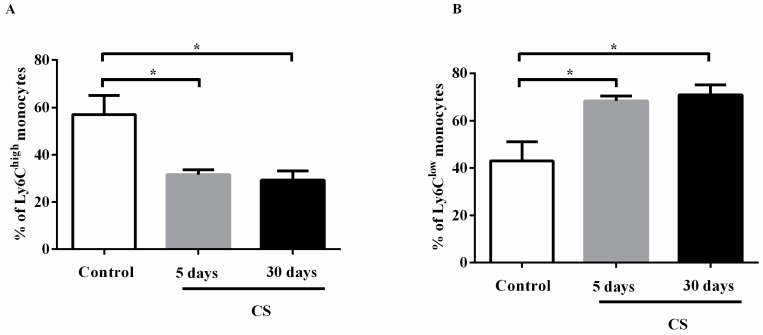
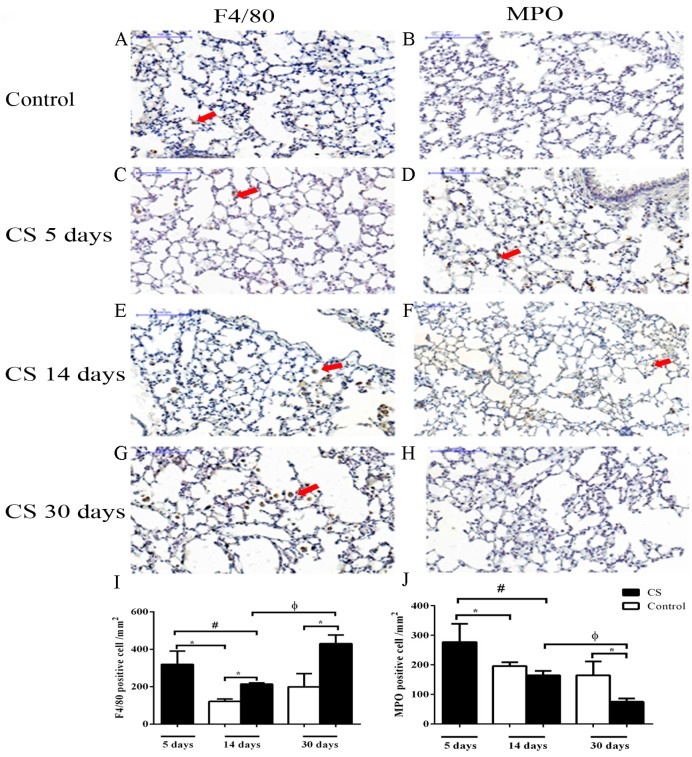
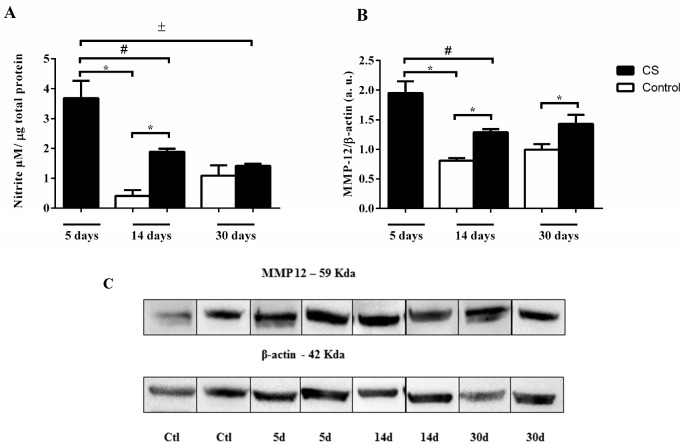
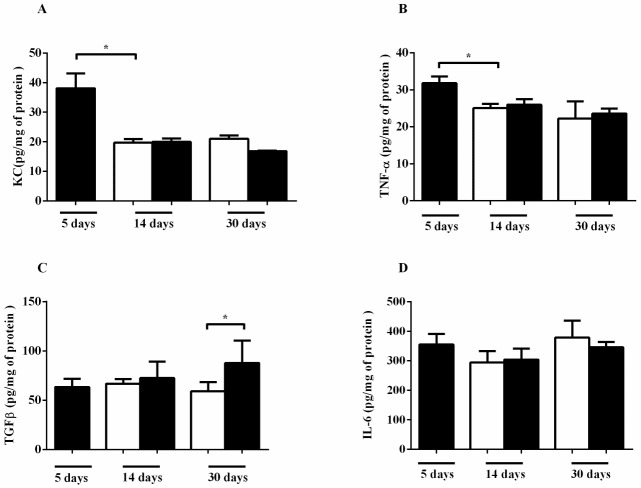
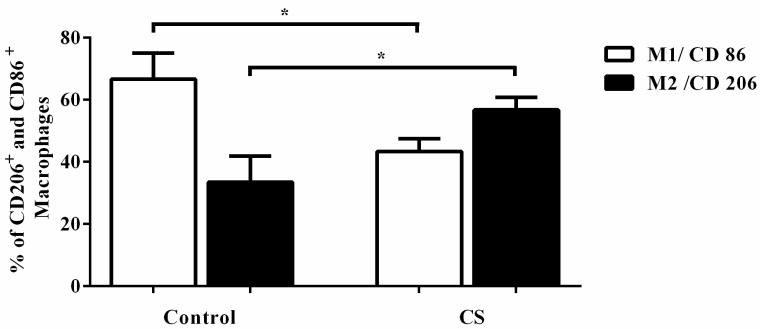
Alveolar macrophages play a central role in the pathogenesis of chronic obstructive pulmonary disease (COPD). Monocytes are recruited from blood during inflammation and then mature into alveolar macrophages. The aim of this study was to investigate the effect of cigarette smoke (CS) at different times in lung macrophages and monocytes from blood and bone marrow in mice. Male mice (C57BL/6, = 45) were divided into groups: control, CS 5 days, CS 14 days and CS 30 days. Five days' CS exposure induced a pronounced influx of neutrophils and macrophages in the lung associated with increased levels of keratinocyte chemoattractant (KC), tumor necrosis factor-α (TNF-α), nitric oxide (NO) and matrix metalloproteinase (MMP)-12. After 14 days of CS exposure, neutrophil recruitment and cytokine production were greatly reduced. Moreover, chronic CS exposure led to increased recruitment of macrophages (with high expression of CD206), transforming growth factor-β (TGF-β) production as well as no detection of TNF-α, interleukin (IL)-6 and KC. CS can also change the monocyte phenotype in the blood and bone marrow, with an increase in Ly6C cells. These results show for the first time that CS can change not only macrophage polarization but also monocyte. These results suggest that continued recruitment of Ly6C monocytes may help the distinct renewing macrophage M2 population required for COPD progression.
肺泡巨噬细胞在慢性阻塞性肺疾病(COPD)的发病机制中起核心作用。炎症期间,单核细胞从血液中募集,然后成熟为肺泡巨噬细胞。本研究的目的是探讨香烟烟雾(CS)在不同时间对小鼠肺巨噬细胞以及血液和骨髓中的单核细胞的影响。将雄性小鼠(C57BL/6,n = 45)分为对照组、CS暴露5天组、CS暴露14天组和CS暴露30天组。暴露于CS 5天会导致肺中嗜中性粒细胞和巨噬细胞大量涌入,同时角质形成细胞趋化因子(KC)、肿瘤坏死因子-α(TNF-α)、一氧化氮(NO)和基质金属蛋白酶(MMP)-12水平升高。CS暴露14天后,嗜中性粒细胞募集和细胞因子产生大幅减少。此外,长期CS暴露导致巨噬细胞(CD206高表达)募集增加、转化生长因子-β(TGF-β)产生增加,且未检测到TNF-α、白细胞介素(IL)-6和KC。CS还可改变血液和骨髓中的单核细胞表型,使Ly6C细胞增加。这些结果首次表明,CS不仅可改变巨噬细胞极化,还可改变单核细胞。这些结果提示,持续募集Ly6C单核细胞可能有助于COPD进展所需的独特的巨噬细胞M2亚群更新。