Functional Neuroimaging Unit, Cenre de recherche, Institut universitaire de gériatrie de Montréal, Université de Montreal, Québec, Canada.
School of Psychology, University of Ottawa, Ontario, Canada.
Elife. 2017 Sep 11;6:e24987. doi: 10.7554/eLife.24987.
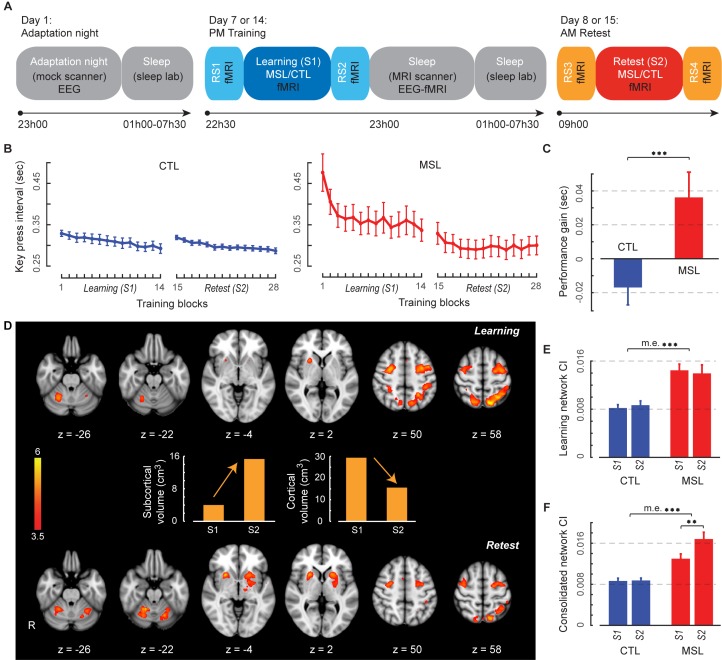
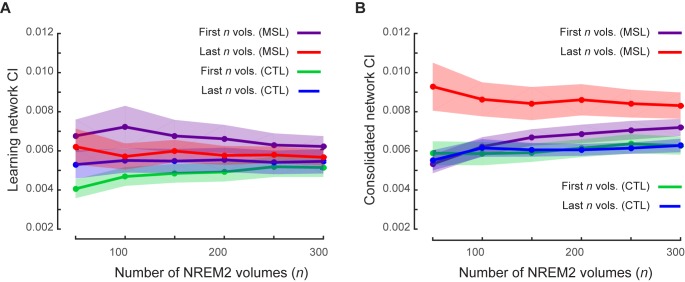
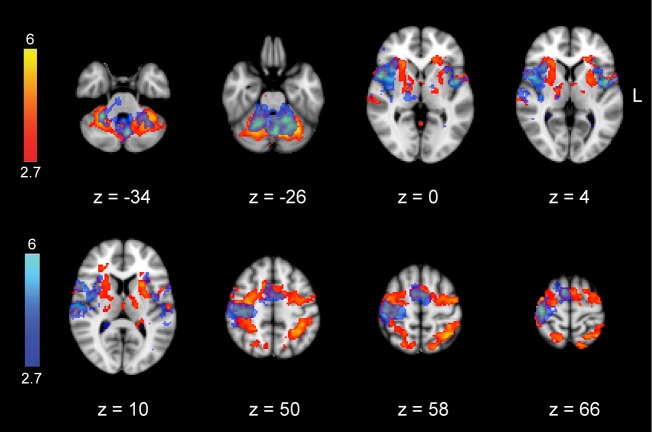
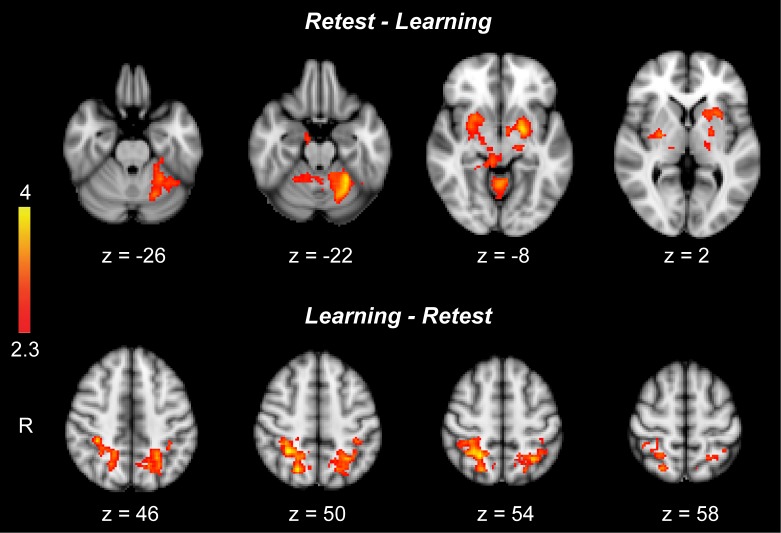
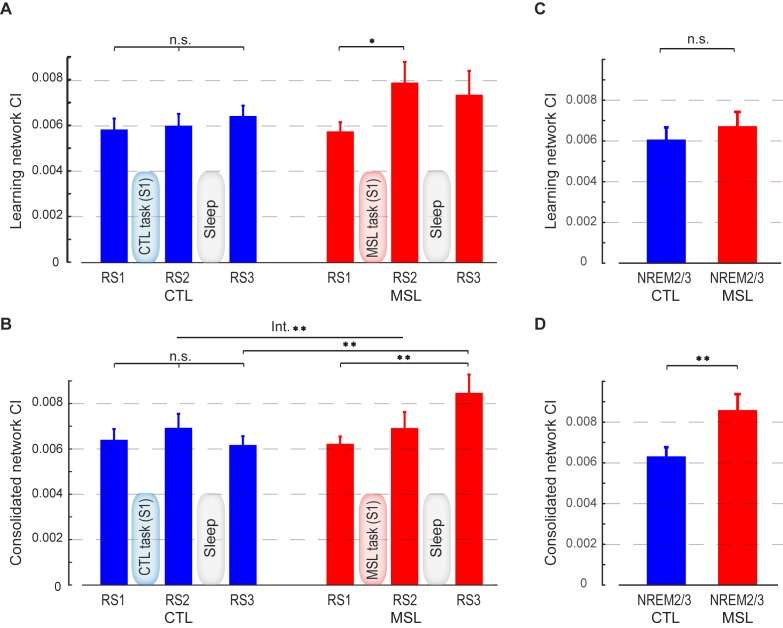
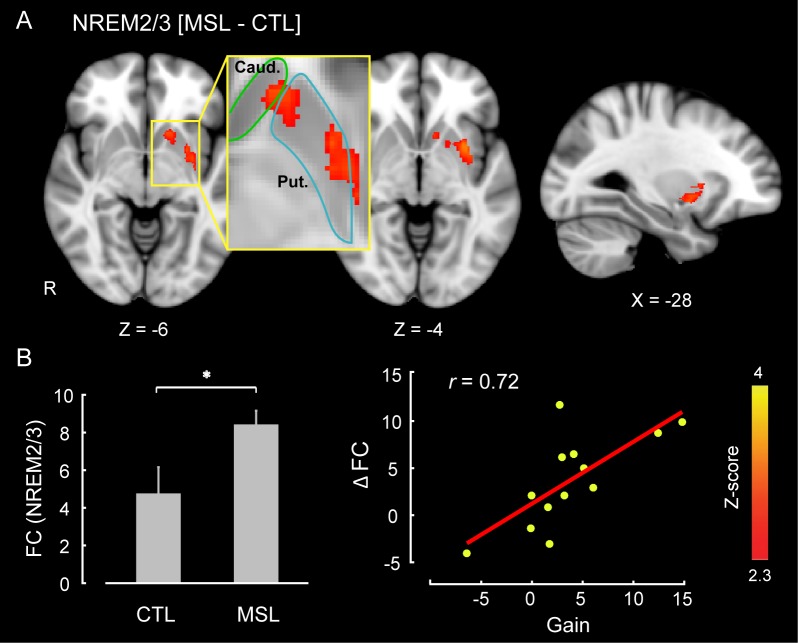
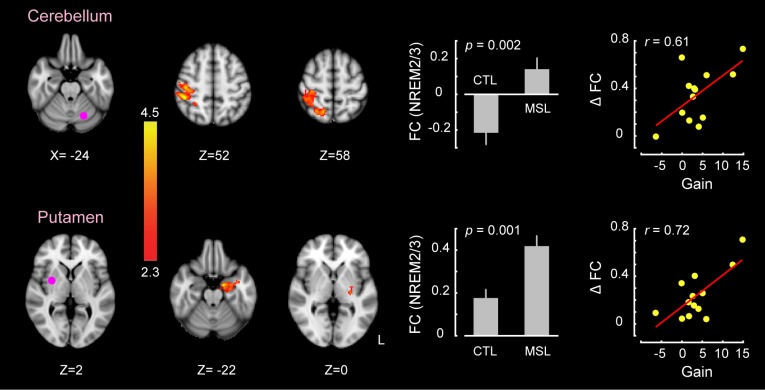
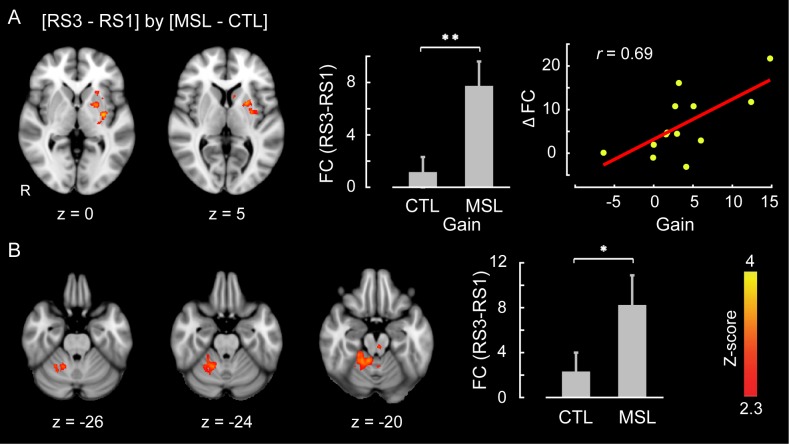
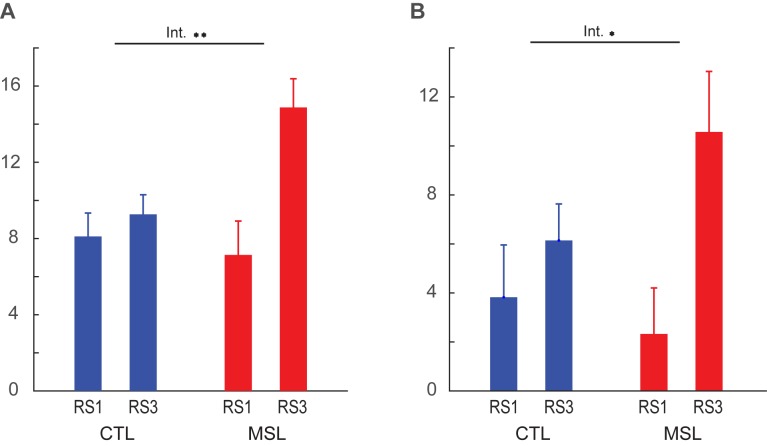
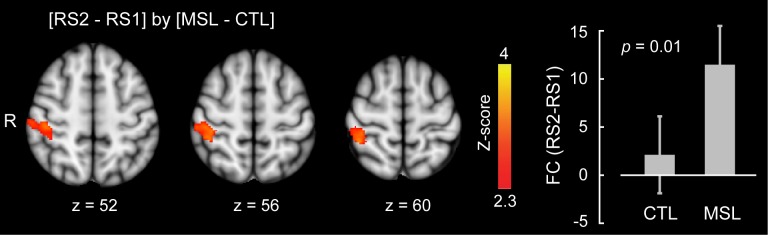
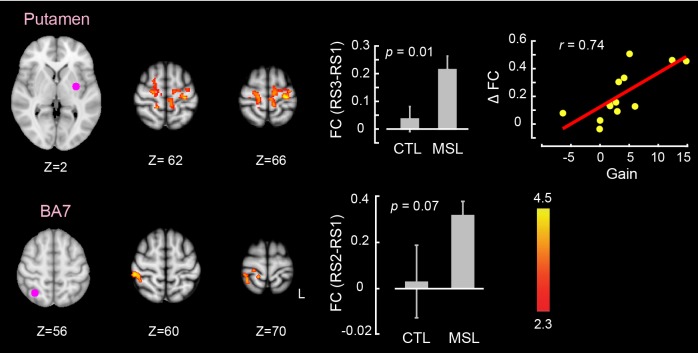
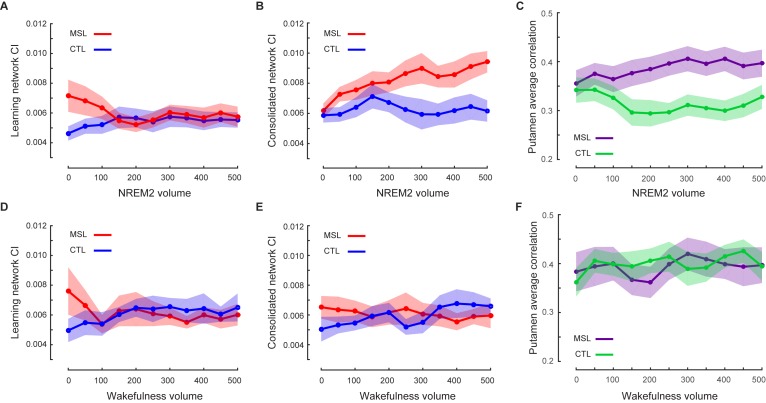
Sleep is necessary for the optimal consolidation of newly acquired procedural memories. However, the mechanisms by which motor memory traces develop during sleep remain controversial in humans, as this process has been mainly investigated indirectly by comparing pre- and post-sleep conditions. Here, we used functional magnetic resonance imaging and electroencephalography during sleep following motor sequence learning to investigate how newly-formed memory traces evolve dynamically over time. We provide direct evidence for transient reactivation followed by downscaling of functional connectivity in a cortically-dominant pattern formed during learning, as well as gradual reorganization of this representation toward a subcortically-dominant consolidated trace during non-rapid eye movement (NREM) sleep. Importantly, the putamen functional connectivity within the consolidated network during NREM sleep was related to overnight behavioral gains. Our results demonstrate that NREM sleep is necessary for two complementary processes: the and of newly-learned information during sleep, which underlie human motor memory consolidation.
睡眠对于新获得的程序性记忆的最佳巩固是必要的。然而,在人类中,睡眠期间运动记忆痕迹发展的机制仍存在争议,因为这个过程主要通过比较睡眠前后的条件来间接研究。在这里,我们在睡眠期间使用功能磁共振成像和脑电图来研究新形成的记忆痕迹如何随时间动态演变。我们提供了直接的证据,证明在运动序列学习期间形成的皮质主导模式中,记忆痕迹在短暂重新激活后会进行功能连接的缩减,并且在非快速眼动 (NREM) 睡眠期间,这种表示逐渐向皮质下主导的巩固痕迹进行重新组织。重要的是,在 NREM 睡眠期间巩固网络内的壳核功能连接与夜间的行为增益有关。我们的结果表明,NREM 睡眠对于两个互补的过程是必要的:在睡眠期间新学习信息的和,这是人类运动记忆巩固的基础。