Duechting Andrea, Przybyla Anna, Kuerten Stefanie, Lehmann Paul V
R & D Department CTL, Shaker Hts, OH 44122, USA.
Department Anatomy, University Erlangen, 91054 Erlangen, Germany.
Cells. 2017 Sep 12;6(3):29. doi: 10.3390/cells6030029.
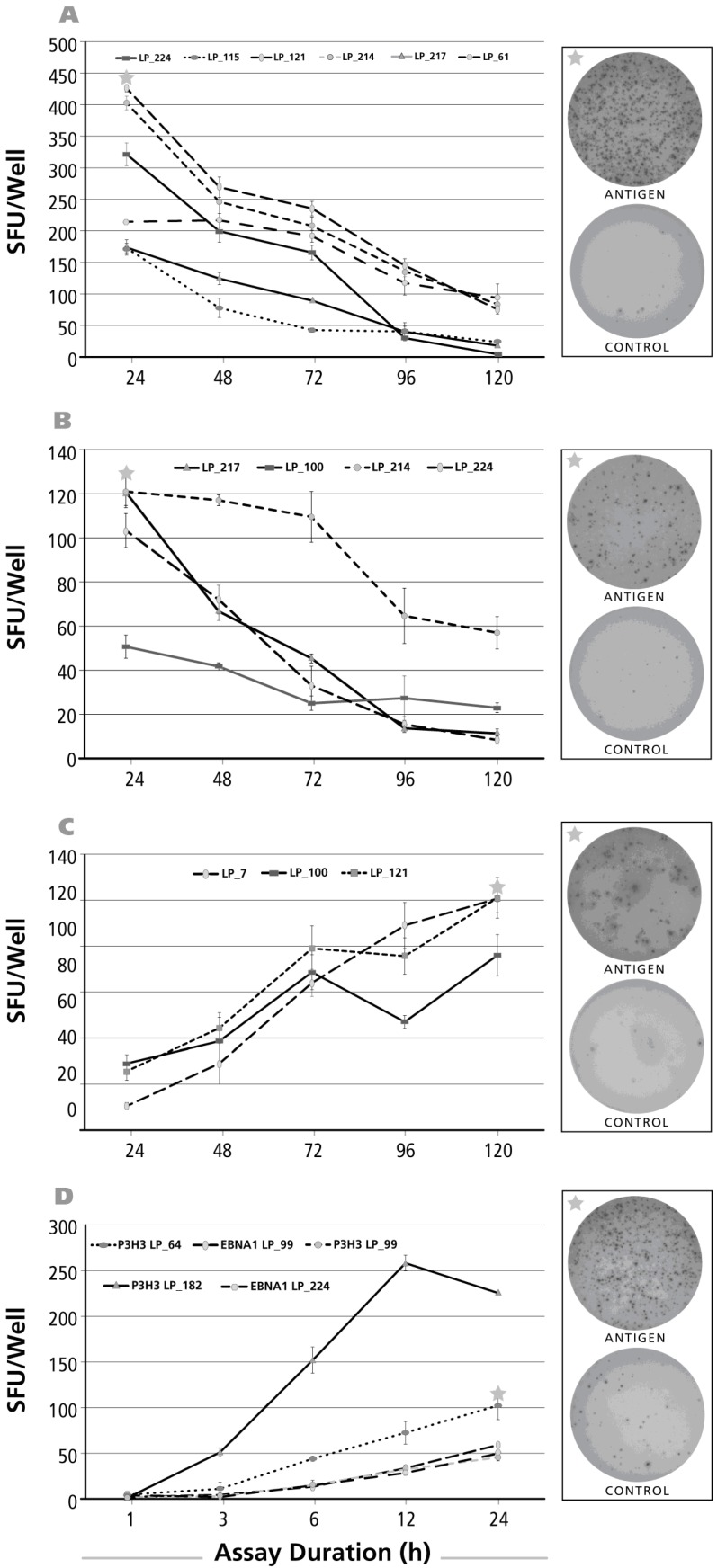
During immune responses, different classes of T cells arise: Th1, Th2, and Th17. Mobilizing the right class plays a critical role in successful host defense and therefore defining the ratios of Th1/Th2/Th17 cells within the antigen-specific T cell repertoire is critical for immune monitoring purposes. Antigen-specific Th1, Th2, and Th17 cells can be detected by challenging peripheral blood mononuclear cells (PBMC) with antigen, and establishing the numbers of T cells producing the respective lead cytokine, IFN-γ and IL-2 for Th1 cells, IL-4 and IL-5 for Th2, and IL-17 for Th-17 cells, respectively. Traditionally, these cytokines are measured within 6 h in flow cytometry. We show here that 6 h of stimulation is sufficient to detect peptide-induced production of IFN-γ, but 24 h are required to reveal the full frequency of protein antigen-specific Th1 cells. Also the detection of IL-2 producing Th1 cells requires 24 h stimulation cultures. Measurements of IL-4 producing Th2 cells requires 48-h cultures and 96 h are required for frequency measurements of IL-5 and IL-17 secreting T cells. Therefore, accounting for the differential secretion kinetics of these cytokines is critical for the accurate determination of the frequencies and ratios of antigen-specific Th1, Th2, and Th17 cells.
在免疫反应过程中,会产生不同类型的T细胞:Th1、Th2和Th17。调动合适的细胞类型对宿主成功防御起着关键作用,因此确定抗原特异性T细胞库中Th1/Th2/Th17细胞的比例对于免疫监测至关重要。通过用抗原刺激外周血单个核细胞(PBMC),并分别确定产生各自主要细胞因子的T细胞数量,即Th1细胞产生的IFN-γ和IL-2、Th2细胞产生的IL-4和IL-5以及Th17细胞产生的IL-17,可检测抗原特异性的Th1、Th2和Th17细胞。传统上,这些细胞因子在流式细胞术中于6小时内进行检测。我们在此表明,6小时的刺激足以检测肽诱导的IFN-γ产生,但需要24小时才能揭示蛋白质抗原特异性Th1细胞的完整频率。同样,检测产生IL-2的Th1细胞也需要24小时的刺激培养。检测产生IL-4的Th2细胞需要48小时培养,而检测分泌IL-5和IL-17的T细胞频率则需要96小时。因此,考虑这些细胞因子不同的分泌动力学对于准确确定抗原特异性Th1、Th2和Th17细胞的频率和比例至关重要。