Sulli Maria, Mandolino Giuseppe, Sturaro Monica, Onofri Chiara, Diretto Gianfranco, Parisi Bruno, Giuliano Giovanni
ENEA, Casaccia Research Center, Via Anguillarese 301, Roma, Italy.
Scuola Superiore S. Anna, Piazza Martiri della Libertà 33, Pisa, Italy.
PLoS One. 2017 Sep 12;12(9):e0184143. doi: 10.1371/journal.pone.0184143. eCollection 2017.
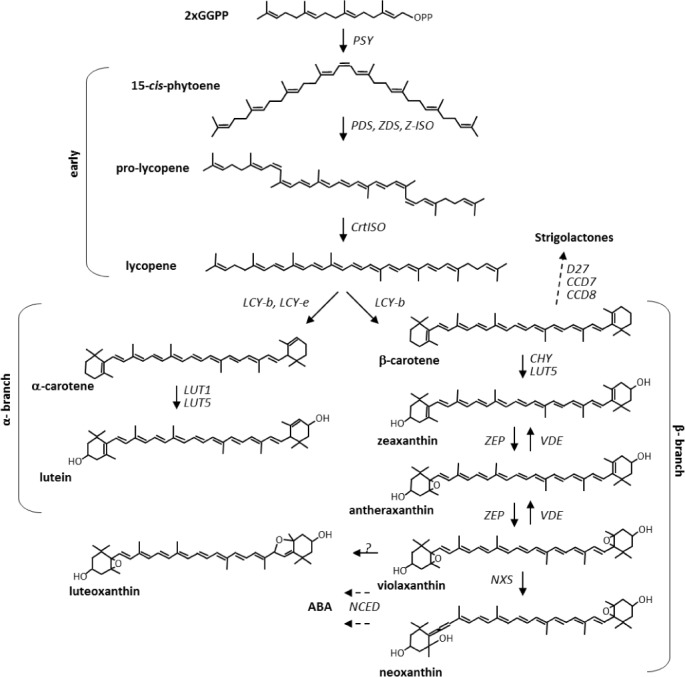
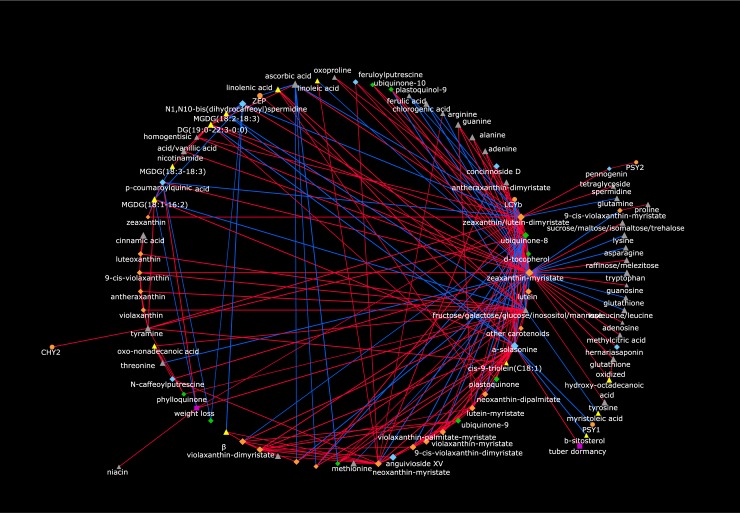
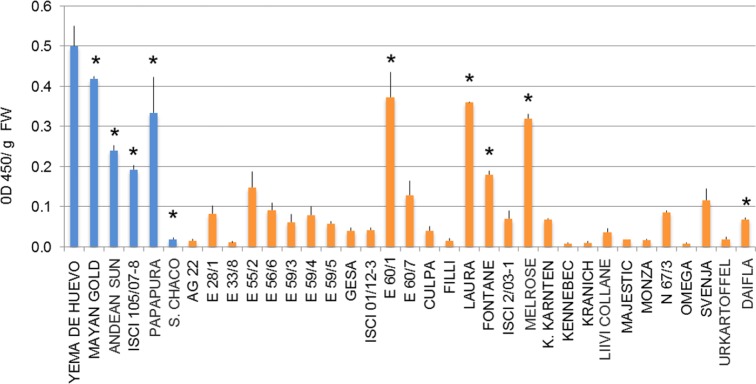
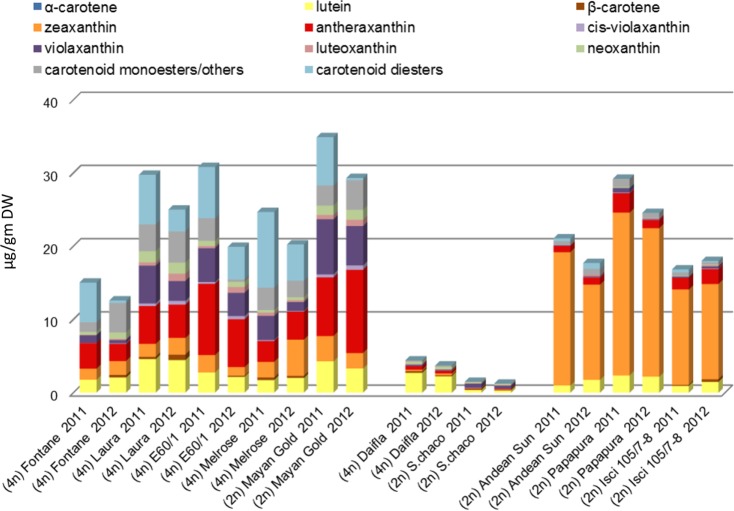
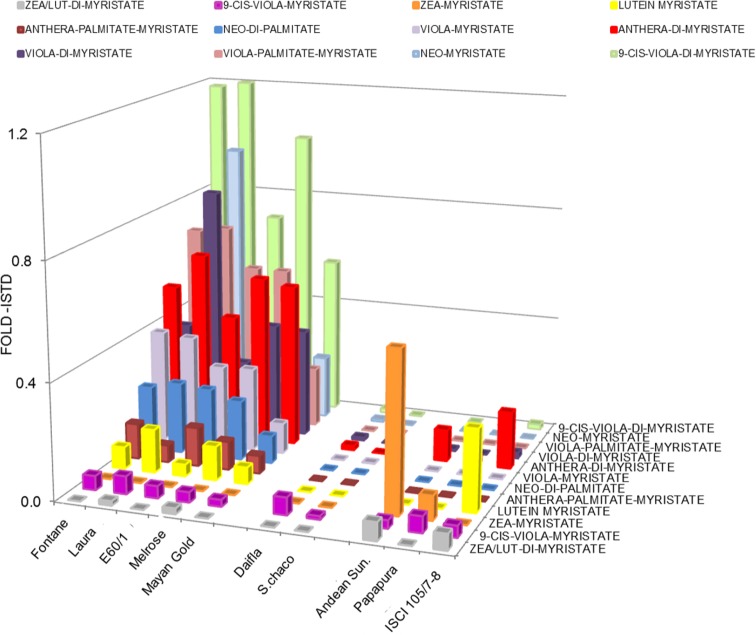
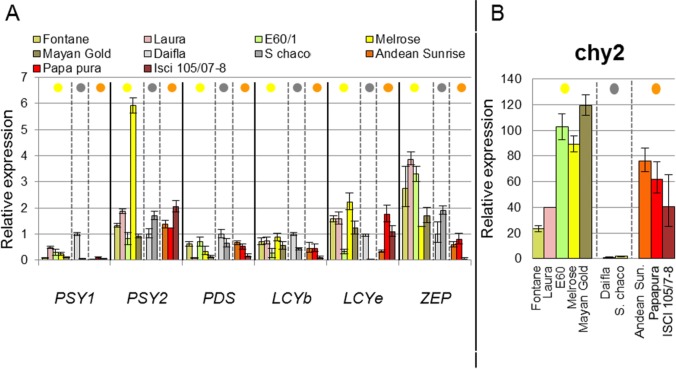
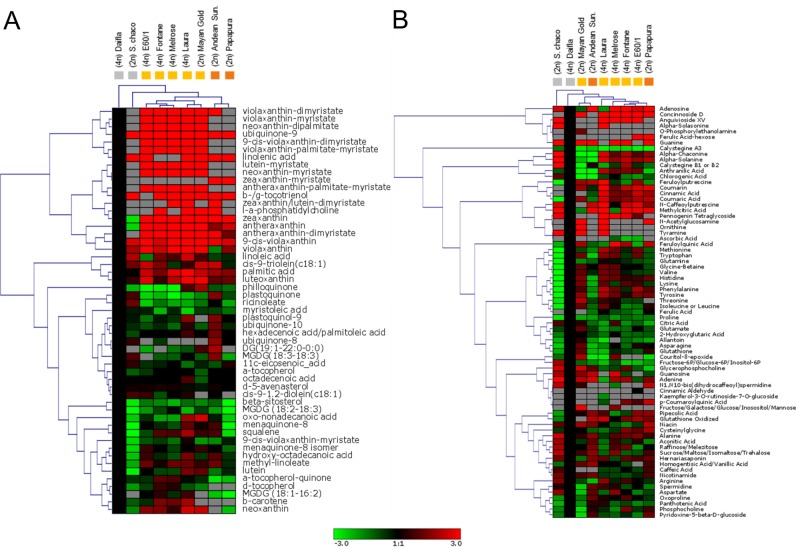
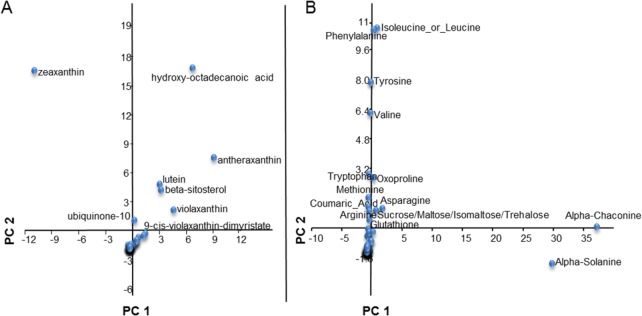
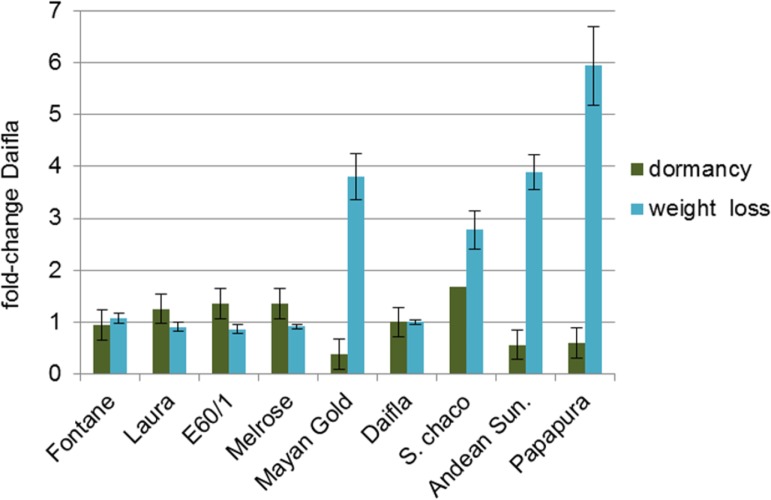
After wheat and rice, potato is the third most important staple food worldwide. A collection of ten tetraploid (Solanum tuberosum) and diploid (S. phureja and S. chacoense) genotypes with contrasting carotenoid content was subjected to molecular characterization with respect to candidate carotenoid loci and metabolic profiling using LC-HRMS. Irrespective of ploidy and taxonomy, tubers of these genotypes fell into three groups: yellow-fleshed, characterized by high levels of epoxy-xanthophylls and xanthophyll esters and by the presence of at least one copy of a dominant allele of the β-Carotene Hydroxylase 2 (CHY2) gene; white-fleshed, characterized by low carotenoid levels and by the presence of recessive chy2 alleles; and orange-fleshed, characterized by high levels of zeaxanthin but low levels of xanthophyll esters, and homozygosity for a Zeaxanthin Epoxidase (ZEP) recessive allele. Novel CHY2 and ZEP alleles were identified in the collection. Multivariate analysis identified several groups of co-regulated non-polar compounds, and resulted in the grouping of the genotypes according to flesh color, suggesting that extensive cross-talk exists between the carotenoid pathway and other metabolite pathways in tubers. Postharvest traits like tuber dormancy and weight loss during storage showed little correlation with tuber carotenoid content, with the exception of zeaxanthin and its esters. Other tuber metabolites, such as glucose, monogalactosyldiacyglycerol (a glycolipid), or suberin precursors, showed instead significant correlations with both traits.
继小麦和水稻之后,马铃薯是全球第三大重要主食。收集了10个四倍体(马铃薯)和二倍体(Phureja马铃薯和Chacoense马铃薯)基因型,它们的类胡萝卜素含量存在差异,针对候选类胡萝卜素基因座进行了分子特征分析,并使用液相色谱-高分辨质谱法进行了代谢谱分析。无论倍性和分类如何,这些基因型的块茎可分为三组:黄肉,其特征是环氧叶黄素和叶黄素酯含量高,且至少有一个β-胡萝卜素羟化酶2(CHY2)基因显性等位基因的拷贝;白肉,其特征是类胡萝卜素含量低且存在隐性chy2等位基因;橙肉,其特征是玉米黄质含量高但叶黄素酯含量低,且为玉米黄质环氧化酶(ZEP)隐性等位基因的纯合子。在该收集物中鉴定出了新的CHY2和ZEP等位基因。多变量分析确定了几组共同调控的非极性化合物,并根据果肉颜色对基因型进行了分组,这表明块茎中的类胡萝卜素途径与其他代谢物途径之间存在广泛的相互作用。收获后性状,如块茎休眠和储存期间的重量损失,与块茎类胡萝卜素含量几乎没有相关性,但玉米黄质及其酯除外。其他块茎代谢物,如葡萄糖、单半乳糖二酰甘油(一种糖脂)或木栓质前体,则与这两个性状均存在显著相关性。