Wageningen UR Plant Breeding, Wageningen University and Research Centre, PO Box 386, 6700 AJ Wageningen, the Netherlands.
BMC Genomics. 2010 Mar 8;11:158. doi: 10.1186/1471-2164-11-158.
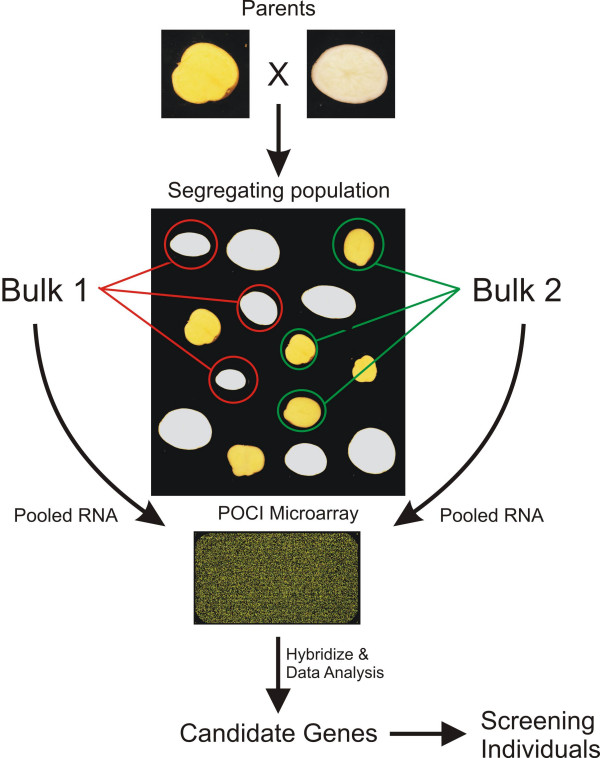
Utilization of the natural genetic variation in traditional breeding programs remains a major challenge in crop plants. The identification of candidate genes underlying, or associated with, phenotypic trait QTLs is desired for effective marker assisted breeding. With the advent of high throughput -omics technologies, screening of entire populations for association of gene expression with targeted traits is becoming feasible but remains costly. Here we present the identification of novel candidate genes for different potato tuber quality traits by employing a pooling approach reducing the number of hybridizations needed. Extreme genotypes for a quantitative trait are collected and the RNA from contrasting bulks is then profiled with the aim of finding differentially expressed genes.
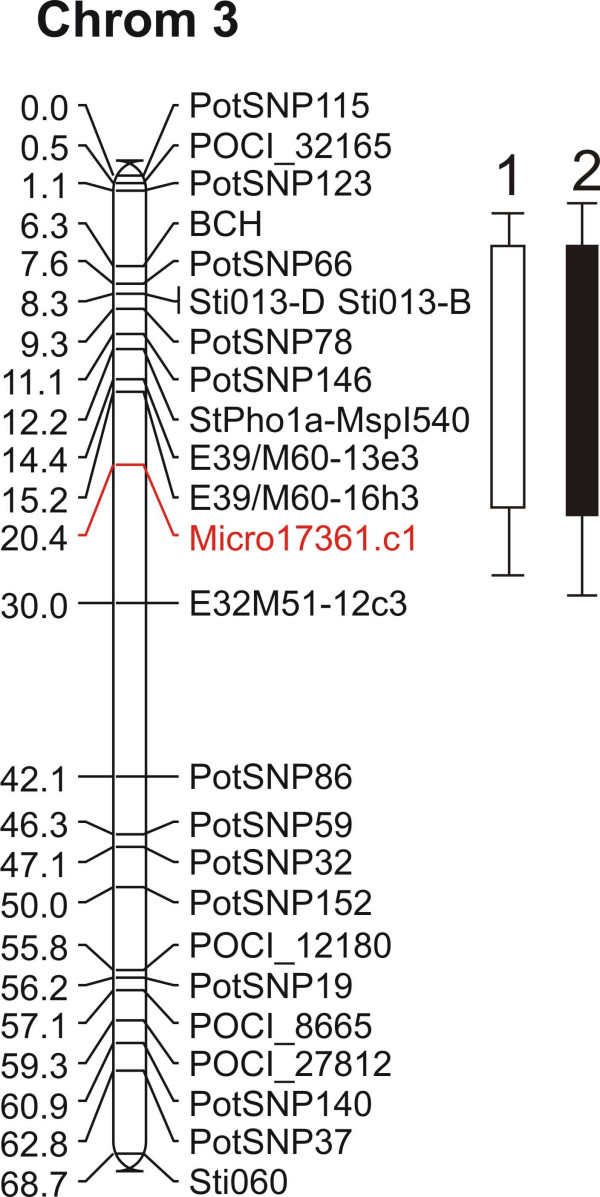
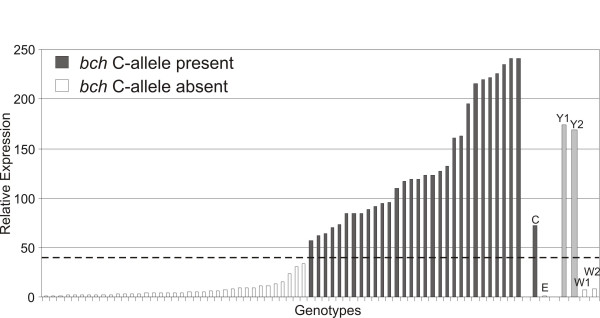
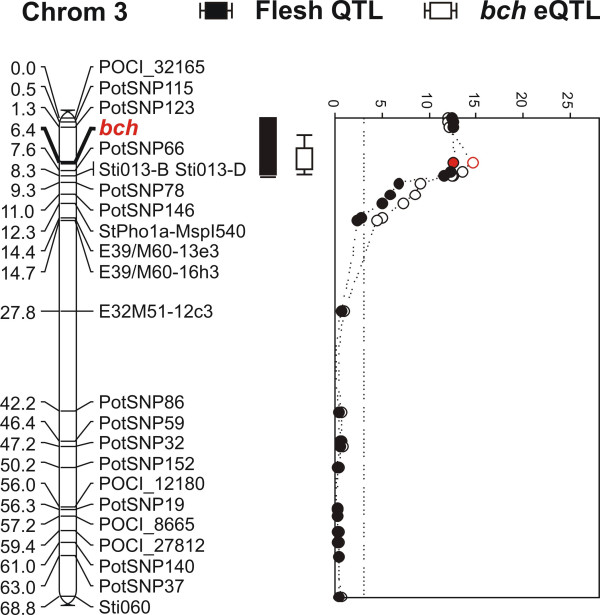
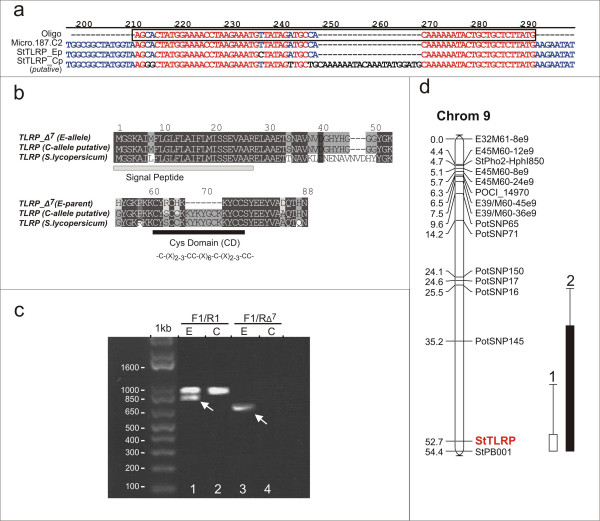
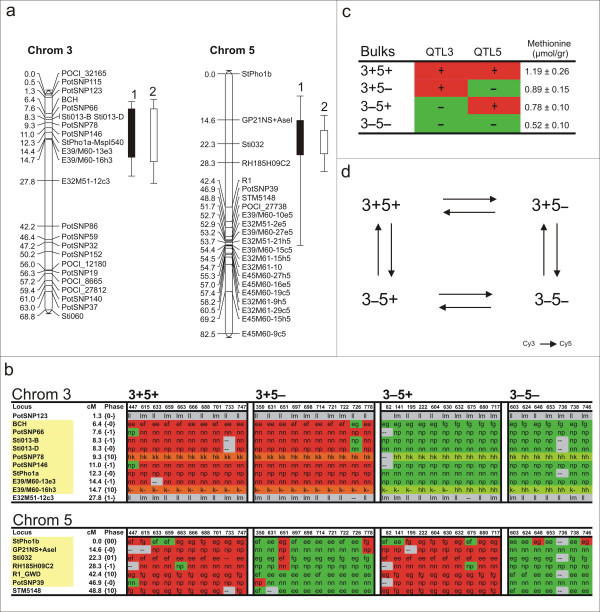
We have successfully implemented the pooling strategy for potato quality traits and identified candidate genes associated with potato tuber flesh color and tuber cooking type. Elevated expression level of a dominant allele of the beta-carotene hydroxylase (bch) gene was associated with yellow flesh color through mapping of the gene under a major QTL for flesh color on chromosome 3. For a second trait, a candidate gene with homology to a tyrosine-lysine rich protein (TLRP) was identified based on allele specificity of the probe on the microarray. TLRP was mapped on chromosome 9 in close proximity to a QTL for potato cooking type strengthening its significance as a candidate gene. Furthermore, we have performed a profiling experiment targeting a polygenic trait, by pooling individual genotypes based both on phenotypic and marker data, allowing the identification of candidate genes associated with the two different linkage groups.
A pooling approach for RNA-profiling with the aim of identifying novel candidate genes associated with tuber quality traits was successfully implemented. The identified candidate genes for tuber flesh color (bch) and cooking type (tlrp) can provide useful markers for breeding schemes in the future. Strengths and limitations of the approach are discussed.
在作物中,利用传统育种计划中的自然遗传变异仍然是一个主要挑战。为了进行有效的标记辅助育种,需要鉴定与表型性状 QTL 相关或相关的候选基因。随着高通量 -omics 技术的出现,针对目标性状的基因表达与群体的关联筛选变得可行,但仍然昂贵。在这里,我们通过采用减少所需杂交数量的池化方法,鉴定不同马铃薯块茎质量性状的新候选基因。收集定量性状的极端基因型,然后用对比块的 RNA 进行分析,以找到差异表达的基因。
我们已经成功地将池化策略应用于马铃薯品质性状,并鉴定了与马铃薯块茎肉色和块茎烹饪类型相关的候选基因。通过在 3 号染色体上与肉色主 QTL 相关的基因定位,发现β-胡萝卜素羟化酶 (bch) 基因的显性等位基因的高表达水平与黄色肉色相关。对于第二个性状,根据微阵列上探针的等位基因特异性,鉴定出一个与酪氨酸-赖氨酸丰富蛋白 (TLRP) 同源的候选基因。TLRP 被映射到 9 号染色体上,靠近与马铃薯烹饪类型相关的 QTL,这加强了它作为候选基因的重要性。此外,我们还针对多基因性状进行了基因表达谱分析,通过基于表型和标记数据对个体基因型进行池化,鉴定与两个不同连锁群相关的候选基因。
成功实施了一种用于 RNA 分析的池化方法,旨在鉴定与块茎品质性状相关的新候选基因。鉴定出的与块茎肉色 (bch) 和烹饪类型 (tlrp) 相关的候选基因可为未来的育种计划提供有用的标记。讨论了该方法的优缺点。