Department of Neuroscience, University of Texas Southwestern Medical Center, Dallas, United States.
Elife. 2017 Sep 13;6:e26278. doi: 10.7554/eLife.26278.
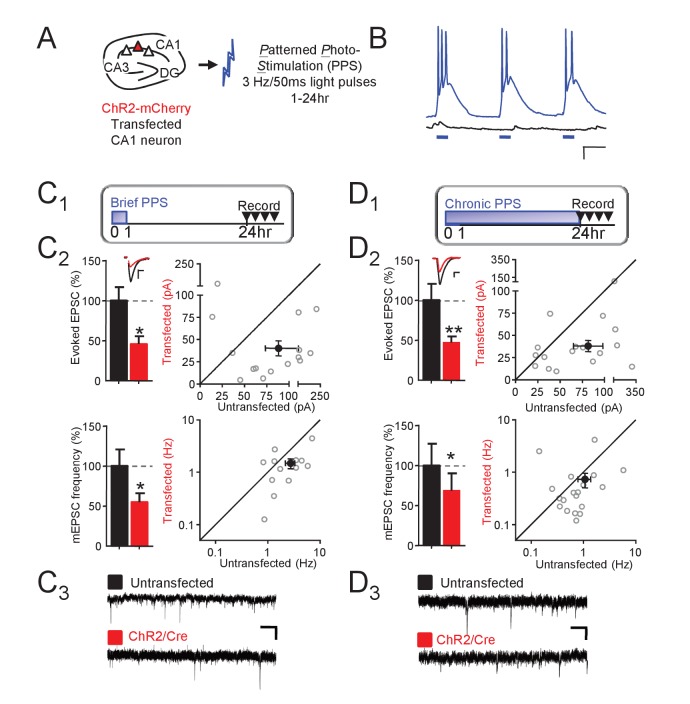
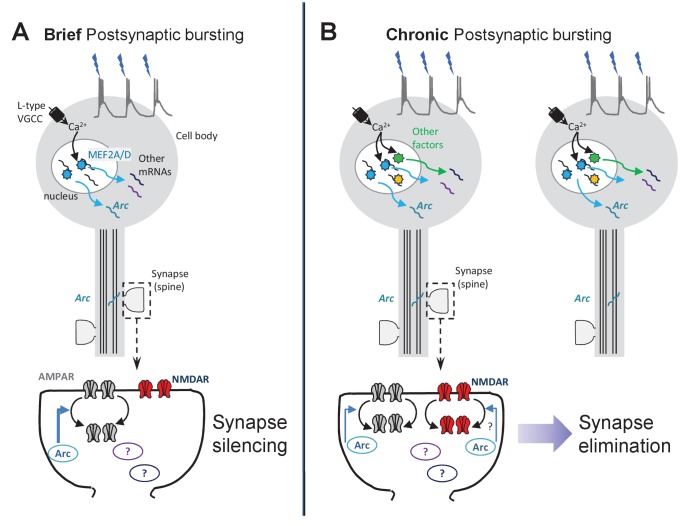
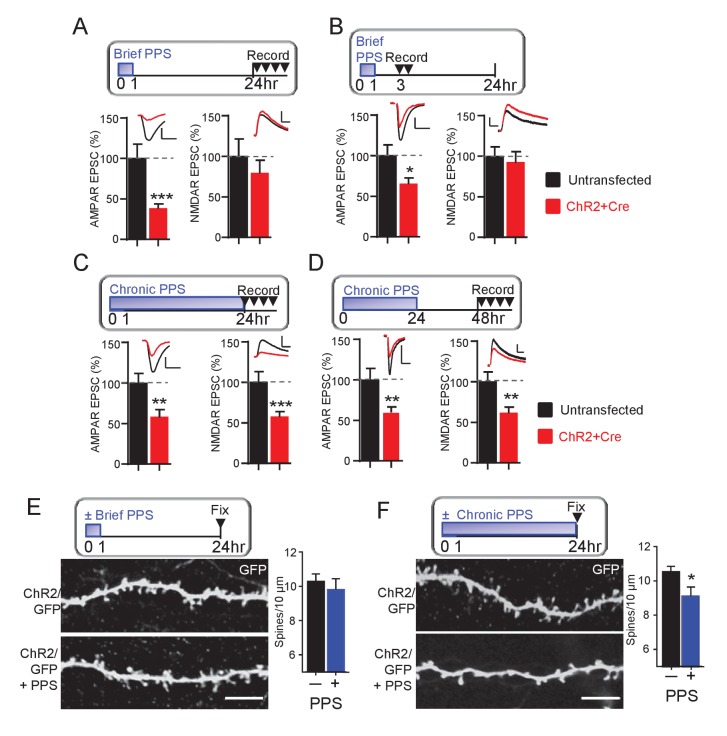
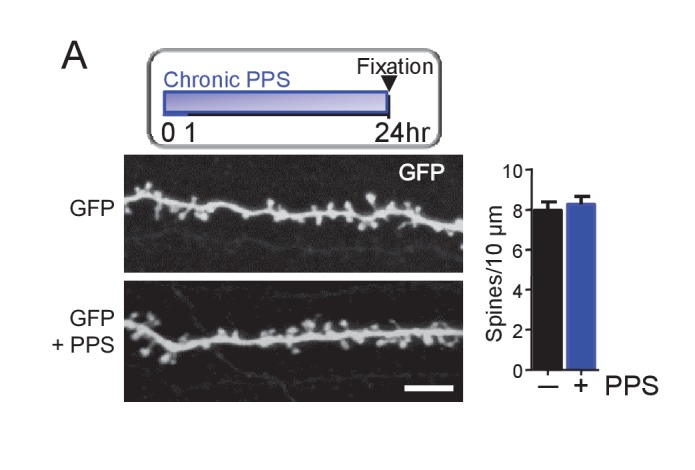
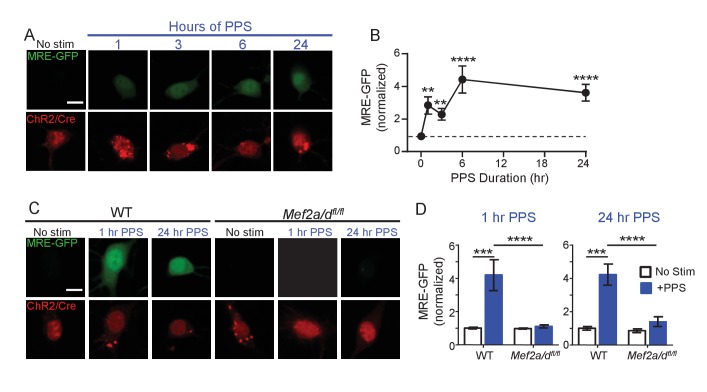
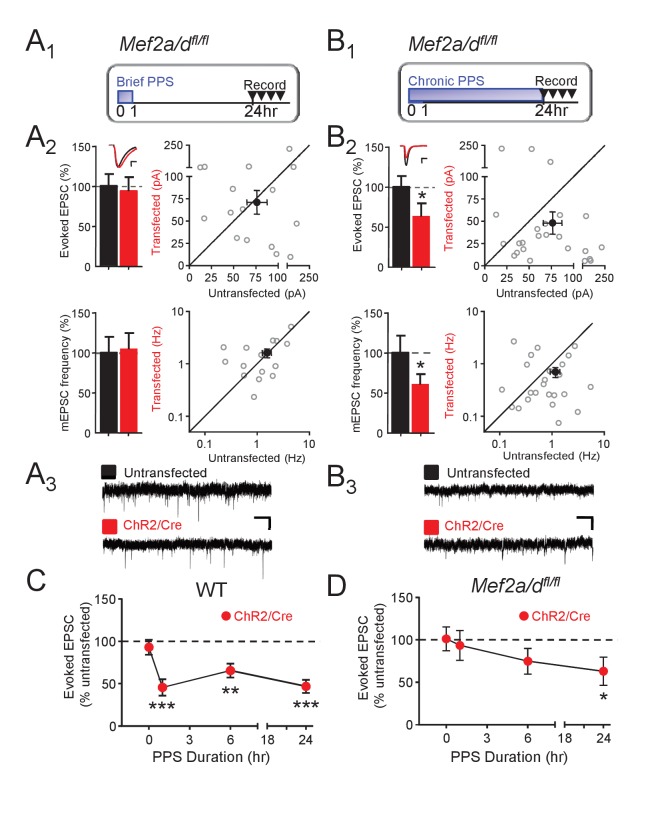
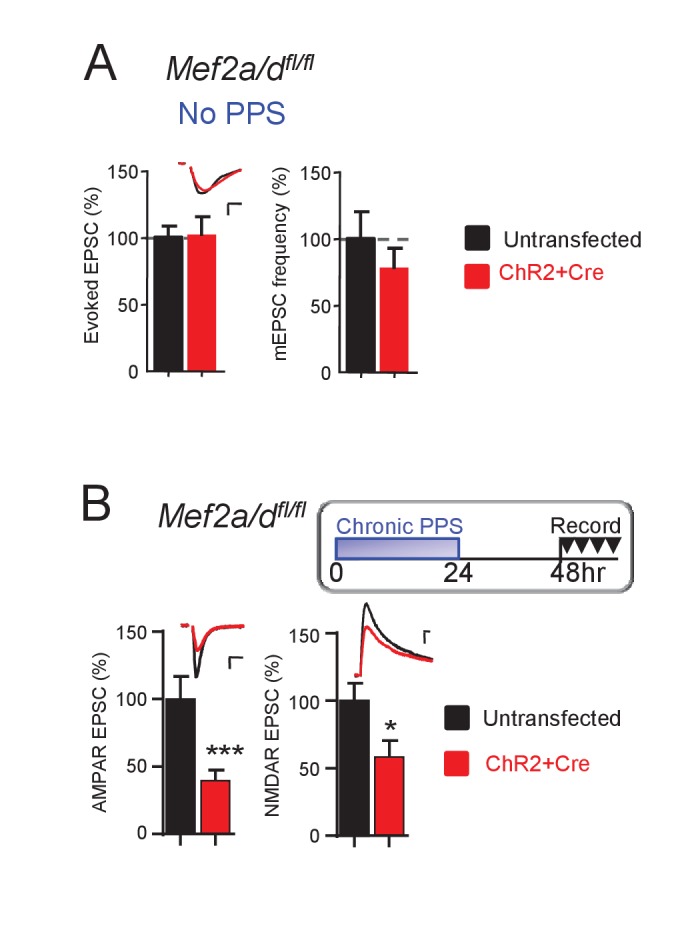
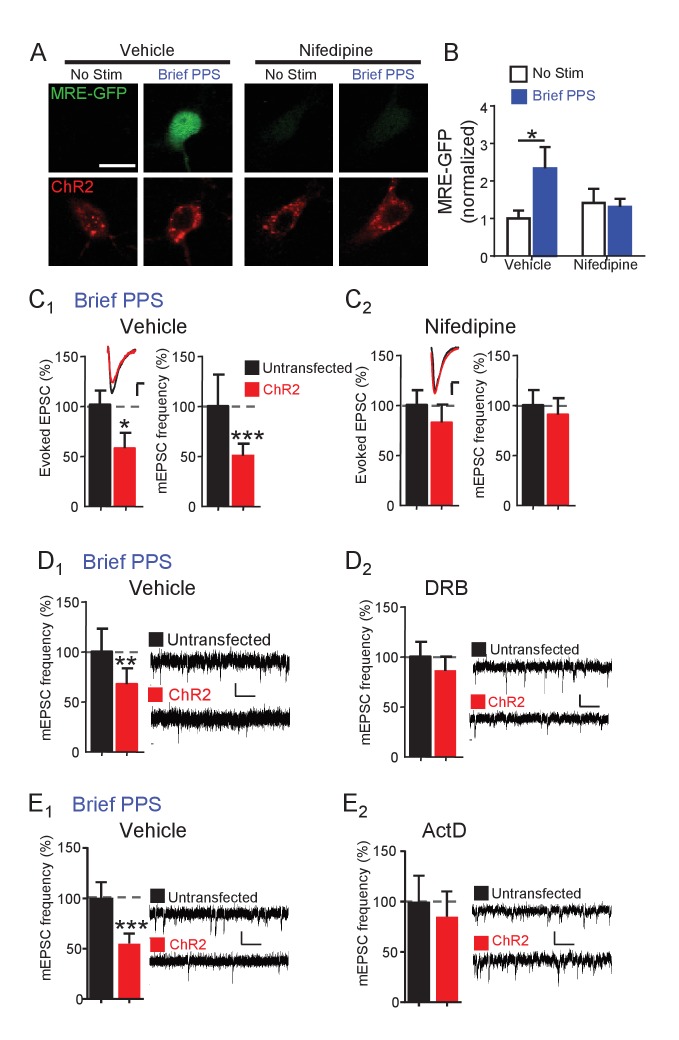
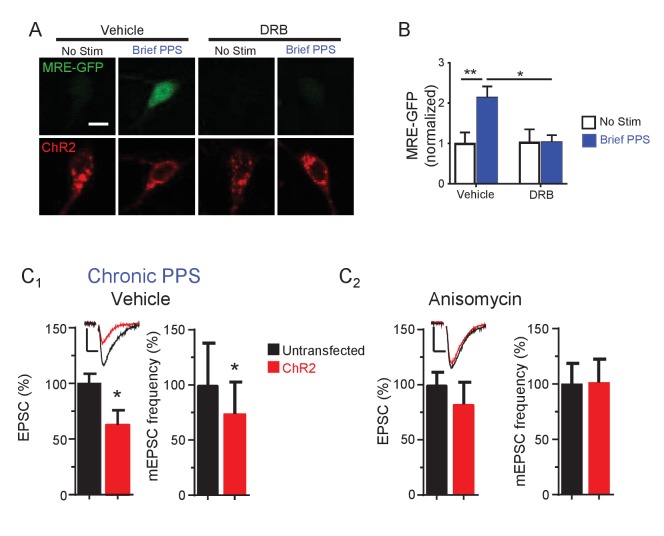
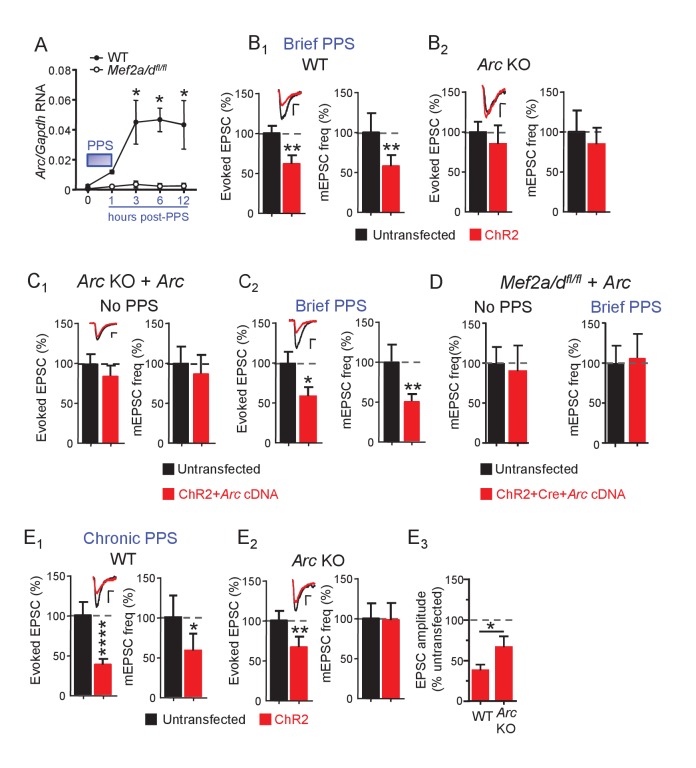
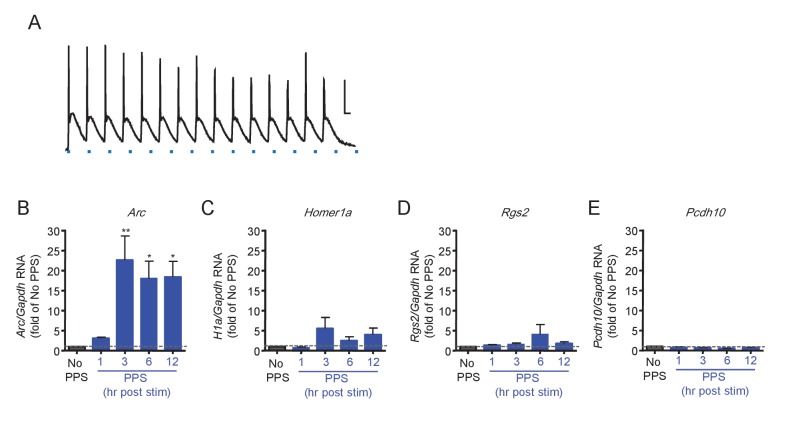
Experience and activity refine cortical circuits through synapse elimination, but little is known about the activity patterns and downstream molecular mechanisms that mediate this process. We used optogenetics to drive individual mouse CA1 hippocampal neurons to fire in theta frequency bursts to understand how cell autonomous, postsynaptic activity leads to synapse elimination. Brief (1 hr) periods of postsynaptic bursting selectively depressed AMPA receptor (R) synaptic transmission, or silenced excitatory synapses, whereas more prolonged (24 hr) firing depressed both AMPAR and NMDAR EPSCs and eliminated spines, indicative of a synapse elimination. Both synapse silencing and elimination required de novo transcription, but only silencing required the activity-dependent transcription factors MEF2A/D. Burst firing induced MEF2A/D-dependent induction of the target gene which contributed to synapse silencing and elimination. This work reveals new and distinct forms of activity and transcription-dependent synapse depression and suggests that these processes can occur independently.
经验和活动通过突触消除来精炼皮质回路,但对于介导这一过程的活动模式和下游分子机制知之甚少。我们使用光遗传学驱动单个小鼠 CA1 海马神经元以θ频率爆发来理解细胞自主的、突触后活动如何导致突触消除。短暂(1 小时)的突触后爆发选择性地抑制 AMPA 受体(R)突触传递,或沉默兴奋性突触,而更长时间(24 小时)的放电则抑制 AMPAR 和 NMDAR EPSC 并消除棘突,表明发生了突触消除。突触沉默和消除都需要新的转录,但只有沉默需要依赖活动的转录因子 MEF2A/D。爆发性放电诱导 MEF2A/D 依赖的靶基因 的诱导,这有助于突触沉默和消除。这项工作揭示了新的和不同形式的活动依赖性和转录依赖性突触抑制,并表明这些过程可以独立发生。