Soler-Oliva María E, Guerrero-Martínez José A, Bachetti Valentina, Reyes José C
Centro Andaluz de Biología Molecular y Medicina Regenerativa-CABIMER, Consejo Superior de Investigaciones Científicas-Universidad de Sevilla-Universidad Pablo de Olavide (CSIC-USE-UPO), Sevilla, Spain.
PLoS Comput Biol. 2017 Sep 13;13(9):e1005708. doi: 10.1371/journal.pcbi.1005708. eCollection 2017 Sep.
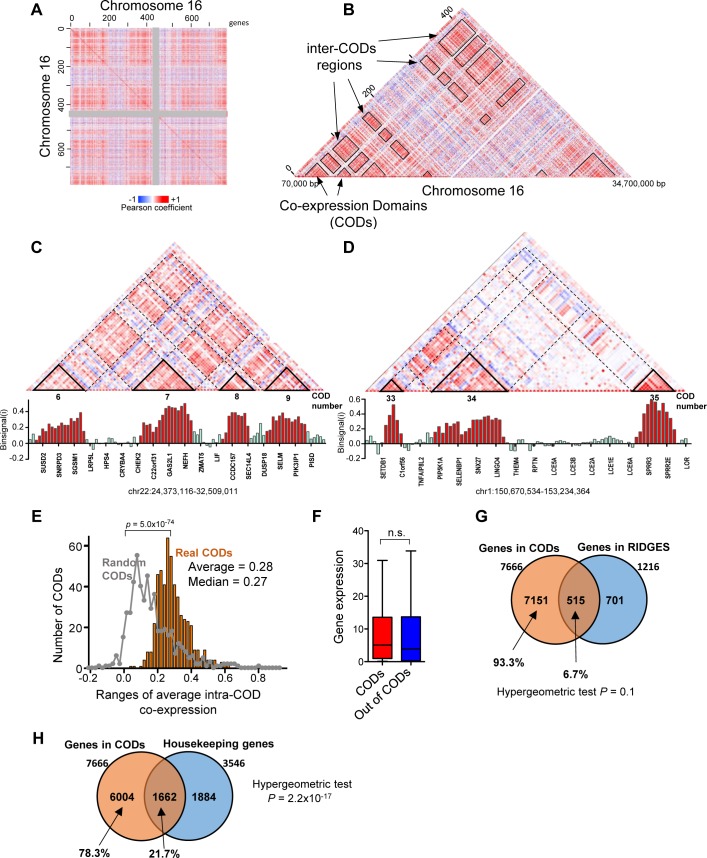
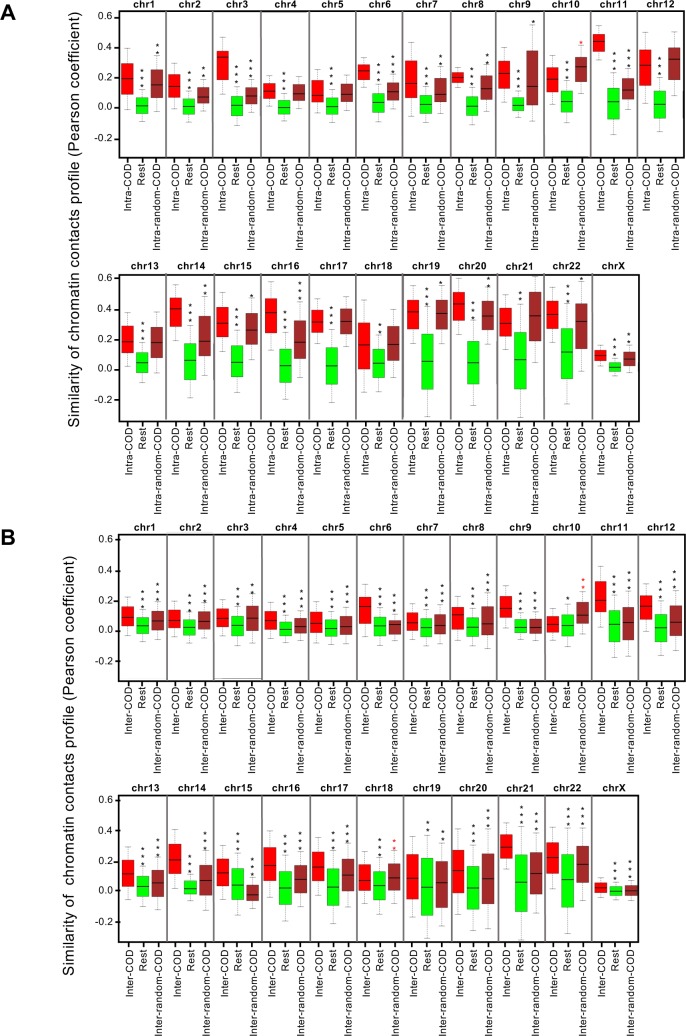
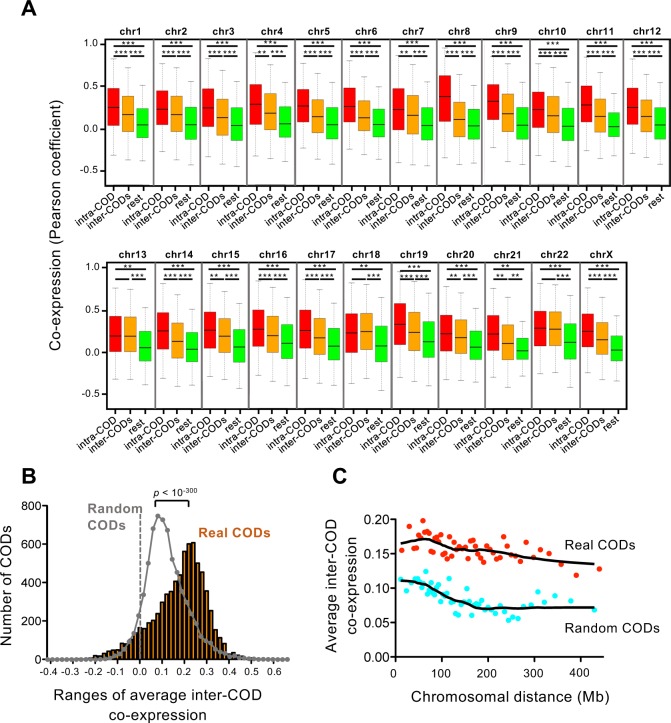
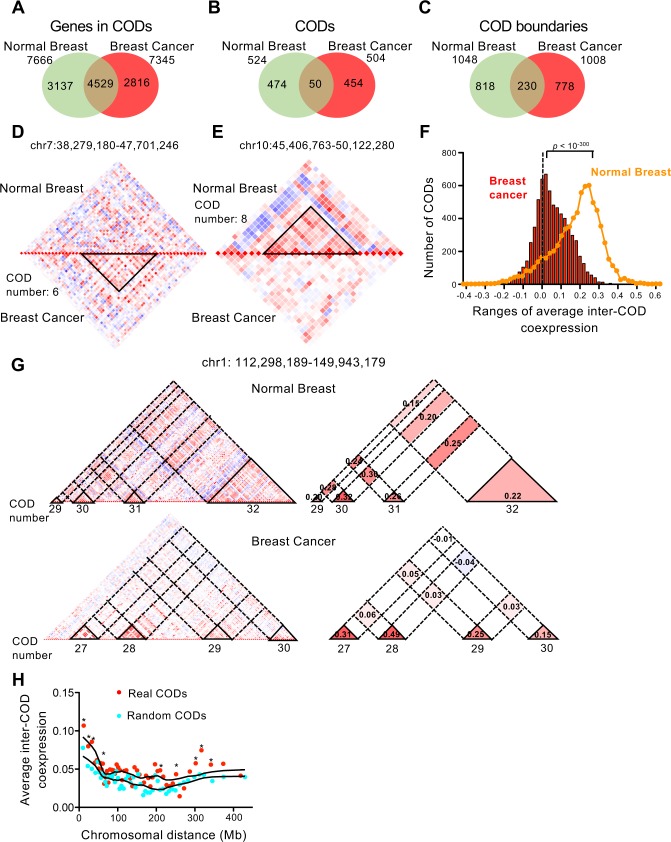
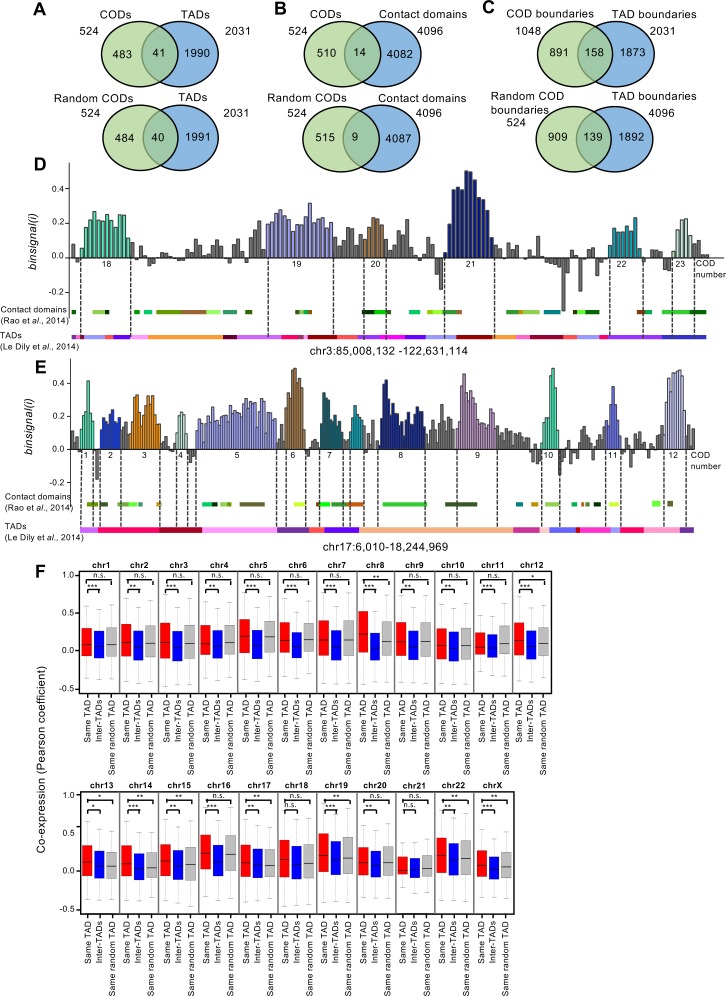
Gene order is not random in eukaryotic chromosomes, and co-regulated genes tend to be clustered. The mechanisms that determine co-regulation of large regions of the genome and its connection with chromatin three-dimensional (3D) organization are still unclear however. Here we have adapted a recently described method for identifying chromatin topologically associating domains (TADs) to identify coexpression domains (which we term "CODs"). Using human normal breast and breast cancer RNA-seq data, we have identified approximately 500 CODs. CODs in the normal and breast cancer genomes share similar characteristics but differ in their gene composition. COD genes have a greater tendency to be coexpressed with genes that reside in other CODs than with non-COD genes. Such inter-COD coexpression is maintained over large chromosomal distances in the normal genome but is partially lost in the cancer genome. Analyzing the relationship between CODs and chromatin 3D organization using Hi-C contact data, we find that CODs do not correspond to TADs. In fact, intra-TAD gene coexpression is the same as random for most chromosomes. However, the contact profile is similar between gene pairs that reside either in the same COD or in coexpressed CODs. These data indicate that co-regulated genes in the genome present similar patterns of contacts irrespective of the frequency of physical chromatin contacts between them.
在真核生物染色体中,基因顺序并非随机,且共同调控的基因往往聚集在一起。然而,决定基因组大片段区域共同调控及其与染色质三维(3D)结构联系的机制仍不清楚。在这里,我们采用了一种最近描述的用于识别染色质拓扑相关结构域(TADs)的方法来识别共表达结构域(我们称之为“COD”)。利用人类正常乳腺和乳腺癌的RNA测序数据,我们识别出了大约500个COD。正常基因组和乳腺癌基因组中的COD具有相似的特征,但基因组成有所不同。与非COD基因相比,COD基因与位于其他COD中的基因共表达的倾向更大。这种跨COD共表达在正常基因组中在大的染色体距离上得以维持,但在癌症基因组中部分丧失。利用Hi-C接触数据分析COD与染色质3D结构之间的关系,我们发现COD与TAD并不对应。事实上,对于大多数染色体而言,TAD内的基因共表达与随机情况相同。然而,位于同一COD或共表达的COD中的基因对之间的接触图谱是相似的。这些数据表明,基因组中共同调控的基因呈现出相似的接触模式,而不论它们之间物理染色质接触的频率如何。