
化妆品中二氧化钛和氧化锌纳米颗粒的分析
Analysis of titanium dioxide and zinc oxide nanoparticles in cosmetics.
作者信息
Lu Pei-Jia, Huang Shou-Chieh, Chen Yu-Pen, Chiueh Lih-Ching, Shih Daniel Yang-Chih
机构信息
Food and Drug Administration, Ministry of Health and Welfare, Taipei, Taiwan.
Food and Drug Administration, Ministry of Health and Welfare, Taipei, Taiwan.
出版信息
J Food Drug Anal. 2015 Sep;23(3):587-594. doi: 10.1016/j.jfda.2015.02.009. Epub 2015 Apr 20.
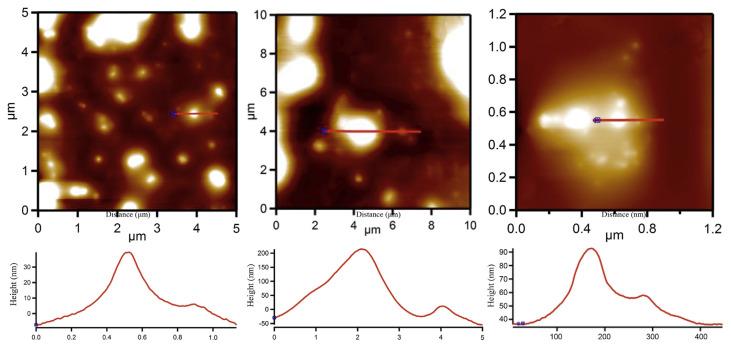
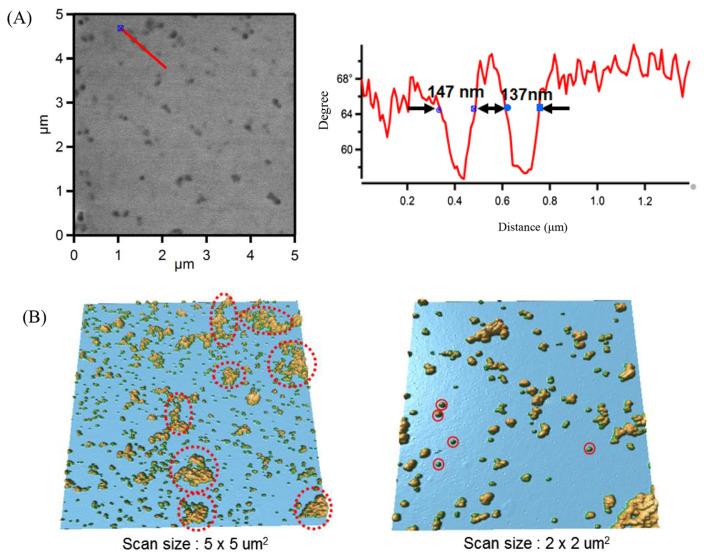
There have been rapid increases in consumer products containing nanomaterials, raising concerns over the impact of nanoparticles (NPs) to humankind and the environment, but little information has been published about mineral filters in commercial sunscreens. It is urgent to develop methods to characterize the nanomaterials in products. Titanium dioxide (TiO) and zinc oxide (ZnO) NPs in unmodified commercial sunscreens were characterized by laser scanning confocal microscopy, atomic force microscopy, X-ray diffraction (XRD), and transmission electron microscopy (TEM). The results showed that laser scanning confocal microscopy evaluated primary particle aggregates and dispersions but could not size NPs because of the diffraction limited resolution of optical microscopy (200 nm). Atomic force microscopy measurements required a pretreatment of the sunscreens or further calibration in phase analysis, but could not provide their elemental composition of commercial sunscreens. While XRD gave particle size and crystal information without a pretreatment of sunscreen, TEM analysis required dilution and dispersion of the commercial sunscreens before imaging. When coupled with energy-dispersive X-ray spectroscopy, TEM afforded particle size information and compositional analysis. XRD characterization of six commercial sunscreens labeled as nanoparticles revealed that three samples contained TiO NPs, among which two listed ZnO and TiO, and displayed average particle sizes of 15 nm, 21 nm, and 78 nm. However, no nanosized ZnO particles were found in any of the samples by XRD. In general, TEM can resolve nanomaterials that exhibit one or more dimensions between 1 nm and 100 nm, allowing the identification of ZnO and TiO NPs in all six sunscreens and ZnO/TiO mixtures in two of the samples. Overall, the combination of XRD and TEM was suitable for analyzing ZnO and TiO NPs in commercial sunscreens.
含纳米材料的消费品数量迅速增加,这引发了人们对纳米颗粒(NPs)对人类和环境影响的担忧,但关于商用防晒霜中矿物过滤器的信息却鲜有报道。开发表征产品中纳米材料的方法迫在眉睫。通过激光扫描共聚焦显微镜、原子力显微镜、X射线衍射(XRD)和透射电子显微镜(TEM)对未改性商用防晒霜中的二氧化钛(TiO)和氧化锌(ZnO)纳米颗粒进行了表征。结果表明,激光扫描共聚焦显微镜可评估初级颗粒聚集体和分散体,但由于光学显微镜的衍射极限分辨率(200 nm),无法对纳米颗粒进行尺寸测量。原子力显微镜测量需要对防晒霜进行预处理或在相分析中进一步校准,但无法提供商用防晒霜的元素组成。虽然XRD无需对防晒霜进行预处理即可提供颗粒尺寸和晶体信息,但TEM分析在成像前需要对商用防晒霜进行稀释和分散。当与能量色散X射线光谱仪结合使用时,TEM可提供颗粒尺寸信息和成分分析。对六种标记为纳米颗粒的商用防晒霜进行XRD表征发现,三个样品含有TiO纳米颗粒,其中两个列出了ZnO和TiO,平均粒径分别为15 nm、21 nm和78 nm。然而,通过XRD在任何样品中均未发现纳米尺寸的ZnO颗粒。一般来说,TEM可以分辨出一维或多维尺寸在1 nm至100 nm之间的纳米材料,从而能够识别所有六种防晒霜中的ZnO和TiO纳米颗粒以及两个样品中的ZnO/TiO混合物。总体而言,XRD和TEM的结合适用于分析商用防晒霜中的ZnO和TiO纳米颗粒。



 Zotero 插件