Department of BioSciences at Rice, Rice University, Houston, TX, USA.
J Antibiot (Tokyo). 2018 Feb;71(2):279-286. doi: 10.1038/ja.2017.108. Epub 2017 Sep 20.
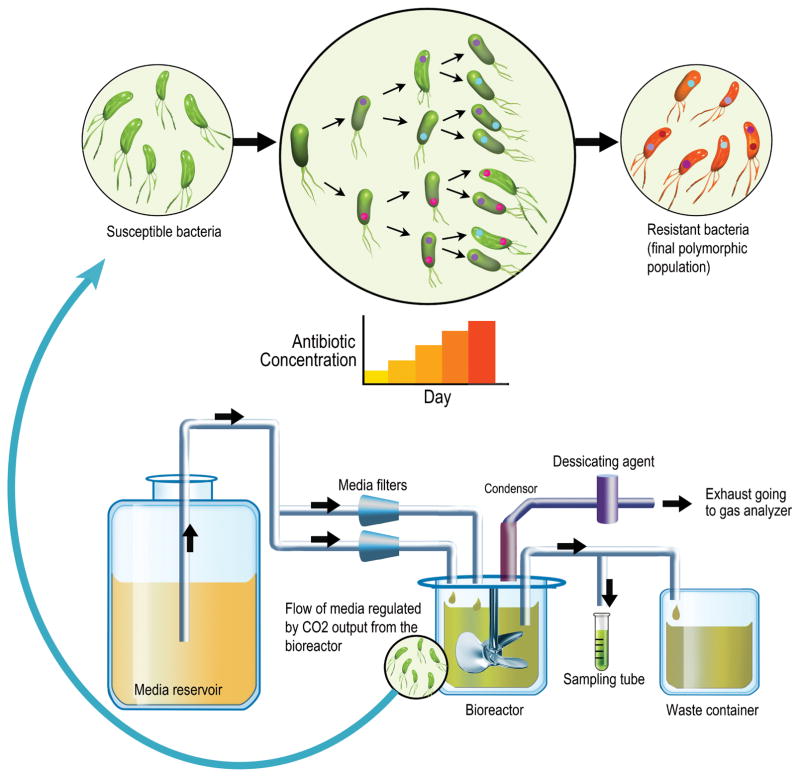
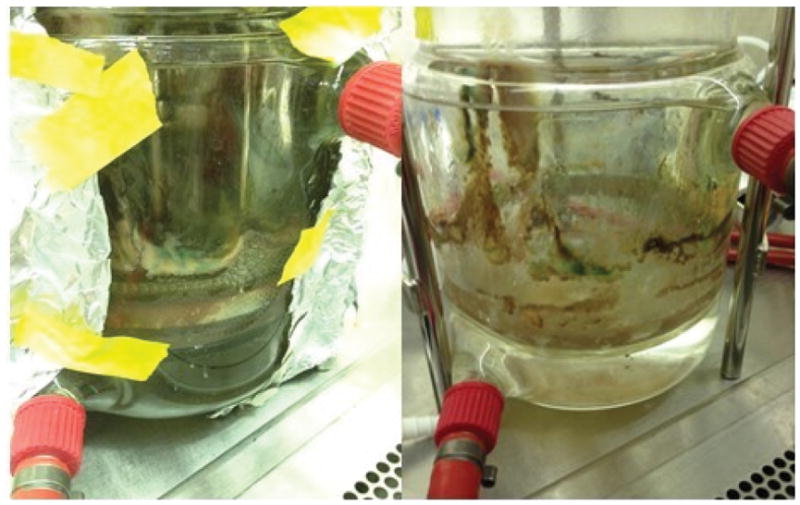
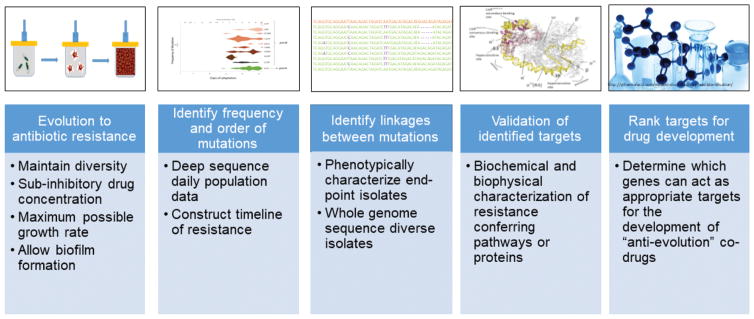
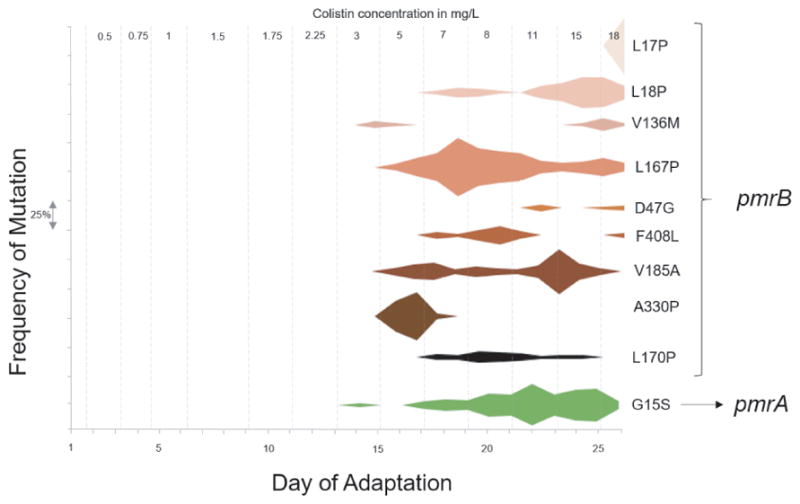
With multi-drug and pan-drug-resistant bacteria becoming increasingly common in hospitals, antibiotic resistance has threatened to return us to a pre-antibiotic era that would completely undermine modern medicine. There is an urgent need to develop new antibiotics and strategies to combat resistance that are substantially different from earlier drug discovery efforts. One such strategy that would complement current and future antibiotics would be a class of co-drugs that target the evolution of resistance and thereby extend the efficacy of specific classes of antibiotics. A critical step in the development of such strategies lies in understanding the critical evolutionary trajectories responsible for resistance and which proteins or biochemical pathways within those trajectories would be good candidates for co-drug discovery. We identify the most important steps in the evolution of resistance for a specific pathogen and antibiotic combination by evolving highly polymorphic populations of pathogens to resistance in a novel bioreactor that favors biofilm development. As the populations evolve to increasing drug concentrations, we use deep sequencing to elucidate the network of genetic changes responsible for resistance and subsequent in vitro biochemistry and often structure determination to determine how the adaptive mutations produce resistance. Importantly, the identification of the molecular steps, their frequency within the populations and their chronology within the evolutionary trajectory toward resistance is critical to assessing their relative importance. In this work, we discuss findings from the evolution of the ESKAPE pathogen, Pseudomonas aeruginosa to the drug of last resort, colistin to illustrate the power of this approach.
随着多药耐药菌和泛耐药菌在医院中越来越普遍,抗生素耐药性已威胁到将我们带回到完全颠覆现代医学的前抗生素时代。迫切需要开发新的抗生素和策略来对抗耐药性,这些策略与早期的药物发现努力有很大的不同。一种可以补充现有和未来抗生素的策略是一类针对耐药性进化的联合药物,从而延长特定类别的抗生素的疗效。开发此类策略的关键步骤之一是了解导致耐药性的关键进化轨迹,以及这些轨迹中的哪些蛋白质或生化途径是联合药物发现的良好候选物。我们通过在有利于生物膜形成的新型生物反应器中使病原体的高度多态性种群进化以产生抗药性,从而确定特定病原体和抗生素组合中耐药性进化的最重要步骤。随着种群进化到更高的药物浓度,我们使用深度测序阐明导致耐药性的遗传变化网络,随后进行体外生物化学和结构测定,以确定适应性突变如何产生耐药性。重要的是,确定分子步骤、它们在种群中的频率以及它们在耐药性进化轨迹中的时间顺序,对于评估它们的相对重要性至关重要。在这项工作中,我们讨论了从 ESKAPE 病原体铜绿假单胞菌对最后手段药物多粘菌素的进化中获得的发现,以说明这种方法的力量。