Hudak Justin, Blume Friederike, Dresler Thomas, Haeussinger Florian B, Renner Tobias J, Fallgatter Andreas J, Gawrilow Caterina, Ehlis Ann-Christine
LEAD Graduate School & Research Network, University of TübingenTübingen, Germany.
Department of Psychiatry and Psychotherapy, University Hospital TübingenTübingen, Germany.
Front Hum Neurosci. 2017 Sep 4;11:425. doi: 10.3389/fnhum.2017.00425. eCollection 2017.
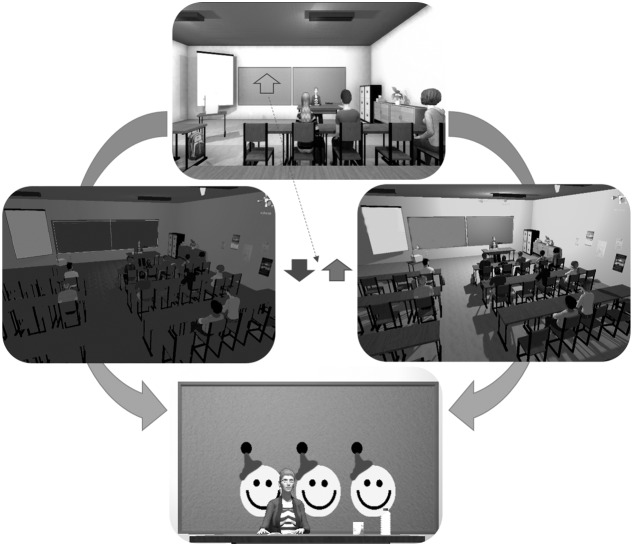
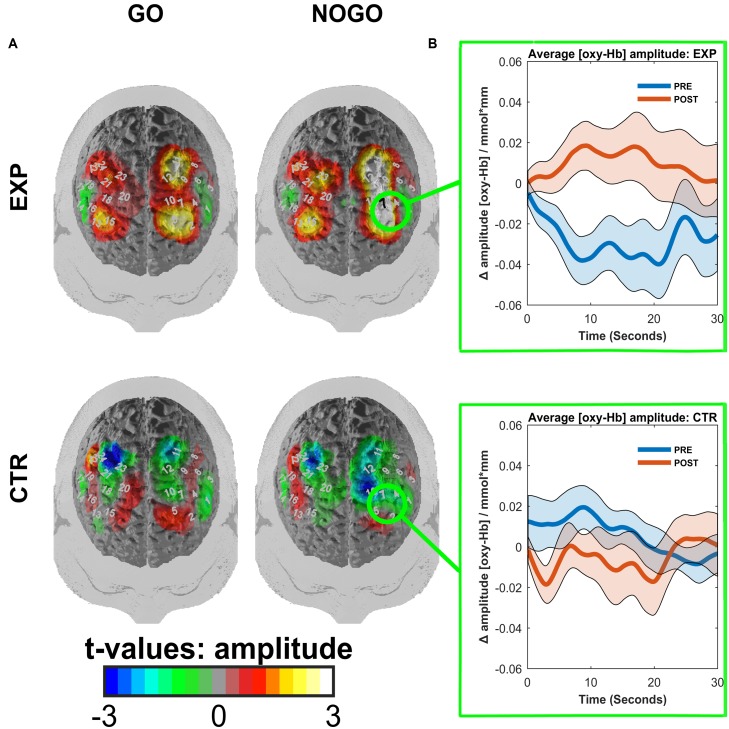
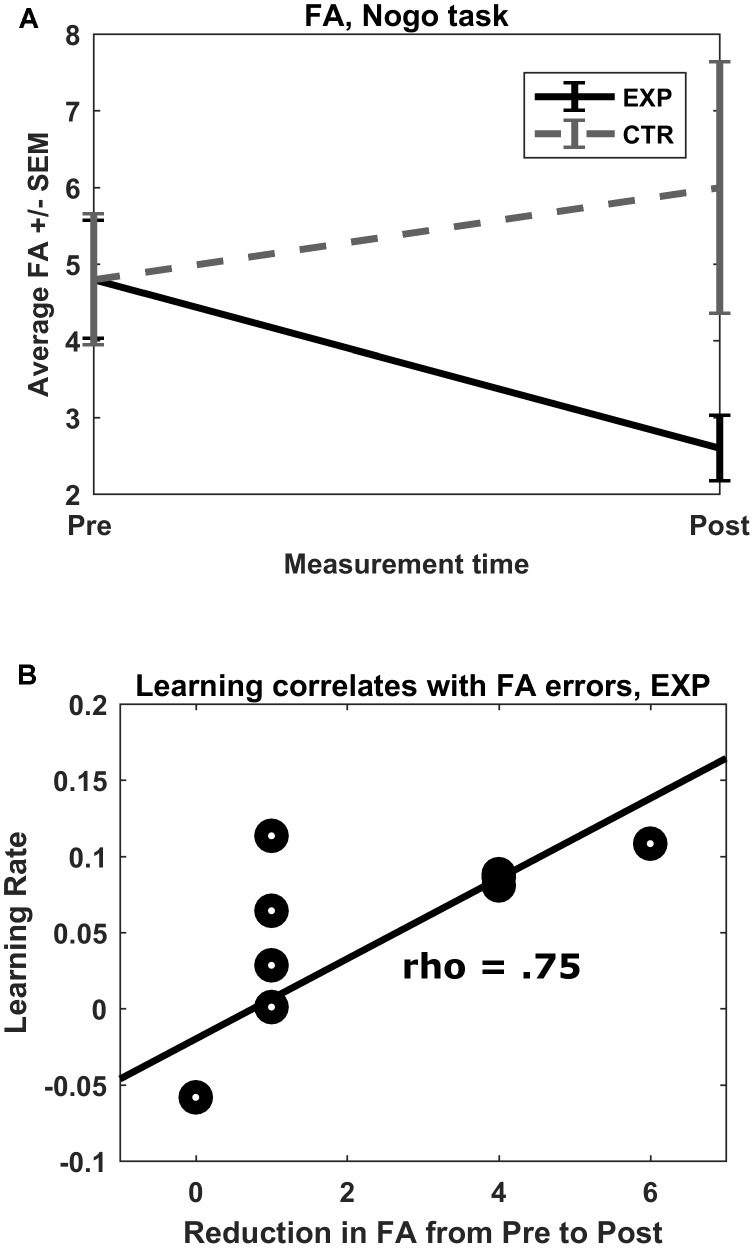
Based on neurofeedback (NF) training as a neurocognitive treatment in attention-deficit/hyperactivity disorder (ADHD), we designed a randomized, controlled functional near-infrared spectroscopy (fNIRS) NF intervention embedded in an immersive virtual reality classroom in which participants learned to control overhead lighting with their dorsolateral prefrontal brain activation. We tested the efficacy of the intervention on healthy adults displaying high impulsivity as a sub-clinical population sharing common features with ADHD. Twenty participants, 10 in an experimental and 10 in a shoulder muscle-based electromyography control group, underwent eight training sessions across 2 weeks. Training was bookended by a pre- and post-test including go/no-go, n-back, and stop-signal tasks (SST). Results indicated a significant reduction in commission errors on the no-go task with a simultaneous increase in prefrontal oxygenated hemoglobin concentration for the experimental group, but not for the control group. Furthermore, the ability of the subjects to gain control over the feedback parameter correlated strongly with the reduction in commission errors for the experimental, but not for the control group, indicating the potential importance of learning feedback control in moderating behavioral outcomes. In addition, participants of the fNIRS group showed a reduction in reaction time variability on the SST. Results indicate a clear effect of our NF intervention in reducing impulsive behavior possibly via a strengthening of frontal lobe functioning. Virtual reality additions to conventional NF may be one way to improve the ecological validity and symptom-relevance of the training situation, hence positively affecting transfer of acquired skills to real life.
基于将神经反馈(NF)训练作为注意力缺陷多动障碍(ADHD)的一种神经认知治疗方法,我们设计了一种随机对照的功能性近红外光谱(fNIRS)NF干预,该干预嵌入在一个沉浸式虚拟现实教室中,参与者通过背外侧前额叶脑激活来学习控制头顶照明。我们测试了该干预对表现出高冲动性的健康成年人的疗效,这些成年人作为与ADHD有共同特征的亚临床人群。20名参与者,10名在实验组,10名在基于肩部肌肉肌电图的对照组,在2周内进行了8次训练课程。训练前后分别进行测试,包括停止信号任务(SST)、Go/No-Go任务和n-back任务。结果表明,实验组在停止信号任务中的错误率显著降低,同时前额叶氧合血红蛋白浓度增加,而对照组则没有。此外,受试者对反馈参数的控制能力与实验组错误率的降低密切相关,而对照组则不然,这表明学习反馈控制在调节行为结果方面具有潜在的重要性。此外,fNIRS组的参与者在停止信号任务中的反应时间变异性降低。结果表明,我们的NF干预通过加强额叶功能,在减少冲动行为方面有明显效果。在传统NF中加入虚拟现实可能是提高训练情境的生态效度和症状相关性的一种方法,从而对将所学技能应用于现实生活产生积极影响。