Craft Jonathan D, Satyal Prabodh, Setzer William N
Department of Chemistry, University of Alabama in Huntsville, Huntsville, AL 35899, USA.
Medicines (Basel). 2017 Jun 29;4(3):47. doi: 10.3390/medicines4030047.
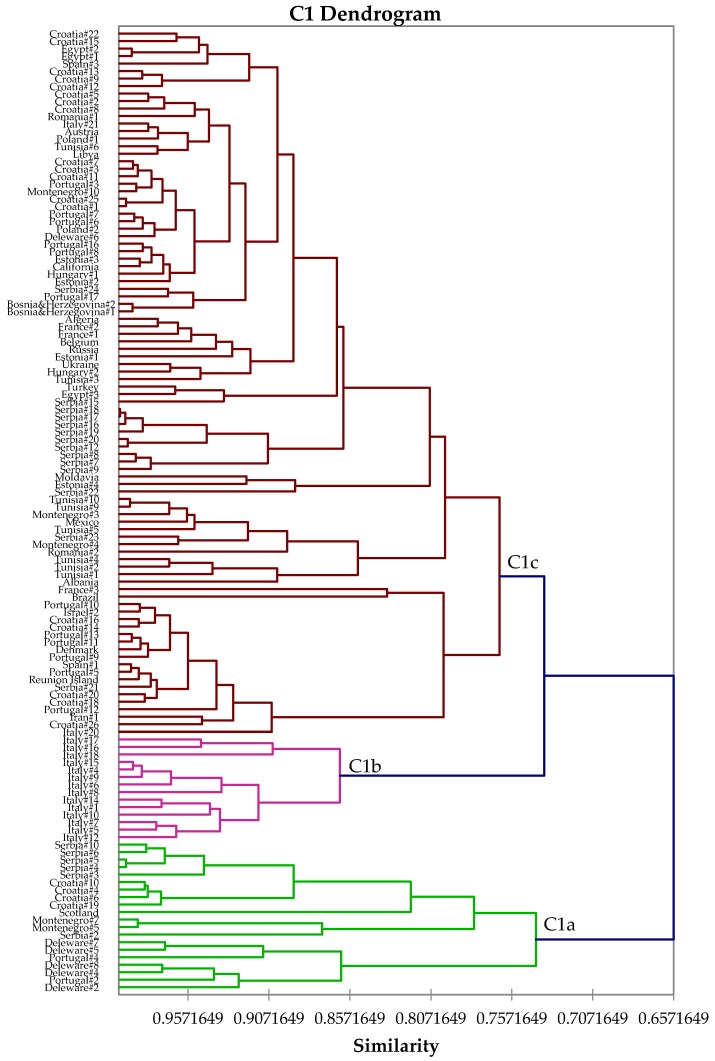
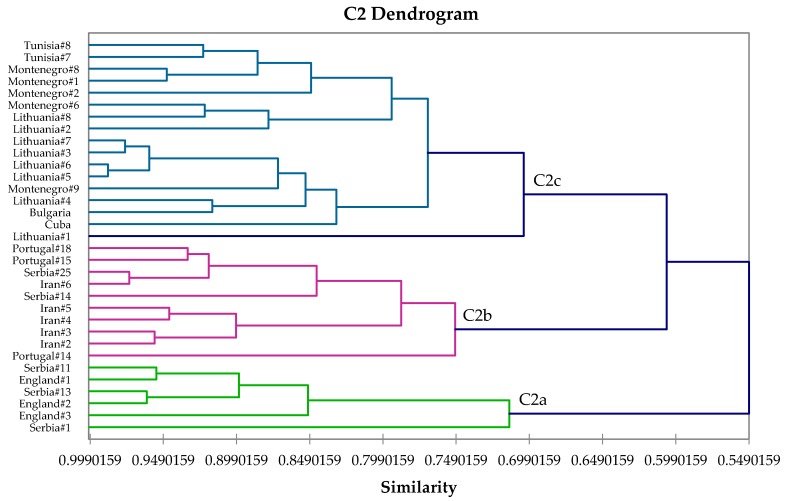
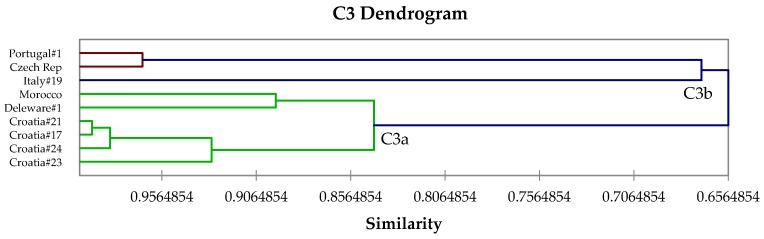
Common sage () is a popular culinary and medicinal herb. A literature survey has revealed that sage oils can vary widely in their chemical compositions. The purpose of this study was to examine sage essential oil from different sources/origins and to define the possible chemotypes of sage oil. Three different samples of sage leaf essential oil have been obtained and analyzed by GC-MS and GC-FID. A hierarchical cluster analysis was carried out on 185 sage oil compositions reported in the literature as well as the three samples in this study. The major components of the three sage oils were the oxygenated monoterpenoids α-thujone (17.2-27.4%), 1,8-cineole (11.9-26.9%), and camphor (12.8-21.4%). The cluster analysis revealed five major chemotypes of sage oil, with the most common being a α-thujone > camphor > 1,8-cineole chemotype, of which the three samples in this study belong. The other chemotypes are an α-humulene-rich chemotype, a β-thujone-rich chemotype, a 1,8-cineole/camphor chemotype, and a sclareol/α-thujone chemotype. Most sage oils belonged to the "typical", α-thujone > camphor > 1,8-cineole, chemotype, but the essential oil compositions do vary widely and may have a profound effect on flavor and fragrance profiles as well as biological activities. There are currently no studies correlating sage oil composition with fragrance descriptions or with biological activities.
普通鼠尾草()是一种广受欢迎的烹饪和药用草本植物。文献调查显示,鼠尾草油的化学成分差异很大。本研究的目的是检测来自不同来源/产地的鼠尾草精油,并确定鼠尾草油可能的化学类型。已获取了三种不同的鼠尾草叶精油样品,并通过气相色谱 - 质谱联用仪(GC - MS)和气相色谱 - 氢火焰离子化检测器(GC - FID)进行分析。对文献中报道的185种鼠尾草油成分以及本研究中的三个样品进行了层次聚类分析。三种鼠尾草油的主要成分是氧化单萜类化合物α - 侧柏酮(17.2 - 27.4%)、1,8 - 桉叶素(11.9 - 26.9%)和樟脑(12.8 - 21.4%)。聚类分析揭示了鼠尾草油的五种主要化学类型,最常见的是α - 侧柏酮>樟脑>1,8 - 桉叶素化学类型,本研究中的三个样品属于该类型。其他化学类型包括富含α - 葎草烯的化学类型、富含β - 侧柏酮的化学类型、1,8 - 桉叶素/樟脑化学类型和硬尾醇/α - 侧柏酮化学类型。大多数鼠尾草油属于“典型的”α - 侧柏酮>樟脑>1,8 - 桉叶素化学类型,但精油成分确实差异很大,可能对风味和香气特征以及生物活性产生深远影响。目前尚无研究将鼠尾草油成分与香气描述或生物活性相关联。