Fraunhofer Portugal AICOS, Rua Alfredo Allen 455/461, 4200-135 Porto, Portugal.
Instituto Nacional de Saúde Dr. Ricardo Jorge, Rua Alexandre Herculano 321, 4000-055 Porto, Portugal.
Sensors (Basel). 2017 Sep 21;17(10):2167. doi: 10.3390/s17102167.
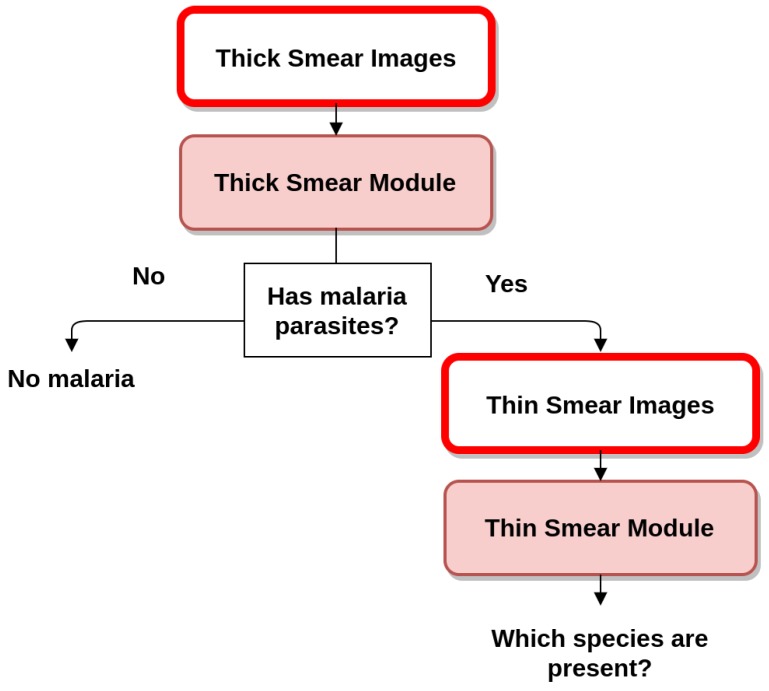
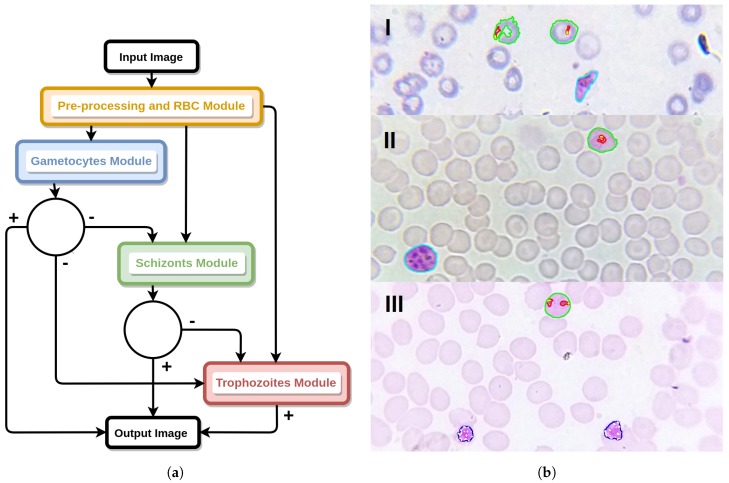
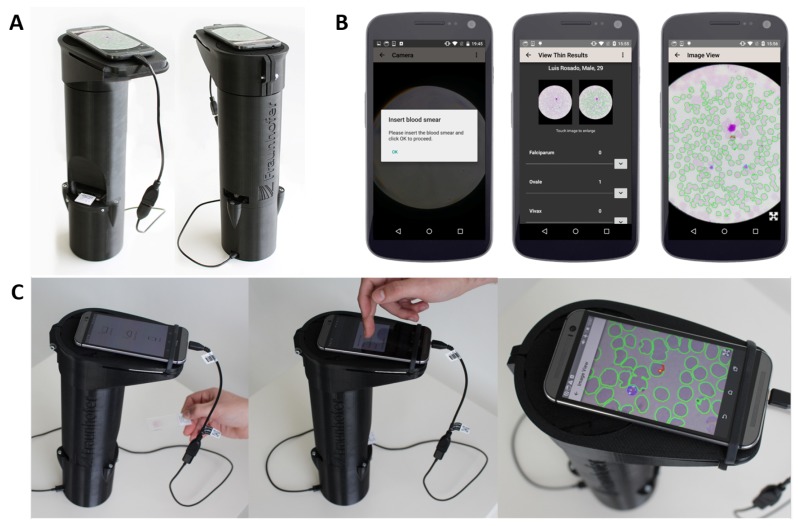
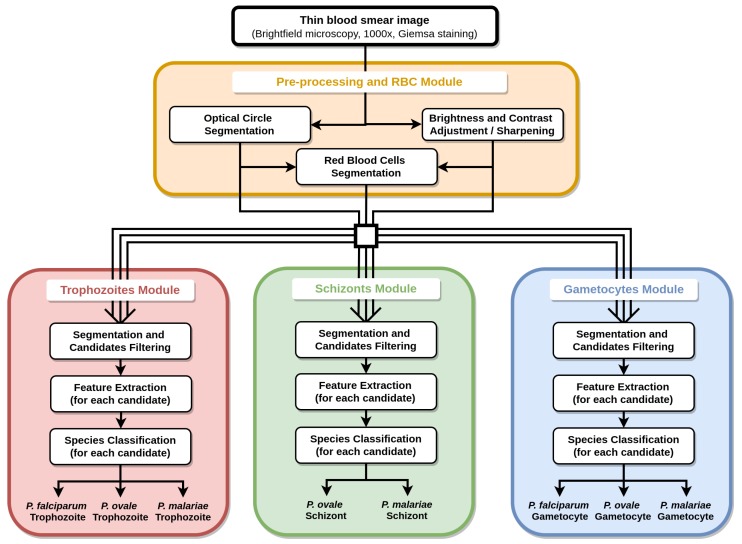
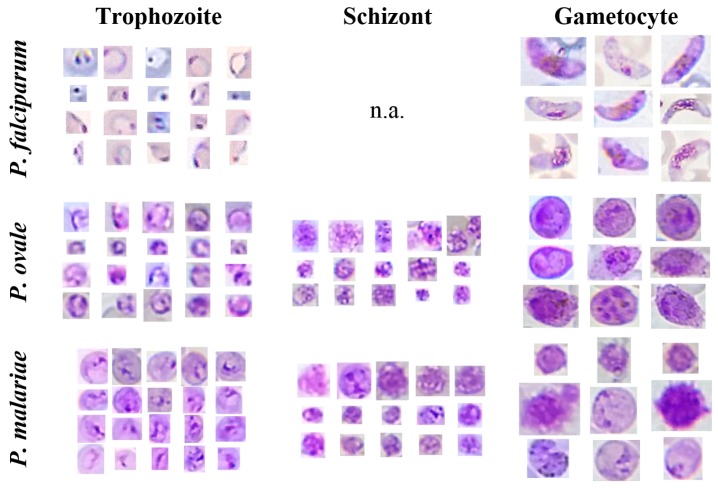
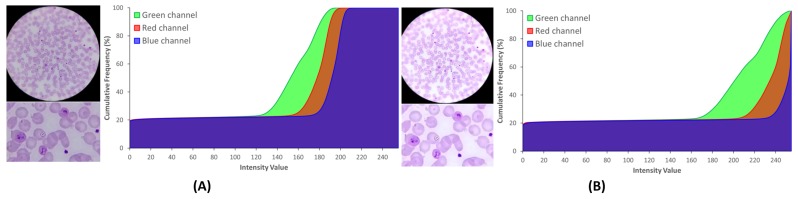
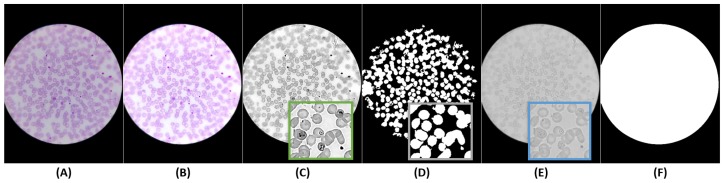
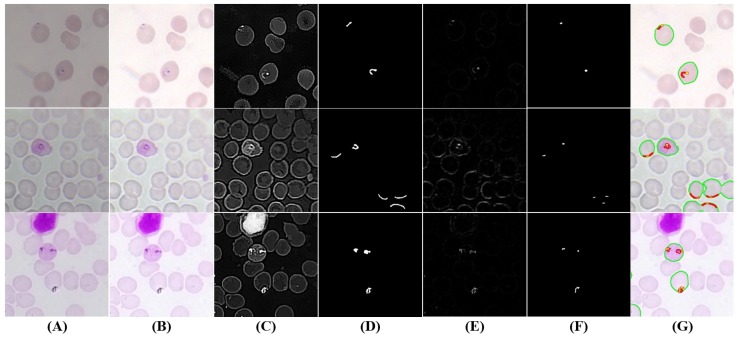
Microscopy examination has been the pillar of malaria diagnosis, being the recommended procedure when its quality can be maintained. However, the need for trained personnel and adequate equipment limits its availability and accessibility in malaria-endemic areas. Rapid, accurate, accessible diagnostic tools are increasingly required, as malaria control programs extend parasite-based diagnosis and the prevalence decreases. This paper presents an image processing and analysis methodology using supervised classification to assess the presence of malaria parasites and determine the species and life cycle stage in Giemsa-stained thin blood smears. The main differentiation factor is the usage of microscopic images exclusively acquired with low cost and accessible tools such as smartphones, a dataset of 566 images manually annotated by an experienced parasilogist being used. Eight different species-stage combinations were considered in this work, with an automatic detection performance ranging from 73.9% to 96.2% in terms of sensitivity and from 92.6% to 99.3% in terms of specificity. These promising results attest to the potential of using this approach as a valid alternative to conventional microscopy examination, with comparable detection performances and acceptable computational times.
显微镜检查一直是疟疾诊断的支柱,当能够保证其质量时,它是推荐的程序。然而,由于需要经过培训的人员和足够的设备,其在疟疾流行地区的可用性和可及性受到限制。随着疟疾控制项目扩展寄生虫诊断,并且患病率下降,快速、准确、易于获取的诊断工具越来越受到需求。本文提出了一种使用监督分类的图像处理和分析方法,用于评估在吉姆萨染色的薄血涂片上是否存在疟原虫,并确定其种类和生活史阶段。主要的区分因素是仅使用低成本和易于获取的工具(如智能手机)获取的显微镜图像,使用了一个由经验丰富的寄生虫学家手动注释的 566 张图像数据集。在这项工作中考虑了八种不同的种-期组合,在灵敏度方面,自动检测性能的范围为 73.9%至 96.2%,在特异性方面,自动检测性能的范围为 92.6%至 99.3%。这些有希望的结果证明了使用这种方法作为传统显微镜检查的有效替代方法的潜力,其检测性能相当,计算时间也可接受。