Woo JungReem, Sharma Shivani, Gimzewski James
Department of Chemistry and Biochemistry, University of California, Los Angeles, USA.
California NanoSystems Institute, University of California, Los Angeles, California, USA.
J Circ Biomark. 2016 Jan 1;5:11. doi: 10.5772/64148. eCollection 2016 Jan-Dec.
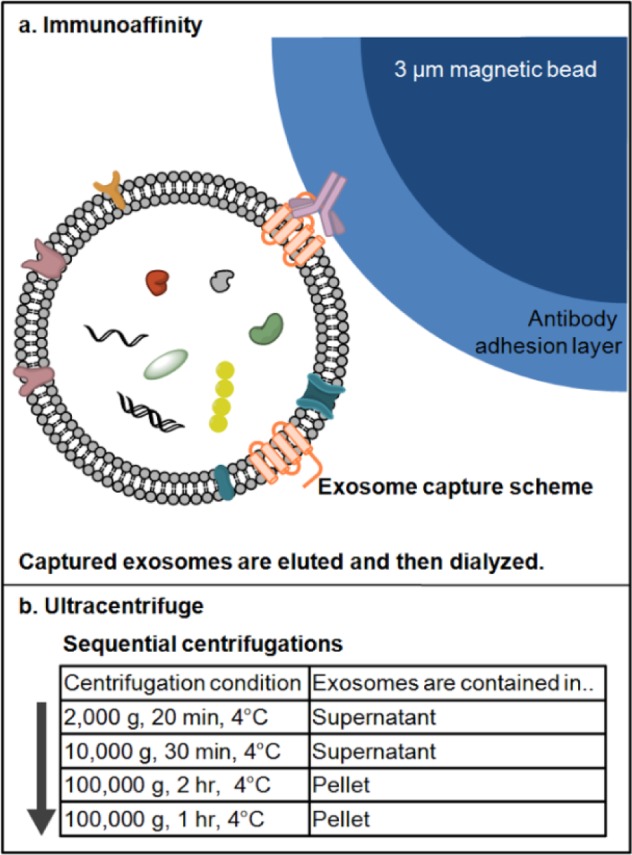
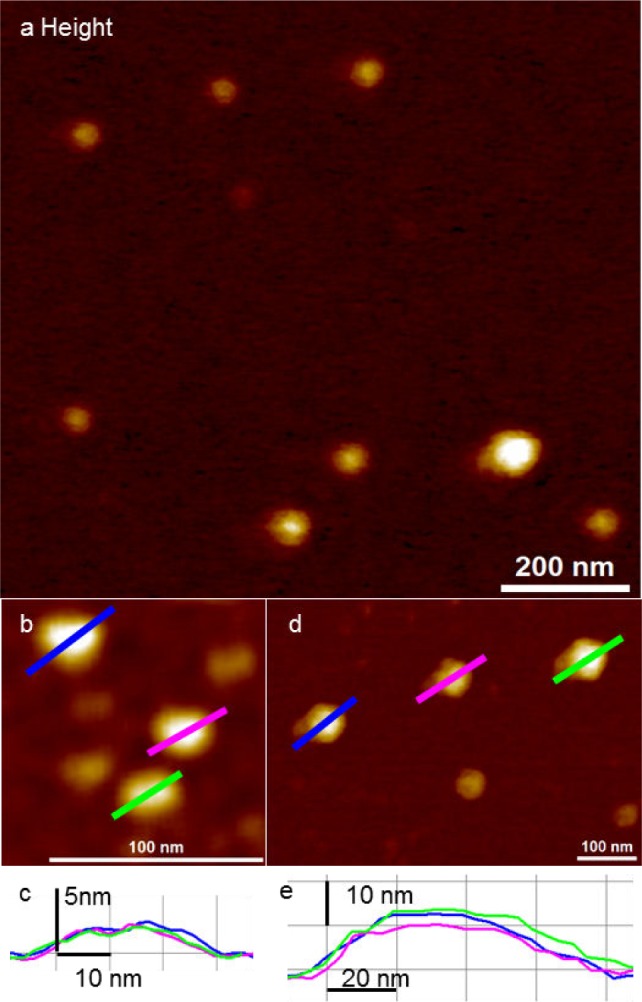
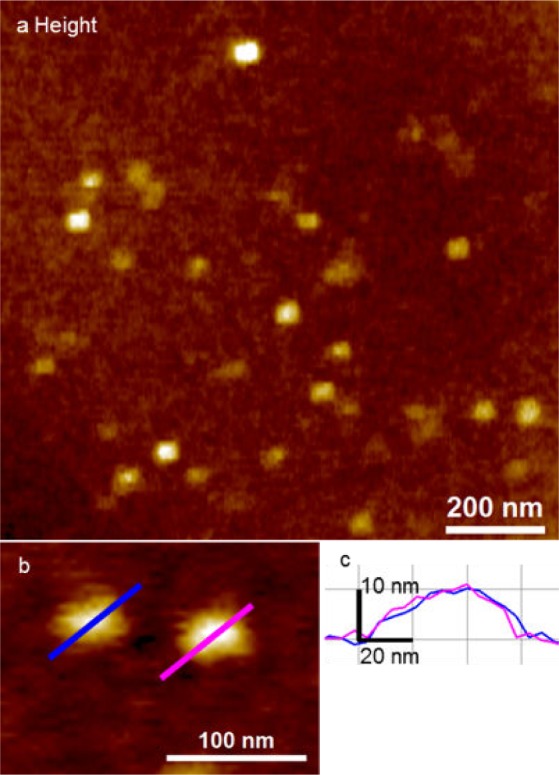
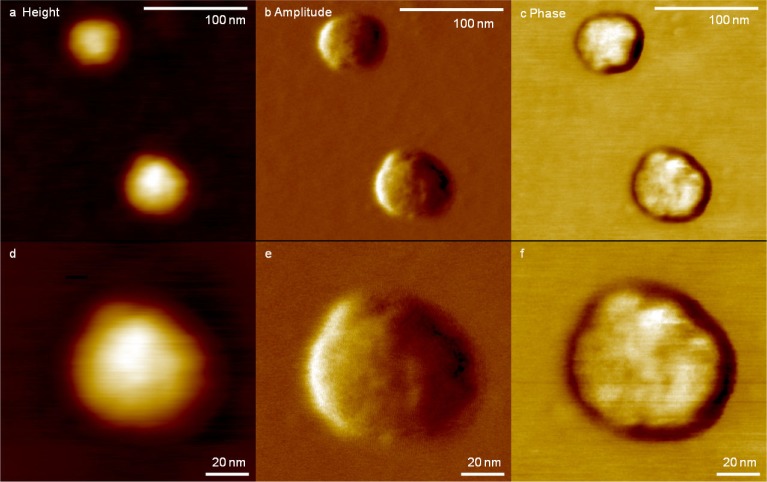
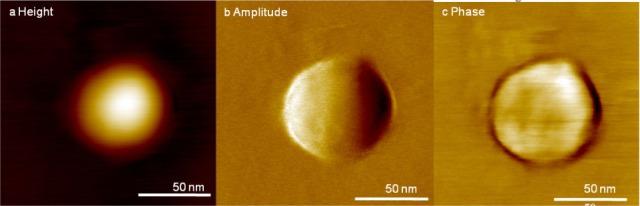
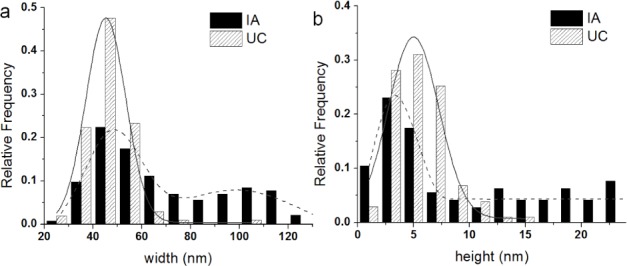
Exosomes are ∼100 nanometre diameter vesicles secreted by mammalian cells. These emerging disease biomarkers carry nucleic acids, proteins and lipids specific to the parental cells that secrete them. Exosomes are typically isolated in bulk by ultracentrifugation, filtration or immunoaffinity precipitation for downstream proteomic, genomic, or lipidomic analysis. However, the structural properties and heterogeneity of isolated exosomes at the single vesicle level are not well characterized due to their small size. In this paper, by using high-resolution atomic force microscope imaging, we show the nanoscale morphology and structural heterogeneity in exosomes derived from U87 cells. Quantitative assessment of single exosomes reveals nanoscale variations in morphology, surface roughness and counts isolated by ultracentrifugation (UC) and immunoaffinity (IA) purification. Both methods produce intact globular, 30-120 nm sized vesicles when imaged under fluid and in air. However, IA exosomes had higher surface roughness and bimodal size population compared to UC exosomes. The study highlights the differences in size and surface topography of exosomes purified from a single cell type using different isolation methods.
外泌体是由哺乳动物细胞分泌的直径约100纳米的囊泡。这些新兴的疾病生物标志物携带分泌它们的亲代细胞特有的核酸、蛋白质和脂质。外泌体通常通过超速离心、过滤或免疫亲和沉淀大量分离,用于下游的蛋白质组学、基因组学或脂质组学分析。然而,由于其尺寸小,在单囊泡水平上分离的外泌体的结构特性和异质性尚未得到很好的表征。在本文中,通过使用高分辨率原子力显微镜成像,我们展示了源自U87细胞的外泌体的纳米级形态和结构异质性。对单个外泌体的定量评估揭示了通过超速离心(UC)和免疫亲和(IA)纯化分离的外泌体在形态、表面粗糙度和数量上的纳米级变化。当在液体中和空气中成像时,这两种方法都产生完整的球形、大小为30 - 120纳米的囊泡。然而,与UC外泌体相比,IA外泌体具有更高的表面粗糙度和双峰大小分布。该研究突出了使用不同分离方法从单一细胞类型纯化的外泌体在大小和表面形貌上的差异。