Yuan Ying, Zhang Hua, Liu Xuexia, Lu Zhongming, Li Guojun, Lu Meixia, Tao Xiaofeng
Department of Radiology, Shanghai Ninth People's Hospital, Shanghai Jiao Tong University School of Medicine, Shanghai, China.
Department of Head and Neck Surgery, The University of Texas M. D. Anderson Cancer Center, Houston, TX, USA.
Oncotarget. 2017 Apr 6;8(35):58386-58393. doi: 10.18632/oncotarget.16878. eCollection 2017 Aug 29.
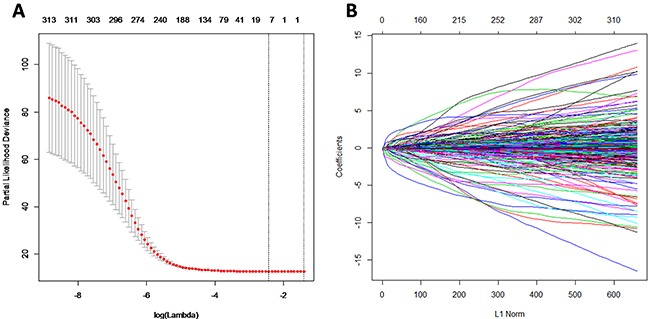
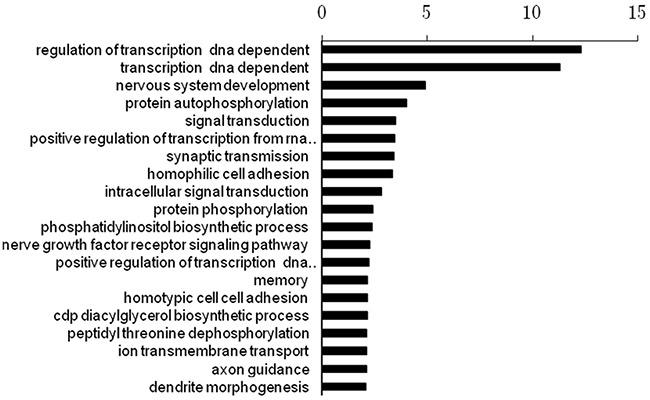
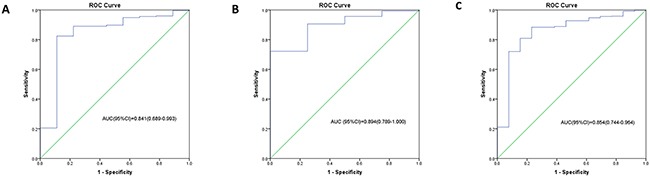
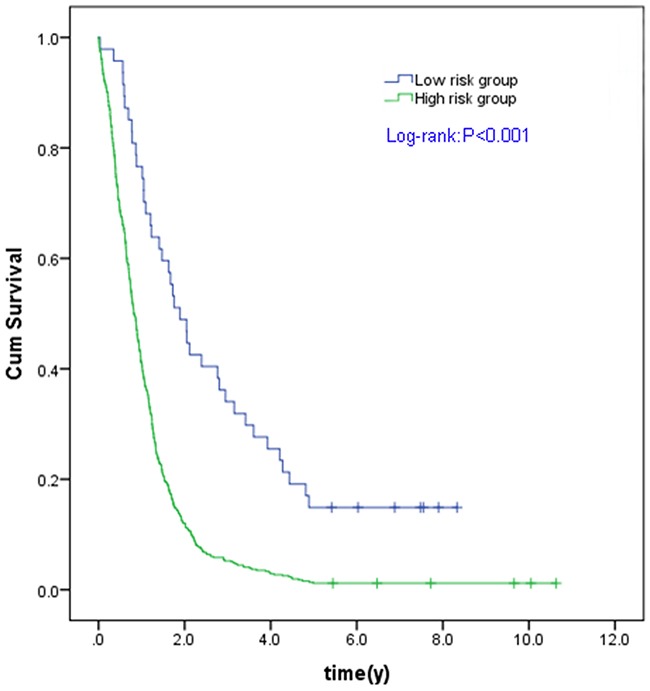
MicroRNAs (miRNAs) play major roles in various biological processes and have been implicated in the pathogenesis and malignant progression of glioblastoma multiforme (GBM). The aim of this study was to assess the predictive values of miRNAs for overall survival (OS) of patients with GBM. MiRNA expression profiles and clinical information of 563 GBM patients were obtained from the Cancer Genome Atlas. The most significantly altered miRNAs were identified and miRNA expression profiles were performed, through principal component analysis, the least absolute shrinkage and selection operator method. The survival analysis was performed using the Cox regression models. Additionally, receiver operating characteristic (ROC) analysis was used to assess the performance of survival prediction. We used the bioinformatics tools to establish the miRNA signature for biological relevance assessment. A linear prognostic model of three miRNAs was developed and the patients were divided into high risk and low risk groups based this model. The area under the ROC curve (AUC) for the three miRNA signature predicting 5-year survival was 0.894 (95%CI, 0.789-1.000) in the testing set and0.841 (95%CI, 0.689-0.993) in all GBM patients. High risk patients had significantly shorter OS than patients with low risk (< 0.001). The results from this study support a three miRNA signature for outcome prediction of GBM. These results provided a new prospect for prognostic biomarker of GBM.
微小RNA(miRNA)在多种生物学过程中发挥着重要作用,并与多形性胶质母细胞瘤(GBM)的发病机制和恶性进展有关。本研究的目的是评估miRNA对GBM患者总生存期(OS)的预测价值。从癌症基因组图谱中获取了563例GBM患者的miRNA表达谱和临床信息。通过主成分分析、最小绝对收缩和选择算子方法,鉴定出变化最显著的miRNA并进行miRNA表达谱分析。使用Cox回归模型进行生存分析。此外,采用受试者工作特征(ROC)分析来评估生存预测的性能。我们使用生物信息学工具建立miRNA特征以进行生物学相关性评估。开发了一种由三个miRNA组成的线性预后模型,并根据该模型将患者分为高风险组和低风险组。在测试集中,三个miRNA特征预测5年生存率的ROC曲线下面积(AUC)为0.894(95%CI,0.789 - 1.000),在所有GBM患者中为0.841(95%CI,0.689 - 0.993)。高风险患者的OS明显短于低风险患者(<0.001)。本研究结果支持使用三个miRNA特征来预测GBM的预后。这些结果为GBM的预后生物标志物提供了新的前景。