Department of Medical Biomaterials Engineering, Kangwon National University, Chuncheon, Gangwon, 24341, Republic of Korea.
Department of Food Science and Nutrition, Zhejiang Key Laboratory for Agro-Food Processing, Zhejiang University, Hangzhou, 310058, Zhejiang, China.
Ann Clin Microbiol Antimicrob. 2017 Sep 22;16(1):66. doi: 10.1186/s12941-017-0237-6.
The emergence of antibiotic-resistant bacteria can cause serious clinical and public health problems. This study describes the possibility of using bacteriophages as an alternative agent to control multidrug-resistant Salmonella Typhimurium.
The potential lytic bacteriophages (P22-B1, P22, PBST10, PBST13, PBST32, and PBST 35) were characterized by morphological property, heat and pH stability, optimum multiplicity of infection (MOI), and lytic activity against S. Typhimurium KCCM 40253, S. Typhimurium ATCC 19585, ciprofloxacin-induced antibiotic-resistant S. Typhimurium ATCC 19585, and S. Typhimurium CCARM 8009.
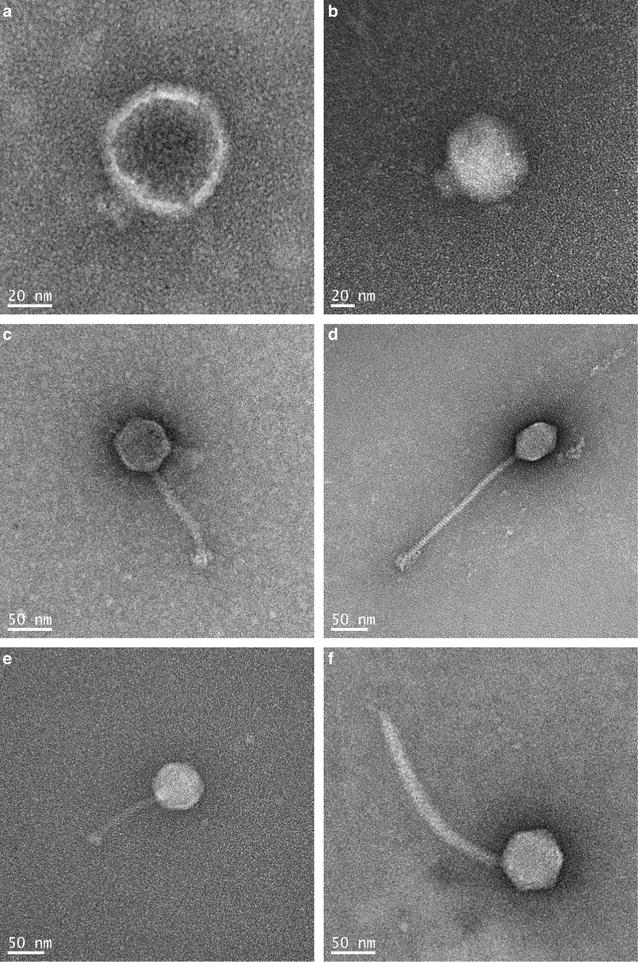
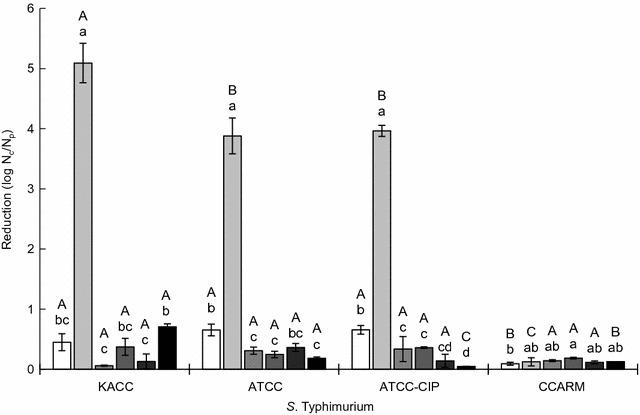
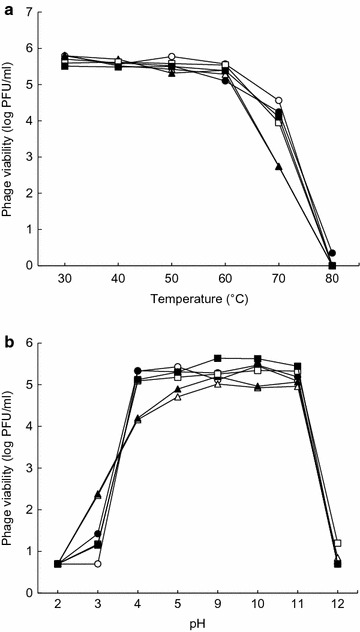
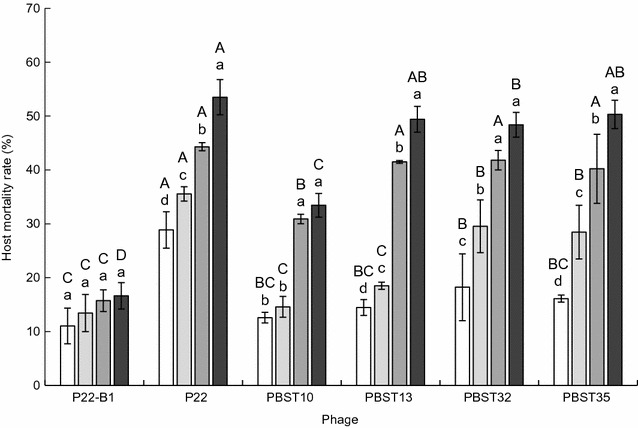
P22-B1 and P22 belong to Podoviridae family and PBST10, PBST13, PBST32, and PBST 35 show a typical structure with polyhedral head and long tail, belonging to Siphoviridae family. Salmonella bacteriophages were highly stable at the temperatures (< 60 °C) and pHs (5.0-11.0). The reduction rates of host cells were increased at the MOI-dependent manner, showing the highest reduction rate at MOI of 10. The host cells were most effectively reduced by P22, while P22-B1 showed the least lytic activity. The ciprofloxacin-induced antibiotic-resistant S. Typhimurium ATCC 19585, and clinically isolated antibiotic-resistant S. Typhimurium CCARM 8009 were resistant to ciprofloxacin, levofloxacin, norfloxacin, and tetracycline. P22 showed the highest lytic activity against S. Typhimurium KCCM 40253 (> 5 log reduction), followed by S. Typhimurium ATCC 19585 (4 log reduction) and ciprofloxacin-induced antibiotic-resistant S. Typhimurium ATCC 19585 (4 log reduction).
The results would provide vital insights into the application of lytic bacteriophages as an alternative therapeutics for the control of multidrug-resistant pathogens.
抗生素耐药菌的出现可能会引发严重的临床和公共卫生问题。本研究描述了使用噬菌体作为控制多重耐药鼠伤寒沙门氏菌的替代药物的可能性。
通过形态学特性、热稳定性和 pH 值稳定性、最佳感染复数 (MOI) 以及对鼠伤寒沙门氏菌 KCCM 40253、鼠伤寒沙门氏菌 ATCC 19585、环丙沙星诱导的抗生素耐药鼠伤寒沙门氏菌 ATCC 19585 和鼠伤寒沙门氏菌 CCARM 8009 的裂解活性来对潜在的裂解噬菌体 (P22-B1、P22、PBST10、PBST13、PBST32 和 PBST 35) 进行特征描述。
P22-B1 和 P22 属于肌尾噬菌体科,而 PBST10、PBST13、PBST32 和 PBST 35 则呈现出典型的多面体头部和长尾巴结构,属于长尾噬菌体科。噬菌体在 (<60°C) 温度和 (5.0-11.0) pH 值下具有高度稳定性。在依赖 MOI 的方式下,宿主细胞的减少率增加,在 MOI 为 10 时表现出最高的减少率。P22 最有效地减少宿主细胞,而 P22-B1 的裂解活性最低。环丙沙星诱导的抗生素耐药鼠伤寒沙门氏菌 ATCC 19585 和临床分离的抗生素耐药鼠伤寒沙门氏菌 CCARM 8009 对环丙沙星、左氧氟沙星、诺氟沙星和四环素均具有耐药性。P22 对鼠伤寒沙门氏菌 KCCM 40253 的裂解活性最高 (>5 log 减少),其次是鼠伤寒沙门氏菌 ATCC 19585(4 log 减少)和环丙沙星诱导的抗生素耐药鼠伤寒沙门氏菌 ATCC 19585(4 log 减少)。
研究结果将为噬菌体作为控制多重耐药病原体的替代治疗方法的应用提供重要的见解。