Al-Hindi Rashad R, Alharbi Mona G, Alotibi Ibrahim, Azhari Sheren A, Algothmi Khloud M, Esmael Ahmed
Department of Biological Sciences, Faculty of Science, King Abdulaziz University, Jeddah, Saudi Arabia.
Health Information Technology Department, Applied College, King Abdulaziz University, Jeddah, Saudi Arabia.
Front Microbiol. 2023 Apr 5;14:1135806. doi: 10.3389/fmicb.2023.1135806. eCollection 2023.
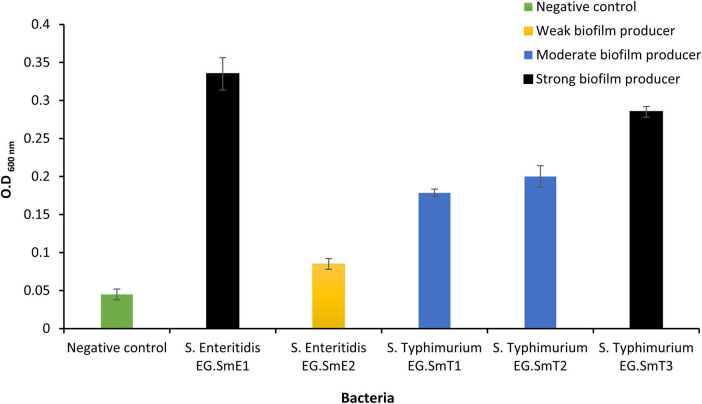
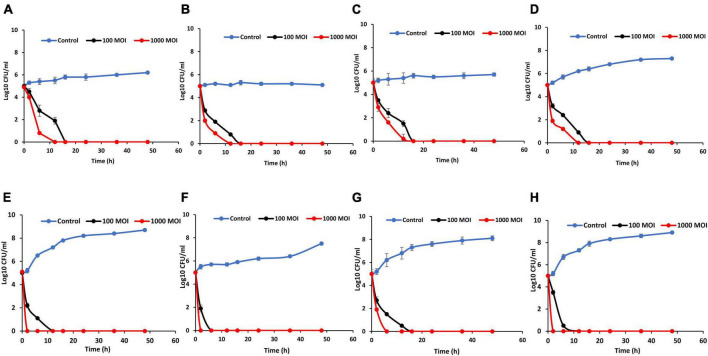
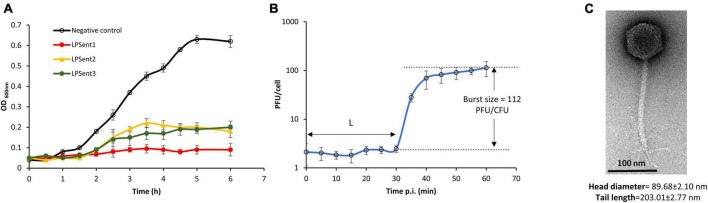
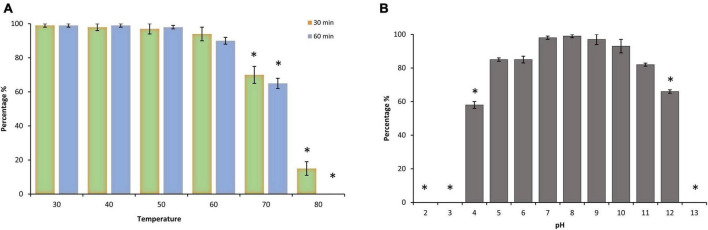
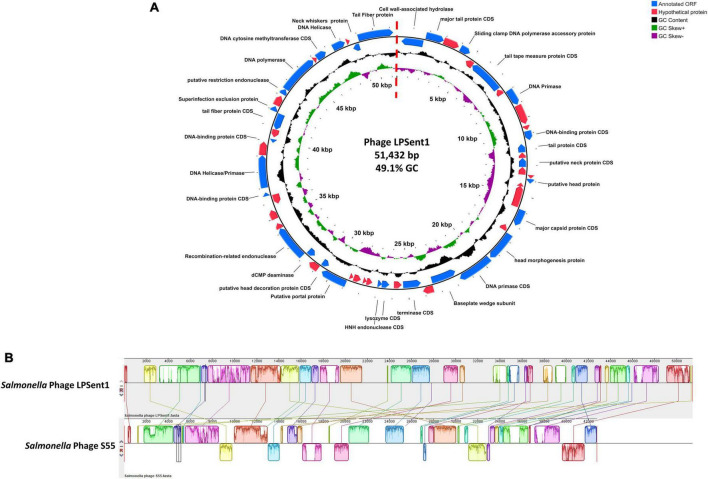
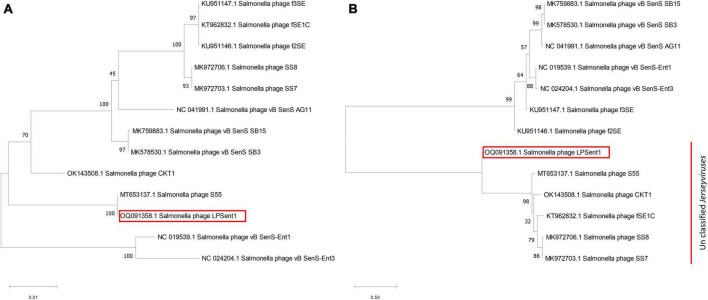
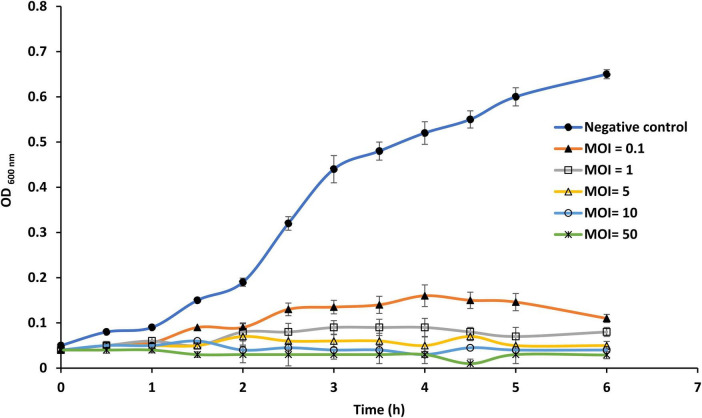
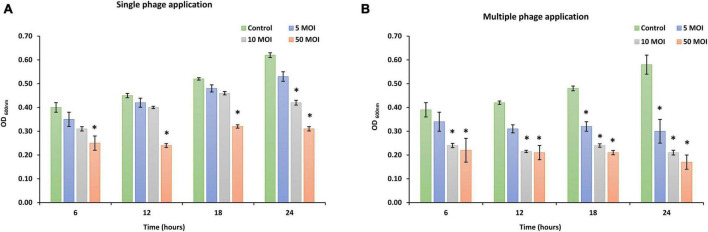
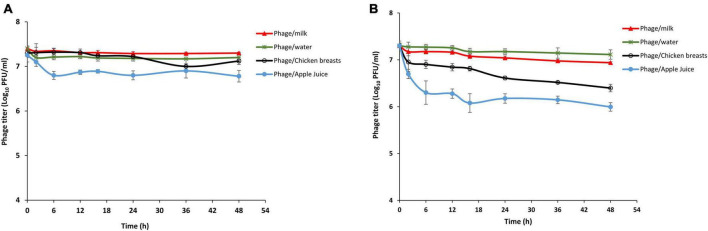
Non-typhoidal is the tremendously predominant source of acquired foodborne infection in humans, causing salmonellosis which is a global threat to the healthcare system. This threat is even worse when it is combined with the incidence of multidrug-resistant strains. Bacteriophage therapy has been proposed as a promising potential candidate to control a diversity of foodborne infective bacteria. The objective of this study designed to isolate and characterize lytic phages infecting zoonotic multi-drug resistant and strong biofilm producer serovar Enteritidis EG.SmE1 and then apply the isolated phage/s as a biocontrol agent against infections in ready-to-eat food articles including milk, water, apple juice, and chicken breasts. One lytic phage (LPSent1) was selected based on its robust and stable lytic activity. Phage LPSent1 belonged to the genus within the subfamily. The lysis time of phage LPSent1 was 60 min with a latent period of 30 min and each infected cell burst about 112 plaque-forming units. Phage LPSent1 showed a narrow host range. Furthermore, the LPSent1 genome did not encode any virulence or lysogenic genes. In addition, phage LPSent1 had wide pH tolerance, prolonged thermal stability, and was stable in food articles lacking its susceptible host for 48 h. applications of phage LPSent1 inhibited free planktonic cells and biofilms of Enteritidis EG.SmE1 with a lower occurrence to form phage-resistant bacterial mutants which suggests promising applications on food articles. Application of phage LPSent1 at multiplicities of infections of 100 or 1000 showed significant inhibition in the bacterial count of Enteritidis EG.SmE1 by 5 log/sample in milk, water, apple juice, and chicken breasts at either 4°C or 25°C. Accordingly, taken together these findings establish phage LPSent1 as an effective, promising candidate for the biocontrol of MDR Enteritidis in ready-to-eat food.
非伤寒沙门氏菌是人类食源性感染的主要来源,可导致沙门氏菌病,这对医疗系统构成全球威胁。当它与多重耐药菌株的发生率相结合时,这种威胁会更加严重。噬菌体疗法已被提议作为控制多种食源感染性细菌的有前景的潜在候选方法。本研究的目的是分离和鉴定感染人畜共患多重耐药且具有强生物膜形成能力的肠炎沙门氏菌血清型EG.SmE1的裂解性噬菌体,然后将分离出的噬菌体用作生物防治剂,以对抗即食食品(包括牛奶、水、苹果汁和鸡胸肉)中的感染。基于其强大而稳定的裂解活性,选择了一种裂解性噬菌体(LPSent1)。噬菌体LPSent1属于 亚科中的 属。噬菌体LPSent1的裂解时间为60分钟,潜伏期为30分钟,每个感染细胞可产生约112个噬菌斑形成单位。噬菌体LPSent1显示出较窄的宿主范围。此外,LPSent1基因组未编码任何毒力或溶原性基因。此外,噬菌体LPSent1具有广泛的pH耐受性、延长的热稳定性,并且在缺乏其敏感宿主的食品中可稳定存在48小时。噬菌体LPSent1的应用抑制了肠炎沙门氏菌EG.SmE1的游离浮游细胞和生物膜,形成噬菌体抗性细菌突变体的发生率较低,这表明其在即食食品上具有良好的应用前景。以100或1000的感染复数应用噬菌体LPSent1,在4°C或25°C下,牛奶、水、苹果汁和鸡胸肉中肠炎沙门氏菌EG.SmE1的细菌计数均显著抑制5 log/样品。因此,综合这些发现表明噬菌体LPSent1是在即食食品中生物防治多重耐药肠炎沙门氏菌的有效且有前景的候选者。