Department of Developmental Biology and Morphology of Invertebrates, Institute of Zoology and Biomedical Research, Jagiellonian University, Gronostajowa 9, 30-387, Kraków, Poland.
Department of Zoology, Faculty of Biology and Environmental Protection, University of Silesia, Bankowa 9, 40-007, Katowice, Poland.
Microb Ecol. 2018 Apr;75(3):771-782. doi: 10.1007/s00248-017-1075-y. Epub 2017 Sep 23.
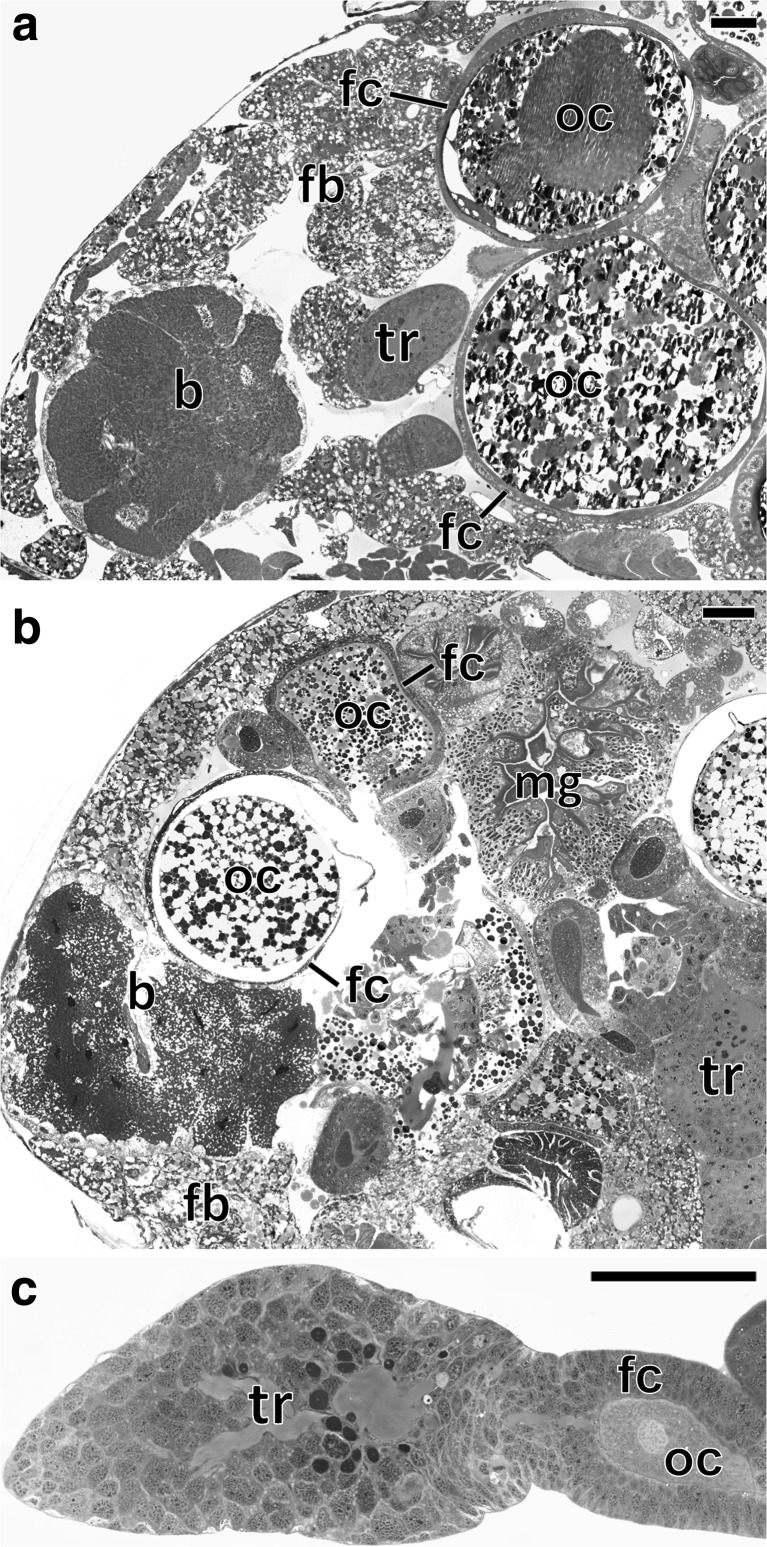
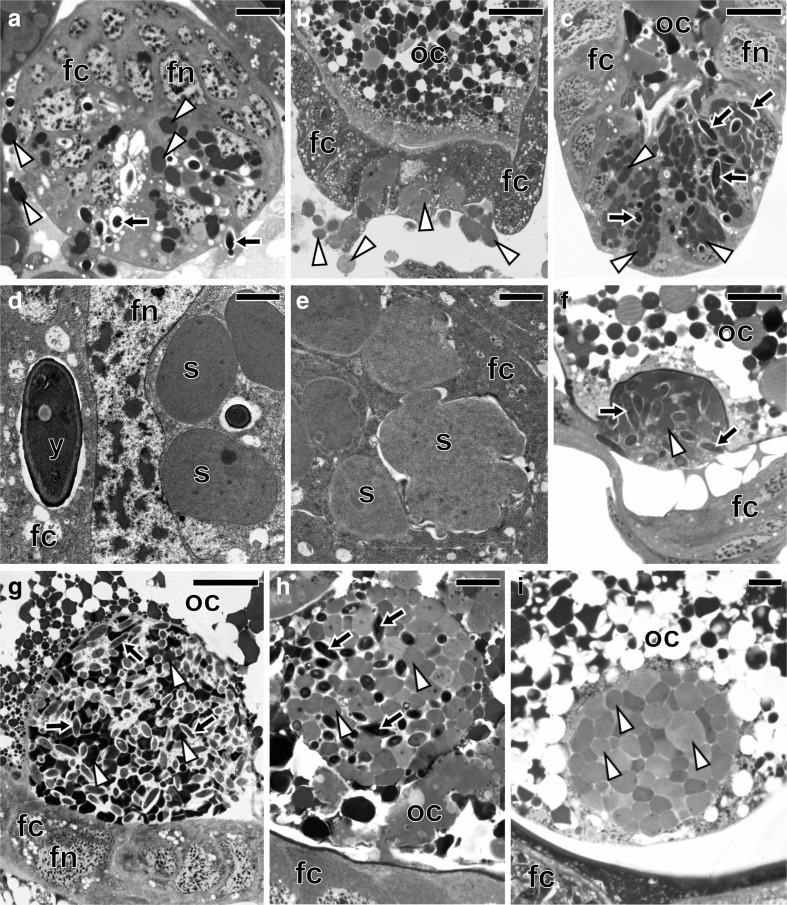
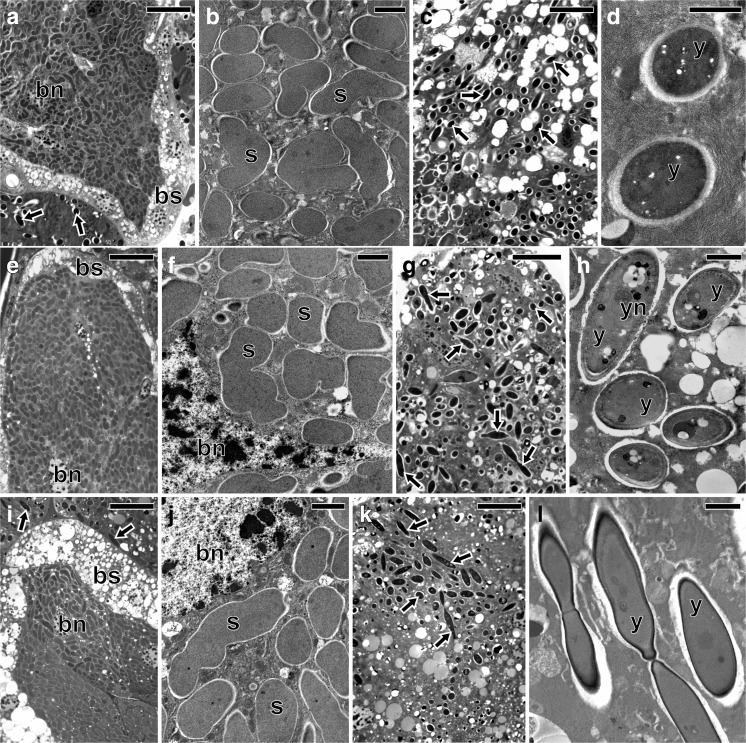
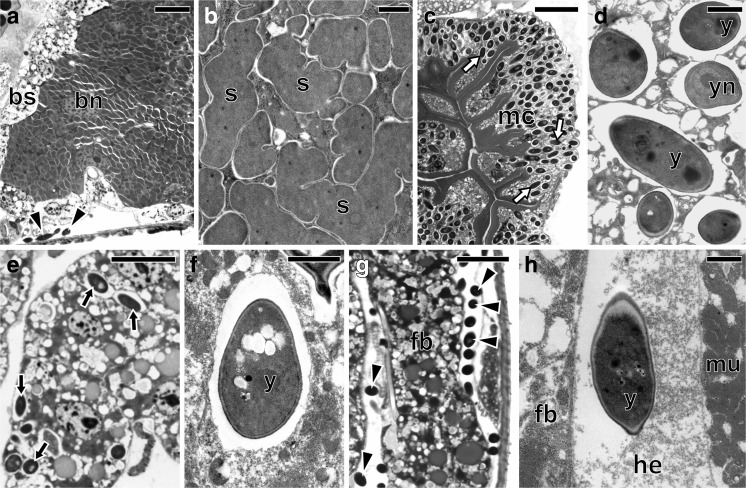
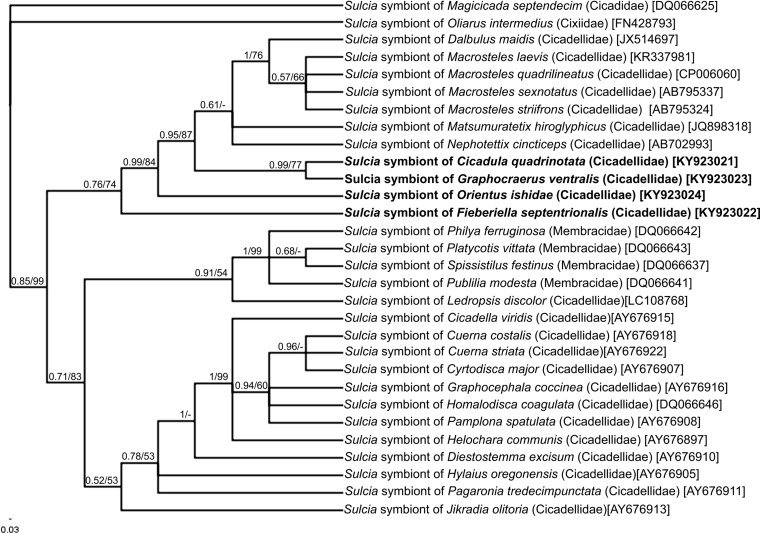
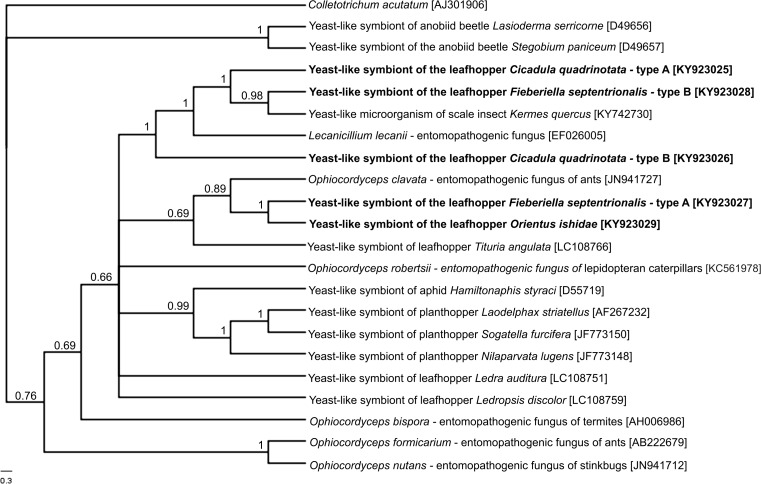
The symbiotic systems (types of symbionts, their distribution in the host insect body, and their transovarial transmission between generations) of four Deltocephalinae leafhoppers: Fieberiella septentrionalis, Graphocraerus ventralis, Orientus ishidae, and Cicadula quadrinotata have been examined by means of histological, ultrastructural, and molecular techniques. In all four species, two types of symbionts are present: bacterium Sulcia (phylum Bacteroidetes) and yeast-like symbionts closely related to the entomopathogenic fungi (phylum Ascomycota, class Sordariomycetes). Sulcia bacteria are always harbored in giant bacteriocytes, which are grouped into large organs termed "bacteriomes." In F. septentrionalis, G. ventralis, and O. ishidae, numerous yeast-like microorganisms are localized in cells of the fat body, whereas in C. quadrinotata, they occupy the cells of midgut epithelium in large number. Additionally, in C. quadrinotata, a small amount of yeast-like microorganisms occurs intracellularly in the fat body cells and, extracellularly, in the hemolymph. Sulcia bacteria in F. septentrionalis, G. ventralis, O. ishidae, and C. quadrinotata, and the yeast-like symbionts residing in the fat body of F. septentrionalis, G. ventralis, and O. ishidae are transovarially transmitted; i.e., they infect the ovarioles which constitute the ovaries.
四种 Deltocephalinae 叶蝉(北方斐叶蝉、腹斑浮尘子、石狩伊蚊和四斑浮尘子)的共生系统(共生体类型、在宿主昆虫体内的分布及其世代间的转卵传播)通过组织学、超微结构和分子技术进行了研究。在这四个物种中,存在两种共生体:细菌 Sulcia(细菌门)和与昆虫病原真菌密切相关的酵母样共生体(子囊菌门、盘菌纲)。Sulcia 细菌总是寄生于巨形细菌细胞中,这些巨形细菌细胞聚集形成称为“细菌体”的大型器官。在北方斐叶蝉、腹斑浮尘子和石狩伊蚊中,大量的酵母样微生物定位于脂肪体细胞中,而在四斑浮尘子中,它们大量存在于中肠上皮细胞中。此外,在四斑浮尘子中,少量的酵母样微生物在脂肪体细胞内和血液淋巴液中外寄生。北方斐叶蝉、腹斑浮尘子、石狩伊蚊和四斑浮尘子中的 Sulcia 细菌以及北方斐叶蝉、腹斑浮尘子和石狩伊蚊脂肪体中的酵母样共生体都是经卵传递的;也就是说,它们感染构成卵巢的卵巢小管。