Bailey Allison, De Wit Pierre, Thor Peter, Browman Howard I, Bjelland Reidun, Shema Steven, Fields David M, Runge Jeffrey A, Thompson Cameron, Hop Haakon
Norwegian Polar Institute Tromsø Norway.
Department of Arctic and Marine Biology Faculty of Biosciences Fisheries and Economics UiT The Arctic University of Norway Tromsø Norway.
Ecol Evol. 2017 Aug 2;7(18):7145-7160. doi: 10.1002/ece3.3063. eCollection 2017 Sep.
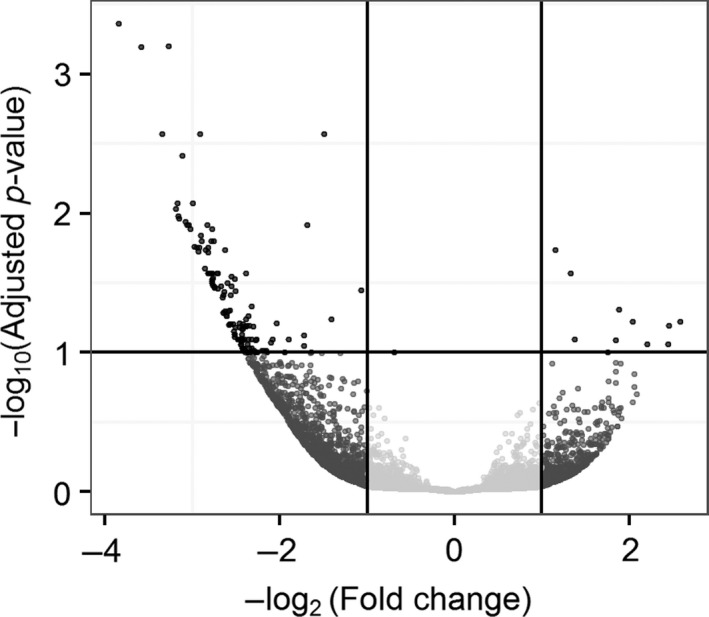
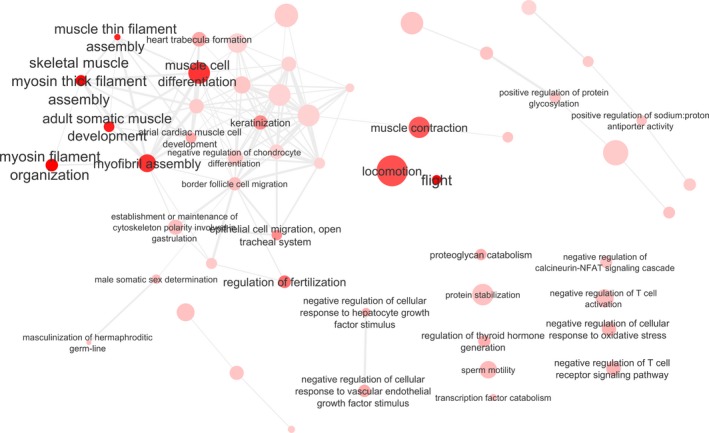
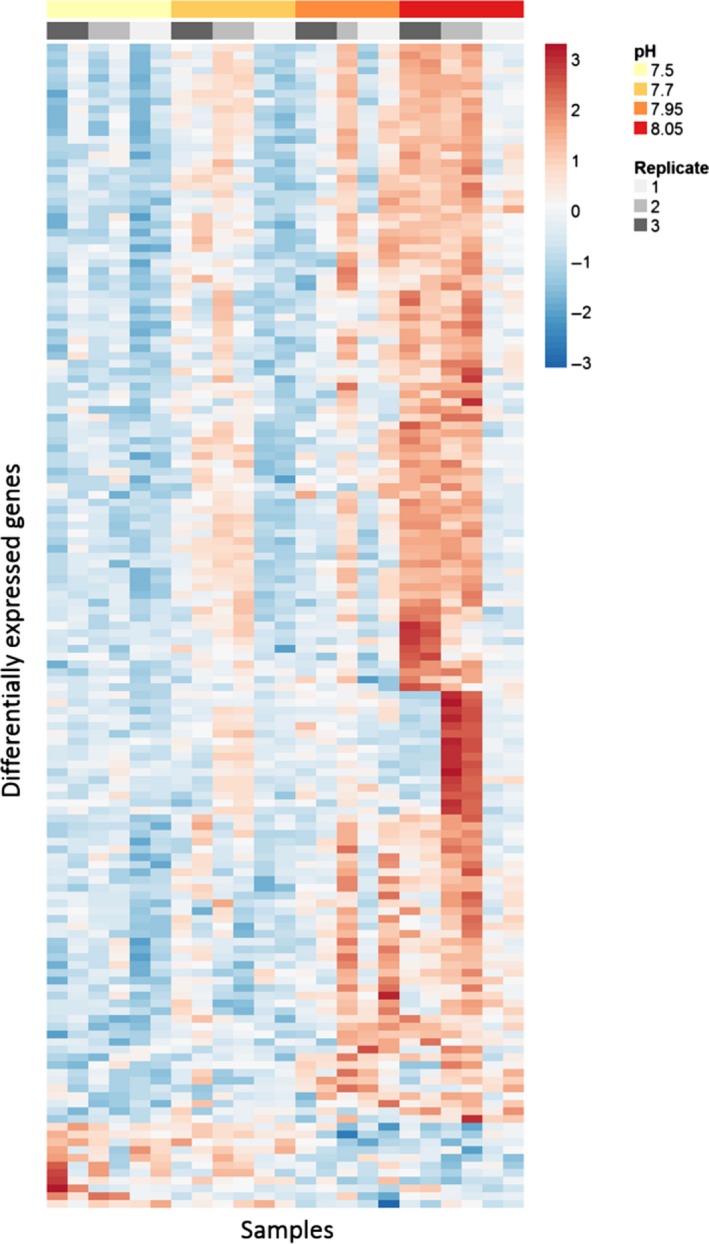
Ocean acidification is the increase in seawater CO due to the uptake of atmospheric anthropogenic CO , with the largest changes predicted to occur in the Arctic seas. For some marine organisms, this change in CO , and associated decrease in pH, represents a climate change-related stressor. In this study, we investigated the gene expression patterns of nauplii of the Arctic copepod cultured at low pH levels. We have previously shown that organismal-level performance (development, growth, respiration) of nauplii is unaffected by low pH. Here, we investigated the molecular-level response to lowered pH in order to elucidate the physiological processes involved in this tolerance. Nauplii from wild-caught were cultured at four pH levels (8.05, 7.9, 7.7, 7.5). At stage N6, mRNA was extracted and sequenced using RNA-seq. The physiological functionality of the proteins identified was categorized using Gene Ontology and KEGG pathways. We found that the expression of 151 contigs varied significantly with pH on a continuous scale (93% downregulated with decreasing pH). Gene set enrichment analysis revealed that, of the processes downregulated, many were components of the universal cellular stress response, including DNA repair, redox regulation, protein folding, and proteolysis. Sodium:proton antiporters were among the processes significantly upregulated, indicating that these ion pumps were involved in maintaining cellular pH homeostasis. significantly alters its gene expression at low pH, although they maintain normal larval development. Understanding what confers tolerance to some species will support our ability to predict the effects of future ocean acidification on marine organisms.
海洋酸化是指海水因吸收大气中的人为二氧化碳而导致海水中二氧化碳增加,预计北极海域的变化最为显著。对于一些海洋生物来说,这种二氧化碳的变化以及随之而来的pH值下降,是一种与气候变化相关的压力源。在本研究中,我们调查了在低pH水平下培养的北极桡足类无节幼体的基因表达模式。我们之前已经表明,无节幼体的个体水平表现(发育、生长、呼吸)不受低pH的影响。在这里,我们研究了对降低pH的分子水平反应,以阐明这种耐受性所涉及的生理过程。从野外捕获的无节幼体在四个pH水平(8.05、7.9、7.7、7.5)下培养。在N6阶段,提取mRNA并使用RNA-seq进行测序。使用基因本体论和KEGG通路对鉴定出的蛋白质的生理功能进行分类。我们发现,151个重叠群的表达随pH值在连续范围内有显著变化(93%随着pH值降低而下调)。基因集富集分析表明,在下调的过程中,许多是普遍细胞应激反应的组成部分,包括DNA修复、氧化还原调节、蛋白质折叠和蛋白水解。钠-质子反向转运蛋白是显著上调的过程之一,表明这些离子泵参与维持细胞pH稳态。无节幼体在低pH时会显著改变其基因表达,尽管它们保持正常的幼体发育。了解某些物种的耐受性来源将有助于我们预测未来海洋酸化对海洋生物的影响。