Jeonnam Institute of Natural Resources Research, Jangheung-gun, Jeollanamdo 59338, Korea.
Herbal Hormone Research Institute, Naturalendo Tech Co., Ltd., Gyeonggido, Seongnam 13486, Korea.
Nutrients. 2017 Sep 27;9(10):1070. doi: 10.3390/nu9101070.
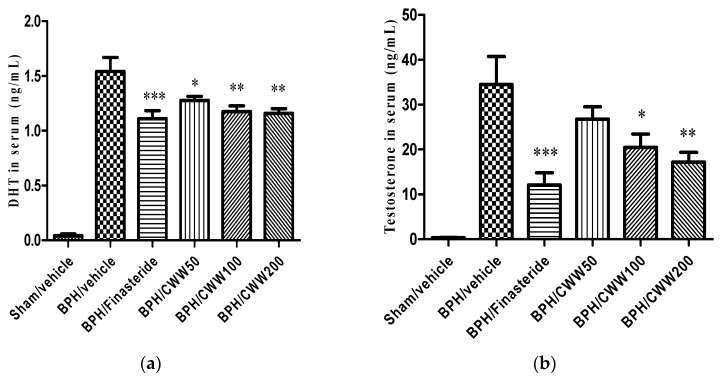
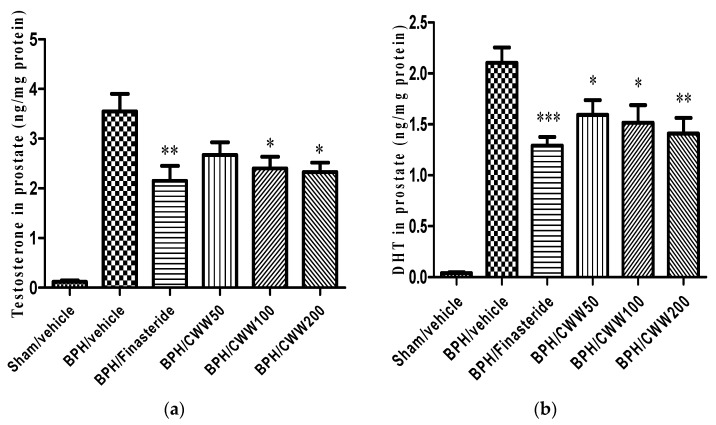
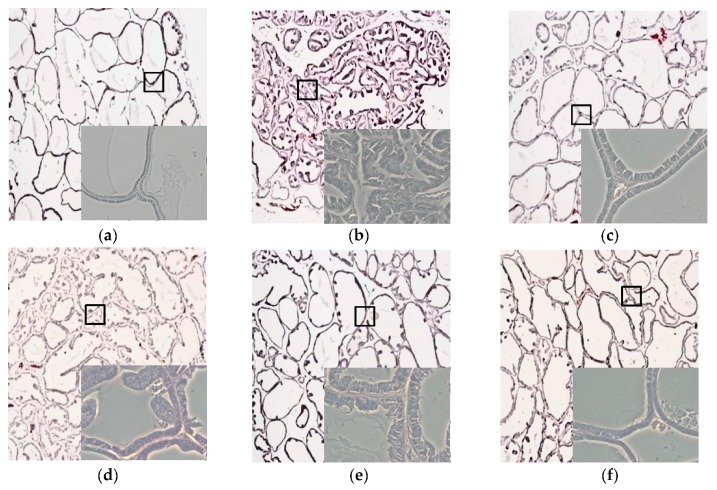
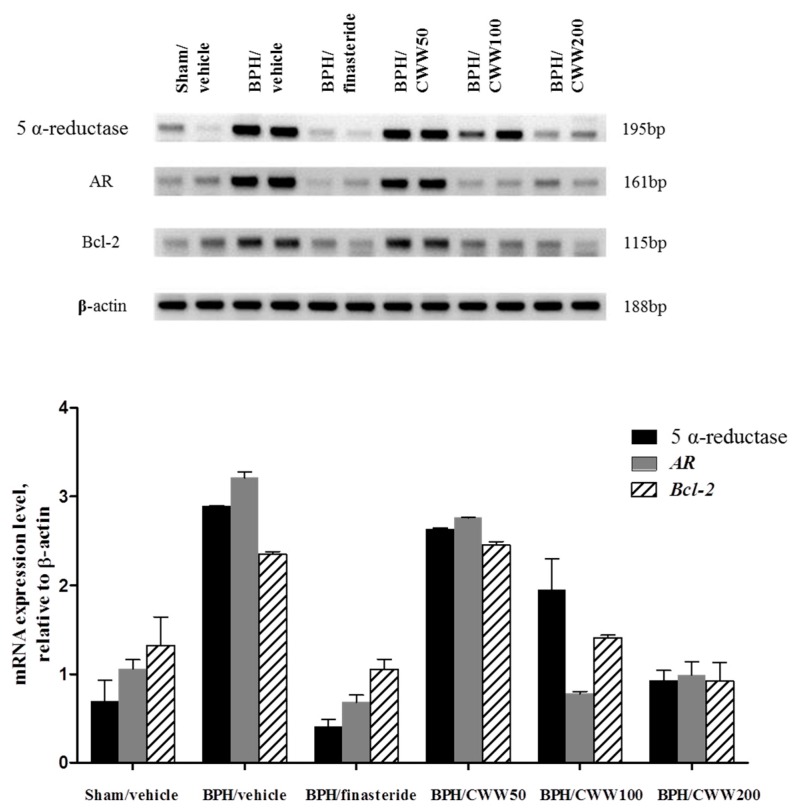
Benign prostatic hyperplasia (BPH) is characterized by uncontrolled proliferation of the prostate gland. has been reported to improve sexual behavior in male rats. In this study, we investigated the protective effect of an aqueous extract of (CWW) against BPH development in a testosterone-induced BPH rat model. The rats were divided into the following six groups: sham/vehicle; BPH/vehicle; BPH/finasteride; and three CWW doses (50, 100, and 200 mg/kg). After a 4-week treatment with CWW, the rats were euthanized at scheduled times, and their prostates were weighed, followed by a histopathological examination. Prostate growth inhibition rates in rats administered CWW 50, 100, and 200 mg/kg were 54.5%, 51.8%, and 50.1%, respectively. The BPH/CWW group showed decreased serum testosterone and dihydrotestosterone (DHT) levels compared to the BPH/vehicle group. Furthermore, the BPH/CWW group showed reduced prostate testosterone and DHT levels compared to the BPH/vehicle group. Mechanistically, the reverse transcription-polymerase chain reaction revealed downregulated mRNA expression levels of the androgen receptor, 5α-reductase, and B-cell lymphoma-2 (Bcl-2) in the BPH/CWW200 group compared with those in the testosterone-induced groups. In conclusion, these findings show the effectiveness of CWW in slowing the progression of testosterone-induced BPH in rats.
良性前列腺增生症(BPH)的特征是前列腺不受控制的增殖。据报道,它可以改善雄性大鼠的性行为。在这项研究中,我们研究了水提物(CWW)对睾酮诱导的大鼠前列腺增生模型中前列腺增生发展的保护作用。大鼠分为以下六组:假手术/载体;BPH/载体;BPH/非那雄胺;以及三个 CWW 剂量(50、100 和 200mg/kg)。用 CWW 治疗 4 周后,在预定时间处死大鼠,称重其前列腺,然后进行组织病理学检查。给予 CWW 50、100 和 200mg/kg 的大鼠前列腺生长抑制率分别为 54.5%、51.8%和 50.1%。与 BPH/载体组相比,BPH/CWW 组的血清睾酮和二氢睾酮(DHT)水平降低。此外,与 BPH/载体组相比,BPH/CWW 组的前列腺睾酮和 DHT 水平降低。从机制上讲,逆转录-聚合酶链反应显示,与睾酮诱导组相比,BPH/CWW200 组雄激素受体、5α-还原酶和 B 细胞淋巴瘤-2(Bcl-2)的 mRNA 表达水平下调。总之,这些发现表明 CWW 有效减缓了睾酮诱导的大鼠前列腺增生的进展。