Hanana H, Simon G, Kervarec N, Cérantola S
Laboratoire de RMN, RPE, Université Européenne de Bretagne, Université de Bretagne Occidentale UFR Sciences et Techniques, 6 avenue le gorgeu, 29238 Brest Cédex3, France.
Toxicol Rep. 2014 Oct 2;1:777-786. doi: 10.1016/j.toxrep.2014.09.012. eCollection 2014.
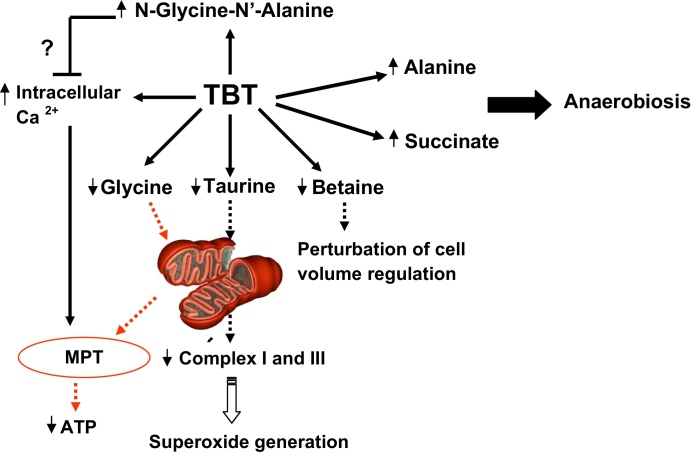
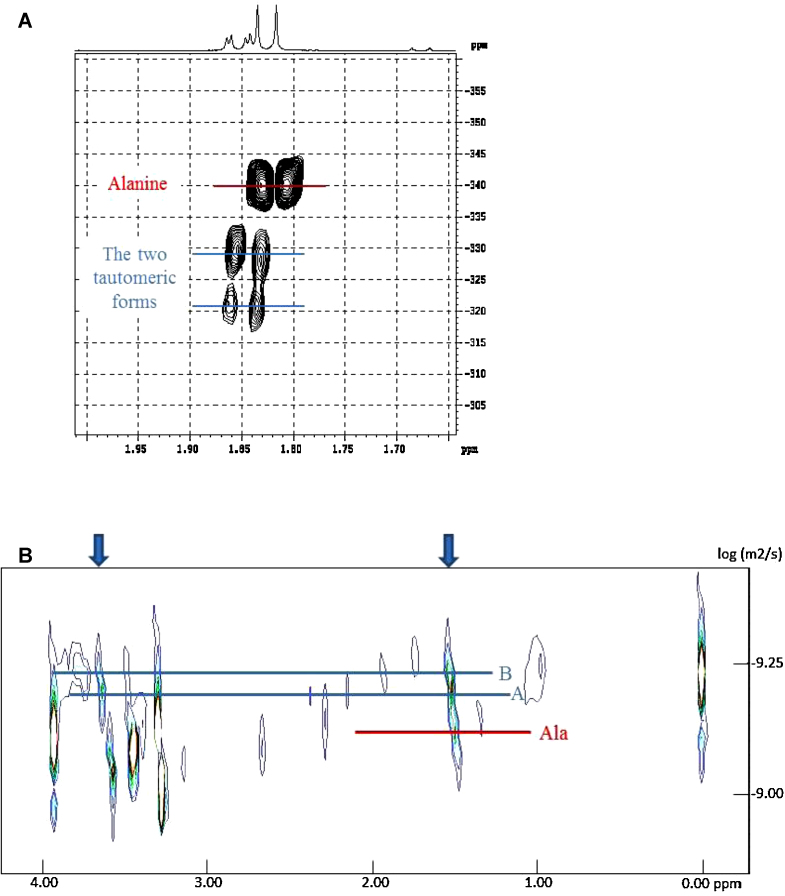
Tributyltin (TBT) is a highly toxic pollutant present in many aquatic ecosystems. Its toxicity in mollusks strongly affects their performance and survival. The main purpose of this study was to elucidate the mechanisms of TBT toxicity in clam by evaluating the metabolic responses of heart tissues, using high-resolution magic angle-spinning nuclear magnetic resonance (HRMAS NMR), after exposure to TBT (10, 10 and 10 M) during 24 h and 72 h. Results show that responses of clam heart tissue to TBT exposure are not dose dependent. Metabolic profile analyses indicated that TBT 10 M, contrary to the two other doses tested, led to a significant depletion of taurine and betaine. Glycine levels decreased in all clam groups treated with the organotin. It is suggested that TBT abolished the cytoprotective effect of taurine, betaine and glycine thereby inducing cardiomyopathie. Moreover, results also showed that TBT induced increase in the level of alanine and succinate suggesting the occurrence of anaerobiosis particularly in clam group exposed to the highest dose of TBT. Taken together, these results demonstrate that TBT is a potential toxin with a variety of deleterious effects on clam and this organotin may affect different pathways depending to the used dose. The main finding of this study was the appearance of an original metabolite after TBT treatment likely N-glycine-N'-alanine. It is the first time that this molecule has been identified as a natural compound. Its exact role is unknown and remains to be elucidated. We suppose that its formation could play an important role in clam defense response by attenuating Ca dependent cell death induced by TBT. Therefore this compound could be a promising biomarker for TBT exposure.
三丁基锡(TBT)是一种存在于许多水生生态系统中的高毒性污染物。其对软体动物的毒性严重影响它们的生理机能和生存。本研究的主要目的是通过使用高分辨率魔角旋转核磁共振(HRMAS NMR)评估心脏组织的代谢反应,来阐明TBT对蛤蜊的毒性作用机制,实验中将蛤蜊暴露于不同浓度(10⁻⁶、10⁻⁷和10⁻⁸M)的TBT中24小时和72小时。结果表明,蛤蜊心脏组织对TBT暴露的反应不具有剂量依赖性。代谢谱分析表明,与其他两个测试剂量相反,10⁻⁶M的TBT导致牛磺酸和甜菜碱显著减少。在用有机锡处理的所有蛤蜊组中,甘氨酸水平均下降。研究表明,TBT消除了牛磺酸、甜菜碱和甘氨酸的细胞保护作用,从而诱发心肌病。此外,结果还表明,TBT导致丙氨酸和琥珀酸水平升高,这表明尤其在暴露于最高剂量TBT的蛤蜊组中出现了无氧代谢。综上所述,这些结果表明TBT是一种对蛤蜊具有多种有害影响的潜在毒素,并且这种有机锡可能根据使用剂量影响不同的代谢途径。本研究的主要发现是TBT处理后出现了一种可能为N-甘氨酸-N'-丙氨酸的原始代谢物。这是该分子首次被鉴定为天然化合物。其确切作用尚不清楚,仍有待阐明。我们推测其形成可能通过减弱TBT诱导的钙依赖性细胞死亡,在蛤蜊的防御反应中发挥重要作用。因此,这种化合物可能是一种有前景的TBT暴露生物标志物。