• 文献检索
  • 文档翻译
  • 深度研究
  • 学术资讯
  • Suppr Zotero 插件Zotero 插件
  • 邀请有礼
  • 套餐&价格
  • 历史记录
应用&插件
Suppr Zotero 插件Zotero 插件浏览器插件Mac 客户端Windows 客户端微信小程序
定价
高级版会员购买积分包购买API积分包
服务
文献检索文档翻译深度研究API 文档MCP 服务
关于我们
关于 Suppr公司介绍联系我们用户协议隐私条款
关注我们

Suppr 超能文献

核心技术专利:CN118964589B侵权必究
粤ICP备2023148730 号-1Suppr @ 2026

文献检索

告别复杂PubMed语法,用中文像聊天一样搜索,搜遍4000万医学文献。AI智能推荐,让科研检索更轻松。

立即免费搜索

文件翻译

保留排版,准确专业,支持PDF/Word/PPT等文件格式,支持 12+语言互译。

免费翻译文档

深度研究

AI帮你快速写综述,25分钟生成高质量综述,智能提取关键信息,辅助科研写作。

立即免费体验

人脱落乳牙干细胞分泌的外泌体通过在大鼠中改变小胶质细胞 M1/M2 极化促进创伤性脑损伤后的功能恢复。

Exosomes secreted by stem cells from human exfoliated deciduous teeth contribute to functional recovery after traumatic brain injury by shifting microglia M1/M2 polarization in rats.

机构信息

Key Laboratory of Shaanxi Province for Craniofacial Precision Medicine Research, Xi'an, Shaanxi, China.

Department of Periodontology, College of Stomatology, Xi'an Jiaotong University, Xi Wu Road No.98, Xi'an, Shaanxi, 710004, China.

出版信息

Stem Cell Res Ther. 2017 Sep 29;8(1):198. doi: 10.1186/s13287-017-0648-5.

DOI:10.1186/s13287-017-0648-5
PMID:28962585
原文链接:https://pmc.ncbi.nlm.nih.gov/articles/PMC5622448/
Abstract

BACKGROUND

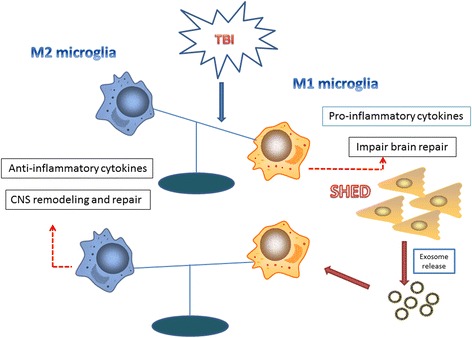
Traumatic brain injury (TBI) is one of the major causes of mortality and disability for all ages worldwide. Mesenchymal stem cells (MSCs)-originated exosomes have provided therapeutic effects. However, as an indispensable component of MSCs, whether odontogenic stem cell-generated exosomes could benefit TBI is still unclear. Thus we aimed to explore the potential of stem cells from human exfoliated deciduous teeth-originated exosomes (SHED-Ex) for the management of TBI.

METHODS

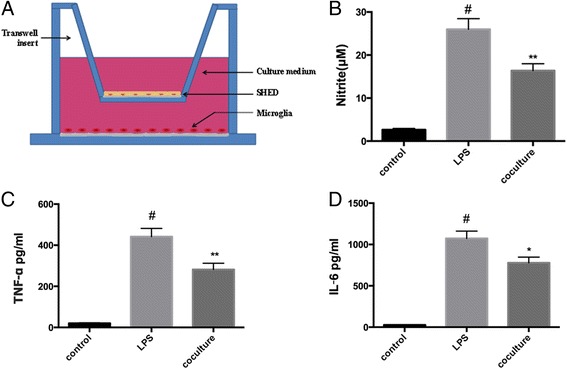
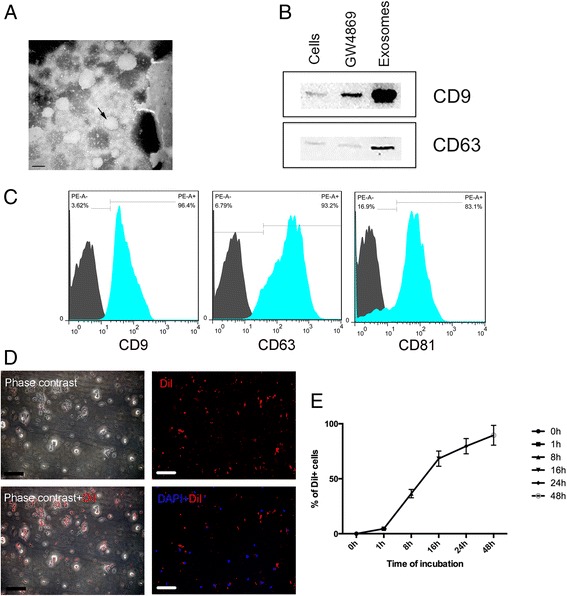
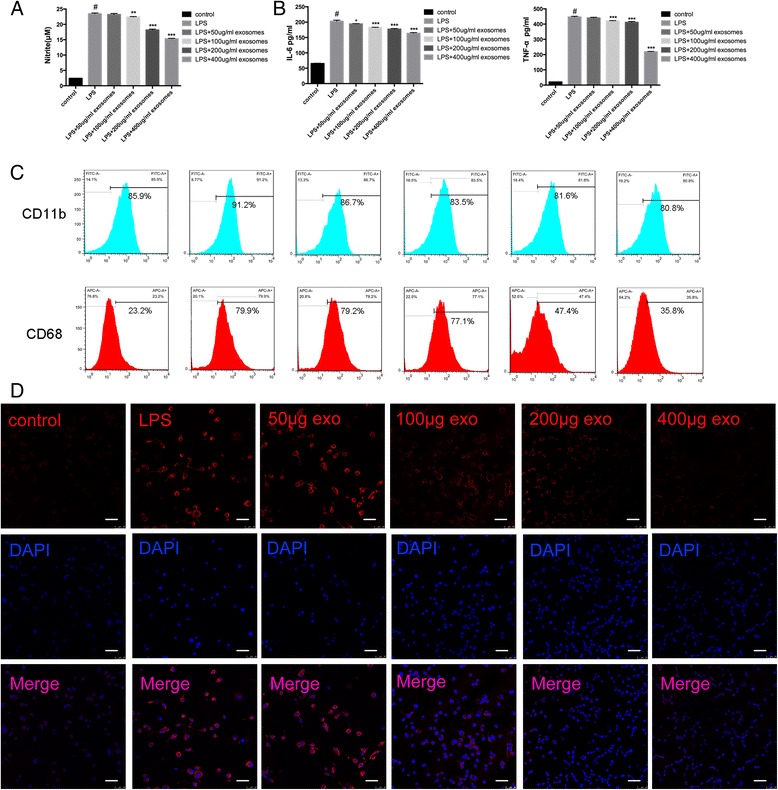
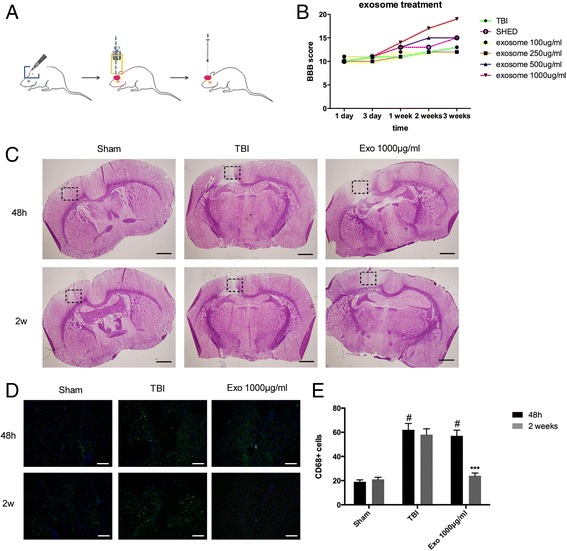
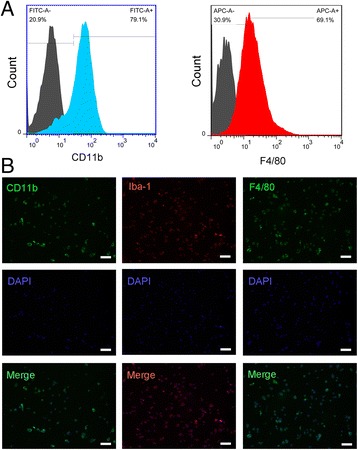
First, a transwell system was used to co-culture activated BV-2 microglia cells with SHED. The secretion levels of neuroinflammatory factors and nitrite were evaluated by enzyme-linked immunosorbent assay (ELISA) and Griess assay. Furthermore, purified SHED-Ex were co-cultured with activated BV-2. ELISA, Griess assay, flow cytometry, immunofluorescence, and qRT-PCR were performed to test the levels of inflammatory factors as well as the microglia phenotype. Finally, SHED and SHED-Ex were locally injected into TBI rat models. Basso, Beattie, and Bresnahan (BBB) scores were chosen to evaluate the motor functional recovery. Histopathology and immunofluorescence were performed to measure the lesion volume and neuroinflammation.

RESULTS

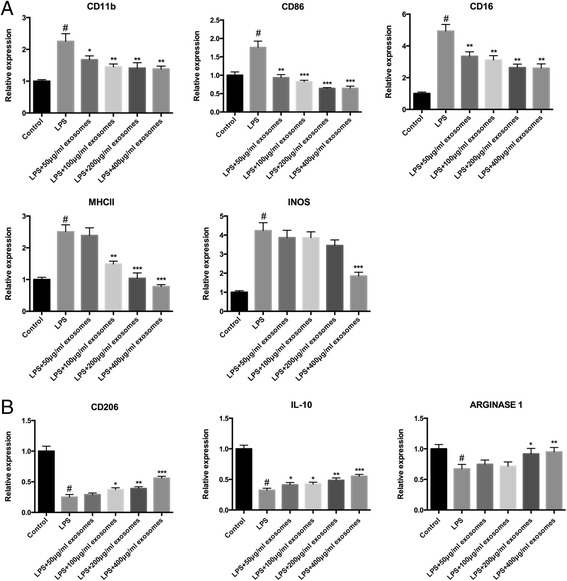
As a result, SHED-Ex could reduce neuroinflammation by shifting microglia polarization. The administration of SHED-Ex improves rat motor functional recovery and reduces cortical lesion compared with the control group 2 weeks post-injury (P < 0.05).

CONCLUSIONS

The current study demonstrates for the first time that SHED-Ex contribute a therapeutic benefit to TBI in rats, at least in part by shifting microglia polarization to reduce neuroinflammation. The use of odontogenic stem cells, and indeed their exosomes, may be expanded for the treatment of TBI or other neurological disorders.

摘要

背景

创伤性脑损伤(TBI)是全球各年龄段人群死亡和残疾的主要原因之一。间充质干细胞(MSCs)衍生的外泌体已显示出治疗效果。然而,作为 MSCs 的不可或缺组成部分,牙源性干细胞产生的外泌体是否对 TBI有益尚不清楚。因此,我们旨在探讨人脱落乳牙来源的间充质干细胞(SHED)衍生的外泌体(SHED-Ex)治疗 TBI 的潜力。

方法

首先,使用 Transwell 系统将激活的 BV-2 小胶质细胞与 SHED 共培养。通过酶联免疫吸附测定(ELISA)和 Griess 测定评估神经炎症因子和亚硝酸盐的分泌水平。此外,将纯化的 SHED-Ex 与激活的 BV-2 共培养。通过 ELISA、Griess 测定、流式细胞术、免疫荧光和 qRT-PCR 检测炎症因子水平以及小胶质细胞表型。最后,将 SHED 和 SHED-Ex 局部注射到 TBI 大鼠模型中。Basso、Beattie 和 Bresnahan(BBB)评分用于评估运动功能恢复情况。进行组织病理学和免疫荧光检查以测量病变体积和神经炎症。

结果

结果表明,SHED-Ex 通过改变小胶质细胞极化来减轻神经炎症。与对照组相比,SHED-Ex 给药可改善 TBI 大鼠的运动功能恢复,并减少皮质损伤(损伤后 2 周,P<0.05)。

结论

本研究首次表明,SHED-Ex 对 TBI 大鼠具有治疗作用,至少部分通过改变小胶质细胞极化来减轻神经炎症。牙源性干细胞及其外泌体的使用可能会扩展到 TBI 或其他神经疾病的治疗中。
https://cdn.ncbi.nlm.nih.gov/pmc/blobs/259c/5622448/540efd1c2a83/13287_2017_648_Fig7_HTML.jpg
https://cdn.ncbi.nlm.nih.gov/pmc/blobs/259c/5622448/2dec023d3fe0/13287_2017_648_Fig1_HTML.jpg
https://cdn.ncbi.nlm.nih.gov/pmc/blobs/259c/5622448/b6edc7cee2ae/13287_2017_648_Fig2_HTML.jpg
https://cdn.ncbi.nlm.nih.gov/pmc/blobs/259c/5622448/8d2e85bf1d43/13287_2017_648_Fig3_HTML.jpg
https://cdn.ncbi.nlm.nih.gov/pmc/blobs/259c/5622448/1f3f570a6de4/13287_2017_648_Fig4_HTML.jpg
https://cdn.ncbi.nlm.nih.gov/pmc/blobs/259c/5622448/fb382ee89205/13287_2017_648_Fig5_HTML.jpg
https://cdn.ncbi.nlm.nih.gov/pmc/blobs/259c/5622448/1b0c4b891dec/13287_2017_648_Fig6_HTML.jpg
https://cdn.ncbi.nlm.nih.gov/pmc/blobs/259c/5622448/540efd1c2a83/13287_2017_648_Fig7_HTML.jpg
https://cdn.ncbi.nlm.nih.gov/pmc/blobs/259c/5622448/2dec023d3fe0/13287_2017_648_Fig1_HTML.jpg
https://cdn.ncbi.nlm.nih.gov/pmc/blobs/259c/5622448/b6edc7cee2ae/13287_2017_648_Fig2_HTML.jpg
https://cdn.ncbi.nlm.nih.gov/pmc/blobs/259c/5622448/8d2e85bf1d43/13287_2017_648_Fig3_HTML.jpg
https://cdn.ncbi.nlm.nih.gov/pmc/blobs/259c/5622448/1f3f570a6de4/13287_2017_648_Fig4_HTML.jpg
https://cdn.ncbi.nlm.nih.gov/pmc/blobs/259c/5622448/fb382ee89205/13287_2017_648_Fig5_HTML.jpg
https://cdn.ncbi.nlm.nih.gov/pmc/blobs/259c/5622448/1b0c4b891dec/13287_2017_648_Fig6_HTML.jpg
https://cdn.ncbi.nlm.nih.gov/pmc/blobs/259c/5622448/540efd1c2a83/13287_2017_648_Fig7_HTML.jpg

相似文献

1
Exosomes secreted by stem cells from human exfoliated deciduous teeth contribute to functional recovery after traumatic brain injury by shifting microglia M1/M2 polarization in rats.人脱落乳牙干细胞分泌的外泌体通过在大鼠中改变小胶质细胞 M1/M2 极化促进创伤性脑损伤后的功能恢复。
Stem Cell Res Ther. 2017 Sep 29;8(1):198. doi: 10.1186/s13287-017-0648-5.
2
Systemic administration of cell-free exosomes generated by human bone marrow derived mesenchymal stem cells cultured under 2D and 3D conditions improves functional recovery in rats after traumatic brain injury.在 2D 和 3D 条件下培养的人骨髓间充质干细胞产生的无细胞外囊泡的系统给药可改善创伤性脑损伤后大鼠的功能恢复。
Neurochem Int. 2017 Dec;111:69-81. doi: 10.1016/j.neuint.2016.08.003. Epub 2016 Aug 15.
3
MiR-124 Enriched Exosomes Promoted the M2 Polarization of Microglia and Enhanced Hippocampus Neurogenesis After Traumatic Brain Injury by Inhibiting TLR4 Pathway.miR-124 富集的外泌体通过抑制 TLR4 通路促进创伤性脑损伤后小胶质细胞的 M2 极化和增强海马神经发生。
Neurochem Res. 2019 Apr;44(4):811-828. doi: 10.1007/s11064-018-02714-z. Epub 2019 Jan 9.
4
Astrocyte-derived exosomes enriched with miR-873a-5p inhibit neuroinflammation via microglia phenotype modulation after traumatic brain injury.星形胶质细胞衍生的富含 miR-873a-5p 的外泌体通过调节创伤性脑损伤后小胶质细胞表型抑制神经炎症。
J Neuroinflammation. 2020 Mar 19;17(1):89. doi: 10.1186/s12974-020-01761-0.
5
Effect of exosomes derived from multipluripotent mesenchymal stromal cells on functional recovery and neurovascular plasticity in rats after traumatic brain injury.多能间充质基质细胞来源的外泌体对创伤性脑损伤大鼠功能恢复和神经血管可塑性的影响。
J Neurosurg. 2015 Apr;122(4):856-67. doi: 10.3171/2014.11.JNS14770. Epub 2015 Jan 16.
6
Neuron-derived exosomes with high miR-21-5p expression promoted polarization of M1 microglia in culture.神经元衍生的外泌体,高表达 miR-21-5p,促进了培养中 M1 小胶质细胞的极化。
Brain Behav Immun. 2020 Jan;83:270-282. doi: 10.1016/j.bbi.2019.11.004. Epub 2019 Nov 7.
7
MiR-17-92 Cluster-Enriched Exosomes Derived from Human Bone Marrow Mesenchymal Stromal Cells Improve Tissue and Functional Recovery in Rats after Traumatic Brain Injury.富含 miR-17-92 簇的人骨髓间充质干细胞衍生的外泌体可改善创伤性脑损伤大鼠的组织和功能恢复。
J Neurotrauma. 2021 Jun 1;38(11):1535-1550. doi: 10.1089/neu.2020.7575. Epub 2021 May 3.
8
Exosomal miRNA-21 derived from umbilical cord mesenchymal stem cells inhibits microglial overactivation to counteract nerve damage.脐带间充质干细胞来源的外泌体 miRNA-21 抑制小胶质细胞过度激活,对抗神经损伤。
Mol Biol Rep. 2024 Aug 28;51(1):941. doi: 10.1007/s11033-024-09878-8.
9
Dental stem cell-derived extracellular vesicles transfer miR-330-5p to treat traumatic brain injury by regulating microglia polarization.牙髓干细胞来源的细胞外囊泡通过调节小胶质细胞极化转移 miR-330-5p 治疗创伤性脑损伤。
Int J Oral Sci. 2022 Sep 5;14(1):44. doi: 10.1038/s41368-022-00191-3.
10
Neuroprotector effect of stem cells from human exfoliated deciduous teeth transplanted after traumatic spinal cord injury involves inhibition of early neuronal apoptosis.外伤性脊髓损伤后移植人乳牙干细胞的神经保护作用涉及抑制早期神经元凋亡。
Brain Res. 2017 May 15;1663:95-105. doi: 10.1016/j.brainres.2017.03.015. Epub 2017 Mar 16.

引用本文的文献

1
Umbilical cord-derived exosomes alleviate spinal cord injury by regulating microglial polarization through miR-340-5p-mediated modulation of the JAK/STAT3 signaling pathway.脐带源外泌体通过miR-340-5p介导的JAK/STAT3信号通路调节,调控小胶质细胞极化,从而减轻脊髓损伤。
Sci Rep. 2025 Sep 1;15(1):32226. doi: 10.1038/s41598-025-16621-1.
2
Sustained release of canine mesenchymal stem/stromal cell-derived extracellular vesicles rescues motor function in rodent spinal cord injury models.犬间充质干细胞衍生的细胞外囊泡的持续释放可挽救啮齿动物脊髓损伤模型中的运动功能。
Regen Ther. 2025 Jun 12;30:164-172. doi: 10.1016/j.reth.2025.05.014. eCollection 2025 Dec.
3

本文引用的文献

1
MSCs-Derived Exosomes: Cell-Secreted Nanovesicles with Regenerative Potential.间充质干细胞衍生的外泌体:具有再生潜力的细胞分泌纳米囊泡。
Front Pharmacol. 2016 Aug 3;7:231. doi: 10.3389/fphar.2016.00231. eCollection 2016.
2
A novel method for banking stem cells from human exfoliated deciduous teeth: lentiviral TERT immortalization and phenotypical analysis.一种从人脱落乳牙中储存干细胞的新方法:慢病毒端粒酶逆转录酶永生化及表型分析。
Stem Cell Res Ther. 2016 Apr 4;7:50. doi: 10.1186/s13287-016-0309-0.
3
Exosomes as therapeutics: The implications of molecular composition and exosomal heterogeneity.
Isolation methods of exosomes derived from dental stem cells.
从牙源性干细胞中提取外泌体的分离方法。
Int J Oral Sci. 2025 Jun 16;17(1):50. doi: 10.1038/s41368-025-00370-y.
4
Investigating milk-derived extracellular vesicles as mediators of maternal stress and environmental intervention.研究源自牛奶的细胞外囊泡作为母体应激和环境干预的介质。
bioRxiv. 2025 Jun 27:2025.05.30.656911. doi: 10.1101/2025.05.30.656911.
5
Flow Cytometry Illuminates Dental Stem Cells: a Systematic Review of Immunomodulatory and Regenerative Breakthroughs.流式细胞术揭示牙干细胞:免疫调节与再生突破的系统评价
Stem Cell Rev Rep. 2025 Jun;21(5):1331-1350. doi: 10.1007/s12015-025-10883-y. Epub 2025 Apr 25.
6
Mesenchymal stem cell exosomes therapy for the treatment of traumatic brain injury: mechanism, progress, challenges and prospects.间充质干细胞外泌体疗法治疗创伤性脑损伤:机制、进展、挑战与前景
J Transl Med. 2025 Apr 11;23(1):427. doi: 10.1186/s12967-025-06445-y.
7
Targeting of Extracellular Vesicle-Based Therapeutics to the Brain.基于细胞外囊泡的疗法对大脑的靶向作用。
Cells. 2025 Apr 4;14(7):548. doi: 10.3390/cells14070548.
8
The role of natural exosomes from SHED-MSC in immunoregulation of M0/M1 polarized macrophage cells.脱落乳牙间充质干细胞来源的天然外泌体在M0/M1极化巨噬细胞免疫调节中的作用
Front Immunol. 2025 Feb 7;16:1550280. doi: 10.3389/fimmu.2025.1550280. eCollection 2025.
9
Mesenchymal stem cells and their extracellular vesicle therapy for neurological disorders: traumatic brain injury and beyond.间充质干细胞及其细胞外囊泡治疗神经系统疾病:创伤性脑损伤及其他疾病
Front Neurol. 2025 Feb 5;16:1472679. doi: 10.3389/fneur.2025.1472679. eCollection 2025.
10
Microglial DBP Signaling Mediates Behavioral Abnormality Induced by Chronic Periodontitis in Mice.小胶质细胞DBP信号传导介导慢性牙周炎诱导的小鼠行为异常。
Adv Sci (Weinh). 2024 Dec;11(46):e2406269. doi: 10.1002/advs.202406269. Epub 2024 Oct 21.
外泌体作为治疗手段:分子组成和外泌体异质性的影响。
J Control Release. 2016 Apr 28;228:179-190. doi: 10.1016/j.jconrel.2016.02.037. Epub 2016 Mar 2.
4
Neuroinflammation and Depression: Microglia Activation, Extracellular Microvesicles and microRNA Dysregulation.神经炎症与抑郁症:小胶质细胞激活、细胞外微泡与微小RNA失调
Front Cell Neurosci. 2015 Dec 17;9:476. doi: 10.3389/fncel.2015.00476. eCollection 2015.
5
Isolation and characterization of primary microglia from post-natal murine brain tissues: a comparison of two methods.从新生小鼠脑组织中分离和鉴定原代小胶质细胞:两种方法的比较。
Cell Biol Int. 2015 Dec;39(12):1355-63. doi: 10.1002/cbin.10516. Epub 2015 Aug 26.
6
Differentiation of Stem Cells From Human Exfoliated Deciduous Teeth Toward a Phenotype of Corneal Epithelium In Vitro.人脱落乳牙干细胞体外向角膜上皮表型的分化
Cornea. 2015 Nov;34(11):1471-7. doi: 10.1097/ICO.0000000000000532.
7
Mesenchymal Stem Cell-derived Extracellular Vesicles: Toward Cell-free Therapeutic Applications.间充质干细胞衍生的细胞外囊泡:迈向无细胞治疗应用
Mol Ther. 2015 May;23(5):812-823. doi: 10.1038/mt.2015.44. Epub 2015 Mar 19.
8
Mesenchymal-stem-cell-derived exosomes accelerate skeletal muscle regeneration.间充质干细胞衍生的外泌体可加速骨骼肌再生。
FEBS Lett. 2015 May 8;589(11):1257-65. doi: 10.1016/j.febslet.2015.03.031. Epub 2015 Apr 8.
9
Investigational agents for treatment of traumatic brain injury.用于治疗创伤性脑损伤的研究性药物。
Expert Opin Investig Drugs. 2015 Jun;24(6):743-60. doi: 10.1517/13543784.2015.1021919. Epub 2015 Mar 1.
10
Stem cells derived from human exfoliated deciduous teeth: a narrative synthesis of literature.源自人乳牙的干细胞:文献的叙述性综述
Eur Rev Med Pharmacol Sci. 2014 Oct;18(19):2863-81.