Morin B R, Kinzig A P, Levin S A, Perrings C A
Mathematics and Statistics Department, Vassar College, 124 Raymond Avenue, Box 257, Poughkeepsie, NY, 12604-0257, USA.
School of Life Sciences, Arizona State University, PO Box 4501, Tempe, AZ, 85287, USA.
Ecohealth. 2018 Jun;15(2):274-289. doi: 10.1007/s10393-017-1270-9. Epub 2017 Sep 29.
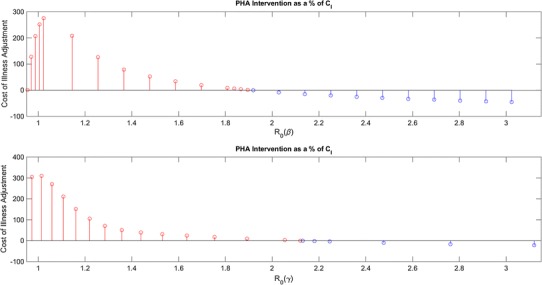
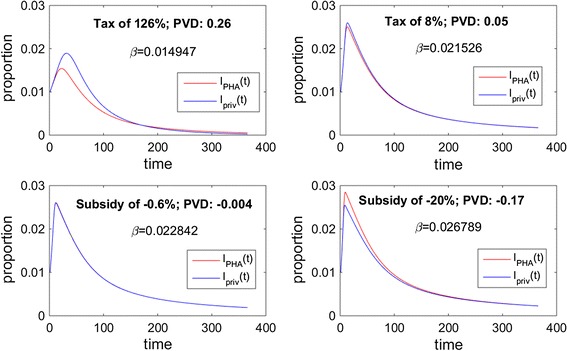
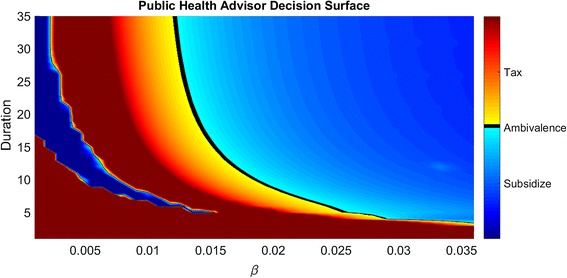
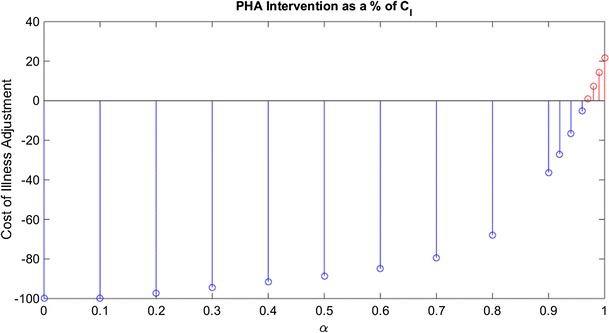
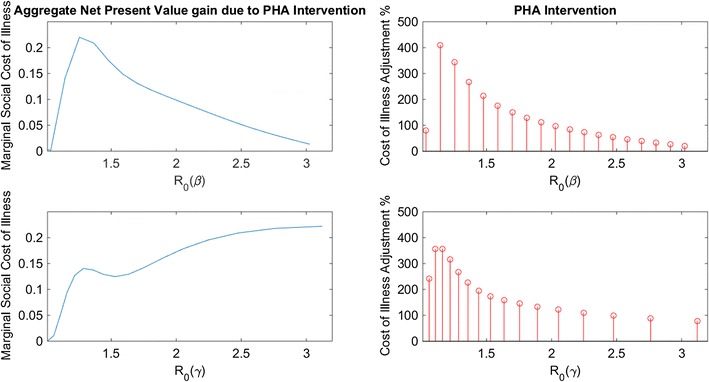
Does society benefit from encouraging or discouraging private infectious disease-risk mitigation? Private individuals routinely mitigate infectious disease risks through the adoption of a range of precautions, from vaccination to changes in their contact with others. Such precautions have epidemiological consequences. Private disease-risk mitigation generally reduces both peak prevalence of symptomatic infection and the number of people who fall ill. At the same time, however, it can prolong an epidemic. A reduction in prevalence is socially beneficial. Prolongation of an epidemic is not. We find that for a large class of infectious diseases, private risk mitigation is socially suboptimal-either too low or too high. The social optimum requires either more or less private mitigation. Since private mitigation effort depends on the cost of mitigation and the cost of illness, interventions that change either of these costs may be used to alter mitigation decisions. We model the potential for instruments that affect the cost of illness to yield net social benefits. We find that where a disease is not very infectious or the duration of illness is short, it may be socially optimal to promote private mitigation effort by increasing the cost of illness. By contrast, where a disease is highly infectious or long lasting, it may be optimal to discourage private mitigation by reducing the cost of disease. Society would prefer a shorter, more intense, epidemic to a longer, less intense epidemic. There is, however, a region in parameter space where the relationship is more complicated. For moderately infectious diseases with medium infectious periods, the social optimum depends on interactions between prevalence and duration. Basic reproduction numbers are not sufficient to predict the social optimum.
鼓励或抑制个人减轻传染病风险对社会有益吗?个人通常会采取一系列预防措施来减轻传染病风险,从接种疫苗到改变与他人的接触方式。这些预防措施会产生流行病学后果。个人减轻疾病风险通常既能降低有症状感染的峰值患病率,也能减少患病的人数。然而,与此同时,它可能会延长疫情。患病率的降低对社会有益。疫情的延长则不然。我们发现,对于一大类传染病来说,个人减轻风险在社会层面上并非最优——要么过低,要么过高。社会最优状态需要更多或更少的个人减轻风险措施。由于个人减轻风险的努力取决于减轻风险的成本和患病成本,改变这两种成本中的任何一种的干预措施都可用于改变减轻风险的决策。我们对影响患病成本的手段产生净社会效益的可能性进行了建模。我们发现,在一种疾病传染性不强或患病持续时间较短的情况下,通过提高患病成本来促进个人减轻风险的努力在社会层面上可能是最优的。相比之下,在一种疾病传染性很强或持续时间很长的情况下,通过降低患病成本来抑制个人减轻风险可能是最优的。社会更倾向于较短、强度更大的疫情,而非较长、强度较小的疫情。然而,在参数空间中存在一个区域,其中的关系更为复杂。对于具有中等传染期的中等传染性疾病,社会最优状态取决于患病率和持续时间之间的相互作用。基本再生数不足以预测社会最优状态。