Springborn Michael, Chowell Gerardo, MacLachlan Matthew, Fenichel Eli P
Department of Environmental Science & Policy, University of California, 2104 Wickson Hall, One Shields Ave,, Davis 95616, CA, USA.
BMC Infect Dis. 2015 Jan 23;15:21. doi: 10.1186/s12879-014-0691-0.
Theory suggests that individual behavioral responses impact the spread of flu-like illnesses, but this has been difficult to empirically characterize. Social distancing is an important component of behavioral response, though analyses have been limited by a lack of behavioral data. Our objective is to use media data to characterize social distancing behavior in order to empirically inform explanatory and predictive epidemiological models.
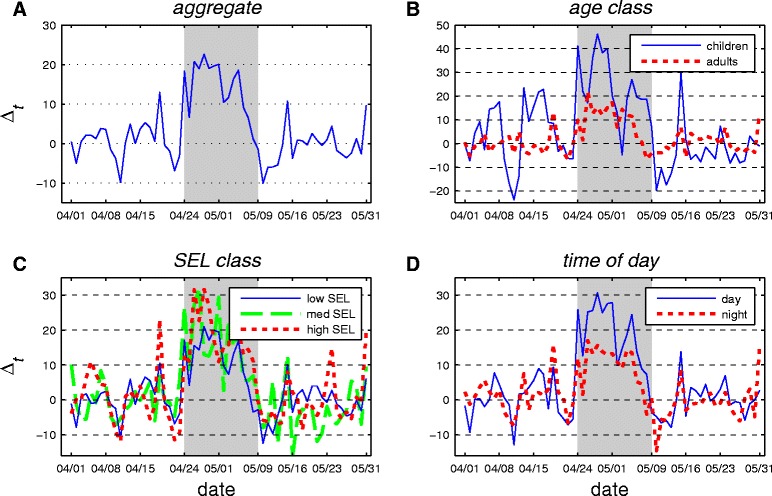
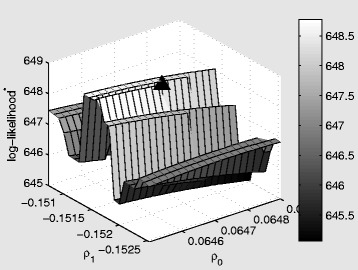
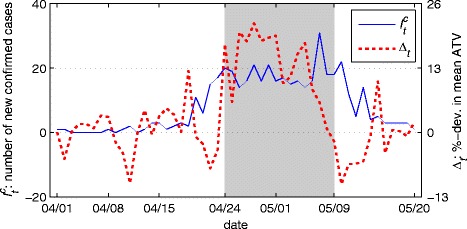
We use data on variation in home television viewing as a proxy for variation in time spent in the home and, by extension, contact. This behavioral proxy is imperfect but appealing since information on a rich and representative sample is collected using consistent techniques across time and most major cities. We study the April-May 2009 outbreak of A/H1N1 in Central Mexico and examine the dynamic behavioral response in aggregate and contrast the observed patterns of various demographic subgroups. We develop and calibrate a dynamic behavioral model of disease transmission informed by the proxy data on daily variation in contact rates and compare it to a standard (non-adaptive) model and a fixed effects model that crudely captures behavior.
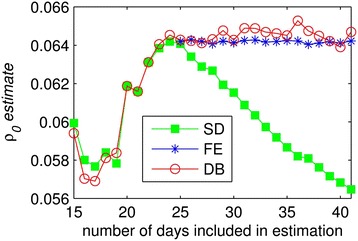
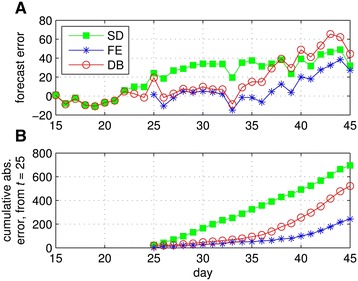
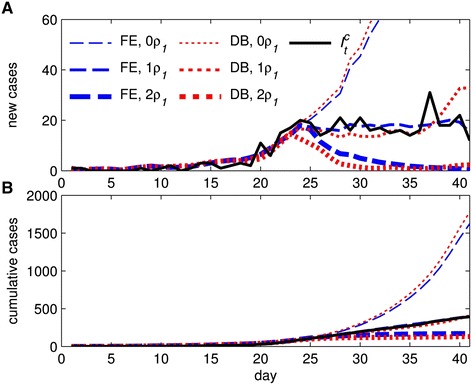
We find that after a demonstrable initial behavioral response (consistent with social distancing) at the onset of the outbreak, there was attenuation in the response before the conclusion of the public health intervention. We find substantial differences in the behavioral response across age subgroups and socioeconomic levels. We also find that the dynamic behavioral and fixed effects transmission models better account for variation in new confirmed cases, generate more stable estimates of the baseline rate of transmission over time and predict the number of new cases over a short horizon with substantially less error.
Results suggest that A/H1N1 had an innate transmission potential greater than previously thought but this was masked by behavioral responses. Observed differences in behavioral response across demographic groups indicate a potential benefit from targeting social distancing outreach efforts.
理论表明个体行为反应会影响流感样疾病的传播,但这一点很难通过实证来描述。社交距离是行为反应的一个重要组成部分,不过分析一直受到行为数据匮乏的限制。我们的目标是利用媒体数据来描述社交距离行为,以便为解释性和预测性流行病学模型提供实证依据。
我们将家庭电视观看时间的变化数据用作在家时间变化的代理指标,进而作为接触的代理指标。这种行为代理指标并不完美,但很有吸引力,因为它是通过在不同时间和大多数主要城市采用一致的技术收集丰富且具有代表性的样本信息。我们研究了2009年4月至5月墨西哥中部甲型H1N1流感疫情,考察总体的动态行为反应,并对比不同人口亚组的观察模式。我们根据接触率每日变化的代理数据开发并校准了一个疾病传播动态行为模型,并将其与一个标准(非适应性)模型以及一个粗略捕捉行为的固定效应模型进行比较。
我们发现,在疫情爆发初期出现明显的初始行为反应(与社交距离一致)之后,在公共卫生干预结束之前反应有所减弱。我们发现不同年龄亚组和社会经济水平的行为反应存在显著差异。我们还发现,动态行为和固定效应传播模型能更好地解释新确诊病例的变化,随着时间推移对传播基线率的估计更稳定,并且在短期内预测新病例数时误差大幅减少。
结果表明,甲型H1N1流感具有比之前认为的更大的固有传播潜力,但这被行为反应掩盖了。不同人口群体行为反应的观察差异表明,针对性的社交距离推广努力可能会带来益处。