Zhang Guo-Liang, Zhang Rui-Qian, Sun Xiao-Feng, Cheng Shun-Feng, Wang Yu-Feng, Ji Chuan-Liang, Feng Yan-Zhong, Yu Jie, Ge Wei, Zhao Yong, Sun Shi-Duo, Shen Wei, Li Lan
College of Animal Science and Technology, Qingdao Agricultural University, Qingdao Shandong 266109, China.
National Engineering Research Center for Gelatin-based Traditional Chinese Medicine, Dong-E-E-Jiao Co., Ltd, Liaocheng Shandong 252000, China.
Oncotarget. 2017 Jul 31;8(38):64001-64014. doi: 10.18632/oncotarget.19699. eCollection 2017 Sep 8.
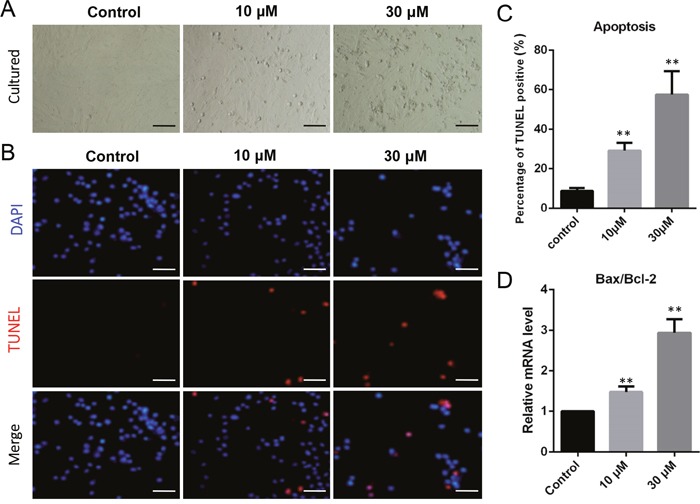
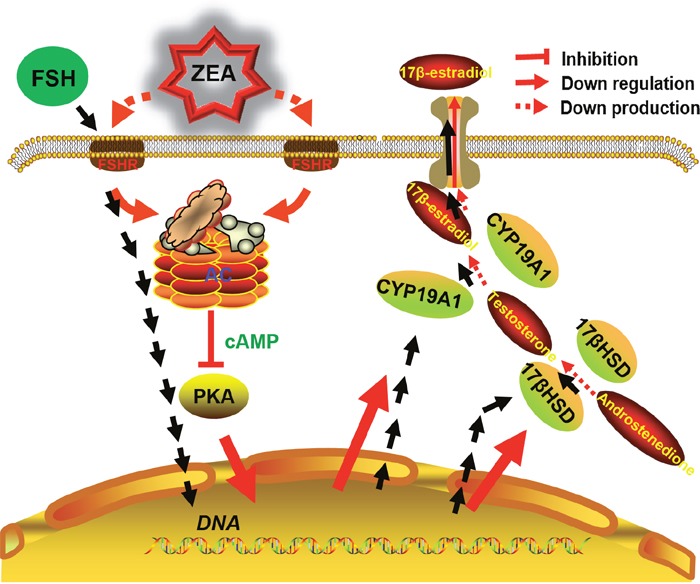
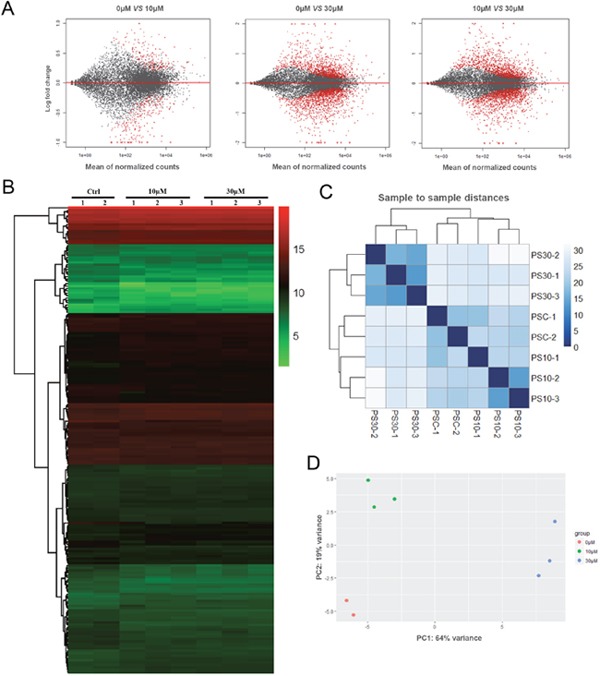
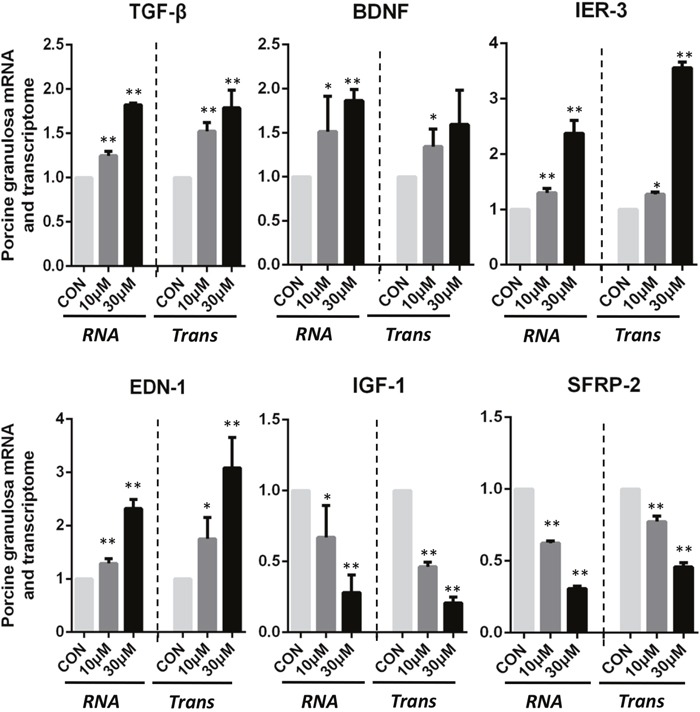
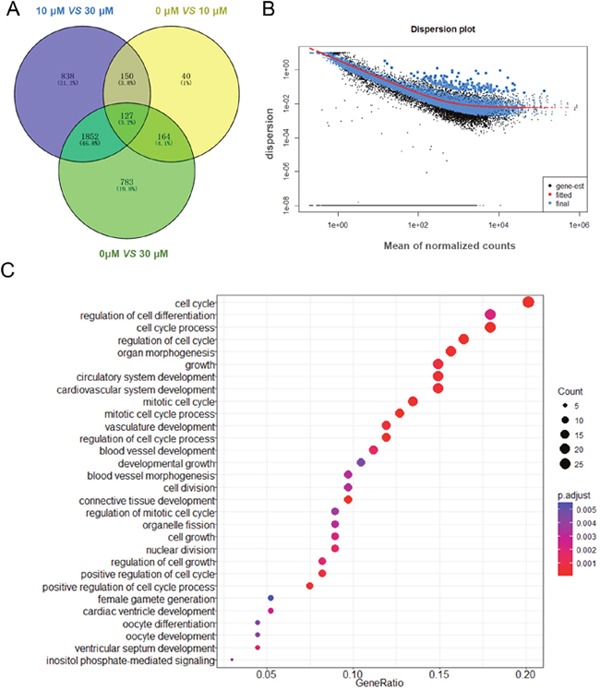
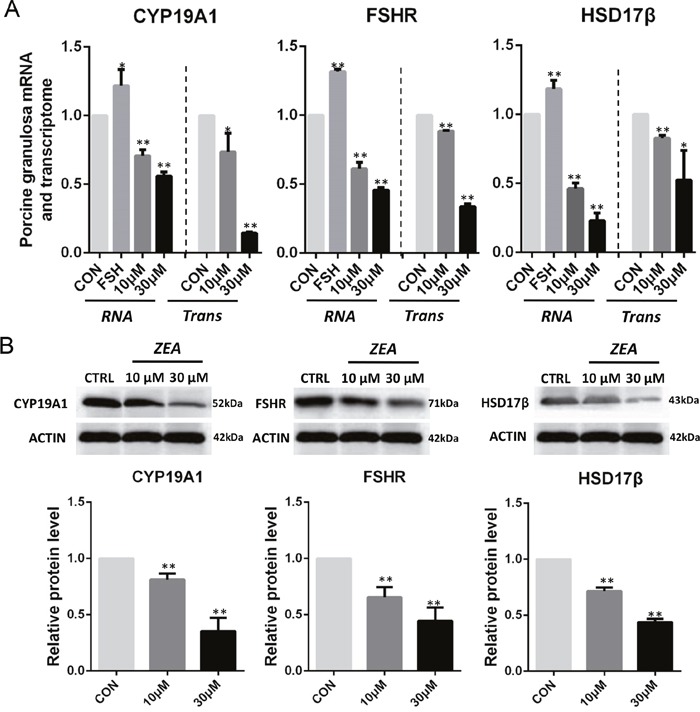
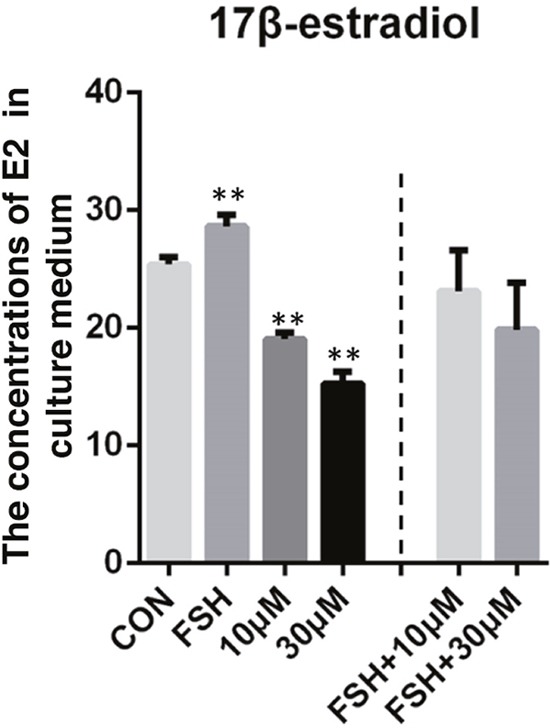
Zearalenone (ZEA) is a natural contaminant of various food and feed products representing a significant problem worldwide. Since the occurrence of ZEA in grains and feeds is frequent, the present study was carried out to evaluate the possible effects of ZEA on steroid production and gene expression of porcine granulosa cells, using RNA-seq analysis. Porcine granulosa cells were administered 10 μM and 30 μM ZEA during 72 h of culture . Following ZEA treatment the gene expression profile of control and exposed granulosa cells was compared using RNA-seq analysis. The results showed that in the exposed granulosa cells ZEA significantly altered the transcript levels, particularly steroidogenesis associated genes. Compared with the control group, 10 μM and 30 μM ZEA treatment significantly increased the mRNA expression of , , and genes and significantly reduced the mRNA expression of and genes. In particular, ZEA significantly decreased the expression of genes essential for estrogen synthesis including , and in granulosa cells. Furthermore, Q-PCR and Western-blot analysis also confirmed reduced expression of these genes in ZEA exposed granulosa cells. These effects were associated with a significant reduction of 17β-estradiol concentrations in the culture medium of granulosa cells. Collectively, these results demonstrated a concretely deleterious effect of ZEA exposure on the mRNA expression of steroidogenesis related genes and the production of steroid hormones in porcine ovarian granulosa cells .
玉米赤霉烯酮(ZEA)是各种食品和饲料产品中的一种天然污染物,在全球范围内是一个重大问题。由于ZEA在谷物和饲料中频繁出现,本研究采用RNA测序分析来评估ZEA对猪颗粒细胞类固醇生成和基因表达的可能影响。在培养72小时期间,对猪颗粒细胞施用10μM和30μM的ZEA。在ZEA处理后,使用RNA测序分析比较对照和暴露的颗粒细胞的基因表达谱。结果表明,在暴露的颗粒细胞中,ZEA显著改变了转录水平,特别是与类固醇生成相关的基因。与对照组相比,10μM和30μM的ZEA处理显著增加了 、 、 和 基因的mRNA表达,并显著降低了 和 基因的mRNA表达。特别是,ZEA显著降低了颗粒细胞中雌激素合成所必需的基因(包括 、 和 )的表达。此外,Q-PCR和蛋白质免疫印迹分析也证实了在ZEA暴露的颗粒细胞中这些基因的表达降低。这些影响与颗粒细胞培养基中17β-雌二醇浓度的显著降低有关。总的来说,这些结果证明了ZEA暴露对猪卵巢颗粒细胞中类固醇生成相关基因的mRNA表达和类固醇激素产生具有具体的有害影响。