Yoshimatsu K, Sakata O, Ohtomo A
Department of Chemical Science and Engineering, Tokyo Institute of Technology, 2-12-1 Ookayama, Meguro-ku, Tokyo, 152-8552, Japan.
Synchrotron X-ray Station at SPring-8, National Institute for Materials Science (NIMS), 1-1-1 Koto, Sayo-cho, Sayo-gun, Hyogo, 679-5148, Japan.
Sci Rep. 2017 Oct 2;7(1):12544. doi: 10.1038/s41598-017-12815-4.
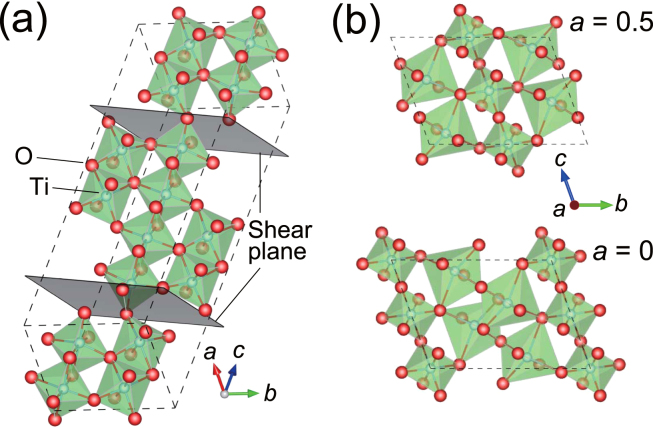
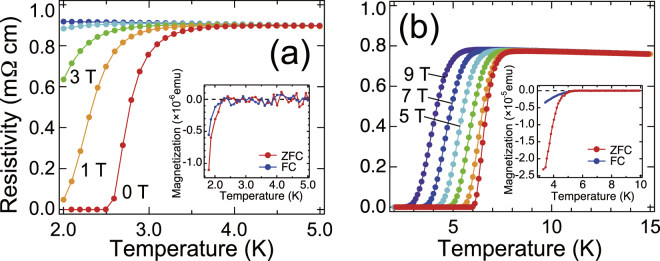
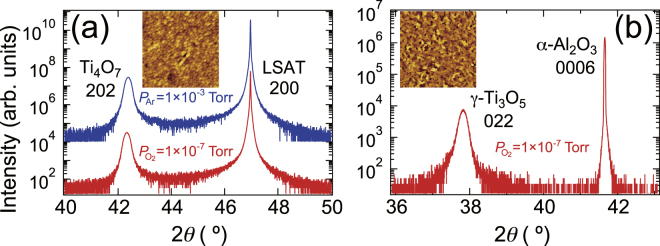
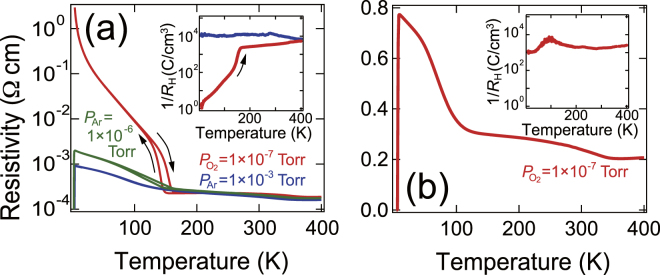
Titanium dioxide is one of the most popular compounds among simple oxides. Except for the fully oxidized titanate, titanium oxides have partially filled d states and their exotic properties have captured attention. Here, we report on the discovery of superconductivity in TiO and γ-TiO in a thin film form. The epitaxial TiO and γ-TiO thin films were grown using pulsed-laser deposition on (LaAlO)-(SrAlTaO) and α-AlO substrates, respectively. The highest superconducting transition temperatures are 3.0 K and 7.1 K for TiO and γ-TiO, respectively. The mechanism behind the superconductivity is discussed on the basis of electrical measurements and previous theoretical predictions. We conclude that the superconductivity arises from unstabilized bipolaronic insulating states with the assistance of oxygen non-stoichiometry and epitaxial stabilization.
二氧化钛是简单氧化物中最常见的化合物之一。除了完全氧化的钛酸盐外,钛氧化物具有部分填充的d态,其奇异特性引起了人们的关注。在此,我们报告了以薄膜形式在TiO和γ-TiO中发现超导性。分别使用脉冲激光沉积在(LaAlO)-(SrAlTaO)和α-AlO衬底上生长外延TiO和γ-TiO薄膜。TiO和γ-TiO的最高超导转变温度分别为3.0 K和7.1 K。基于电学测量和先前的理论预测讨论了超导性背后的机制。我们得出结论,超导性源于氧非化学计量和外延稳定作用下不稳定的双极化子绝缘态。