Departments of Biological Engineering and Chemistry, and Center for Environmental Health Sciences, Massachusetts Institute of Technology, Cambridge, Massachusetts 02139.
Graduate Program in Environmental Toxicology, Chulabhorn Graduate Institute, Bangkok 10210, Thailand.
Toxicol Sci. 2017 Nov 1;160(1):173-179. doi: 10.1093/toxsci/kfx171.
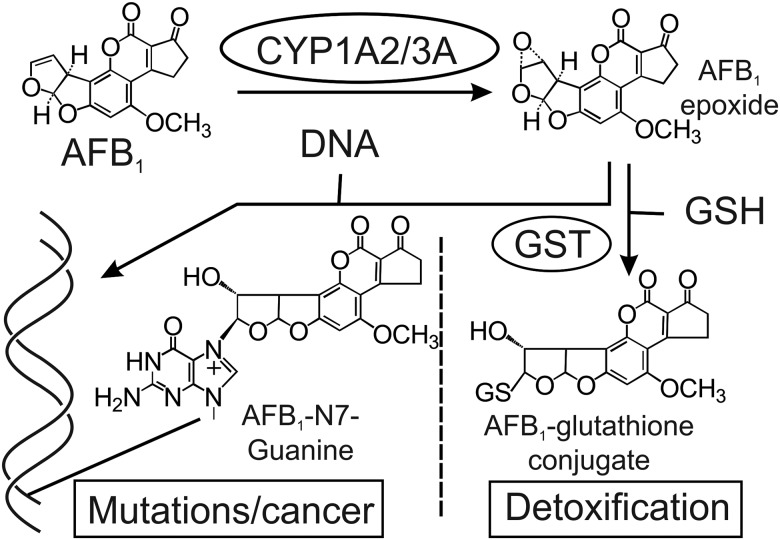
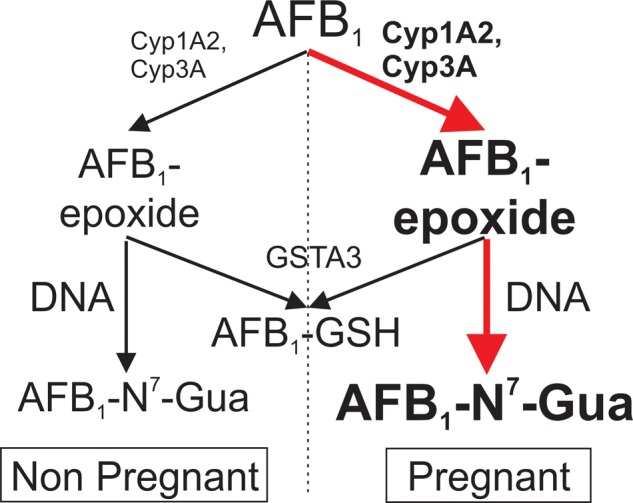
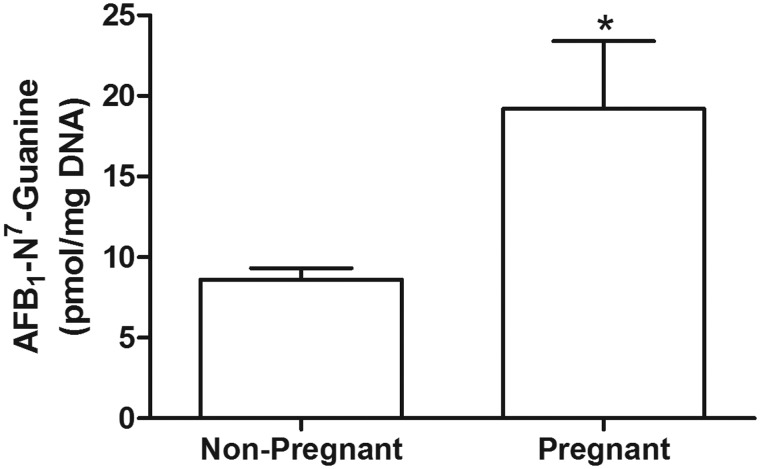
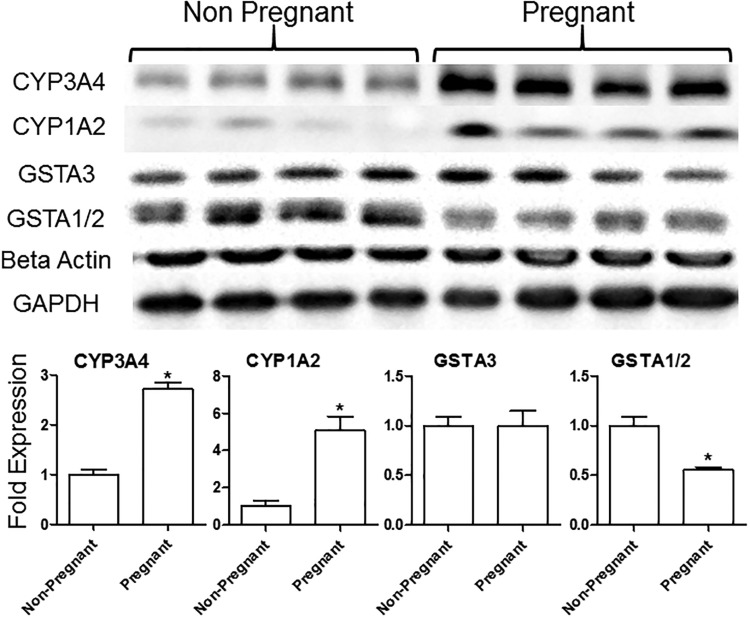
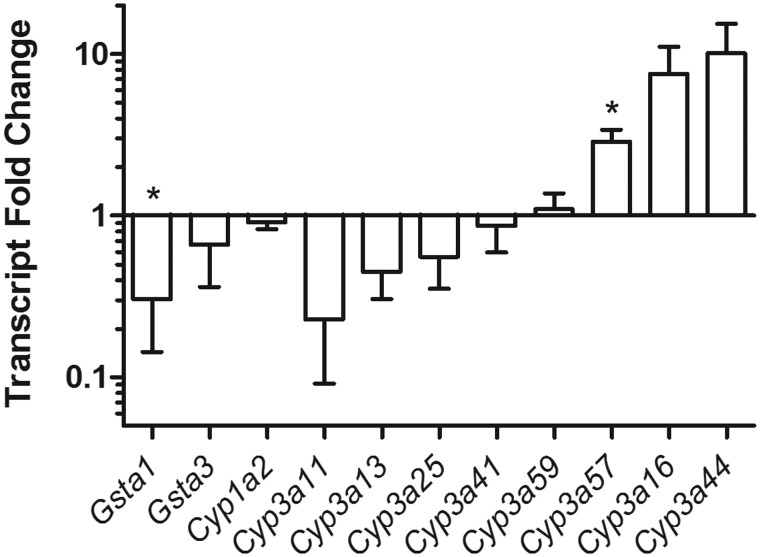
Pregnancy is a complex physiological state, in which the metabolism of endogenous as well as exogenous agents is ostensibly altered. One exogenous agent of concern is the hepatocarcinogen aflatoxin B1 (AFB1), a foodborne fungal toxin, that requires phase I metabolic oxidation for conversion to its toxic and carcinogenic form, the AFB1-8,9-exo-epoxide. The epoxide interacts with cellular targets causing toxicity and cell death; these targets include the covalent modification of DNA leading to mutations that can initiate malignant transformation. The main detoxification pathway of the AFB1-epoxide involves phase II metabolic enzymes including the glutathione-S-transferase (GST) family. Pregnancy can modulate both phase I and II metabolism and alter the biological potency of AFB1. The present work investigated the impact of pregnancy on AFB1 exposure in mice. A single IP dose of 6 mg/kg AFB1 was administered to pregnant C57BL/6 J mice at gestation day 14 and matched non-pregnant controls. Pregnant mice accumulated 2-fold higher AFB1-N7-guanine DNA adducts in the liver when compared with nonpregnant controls 6 h post-exposure. Enhanced DNA adduct formation in pregnant animals paralleled elevated hepatic protein expression of mouse CYP1A2 and mouse homologs of human CYP3A4, phase I enzymes capable of bioactivating AFB1. Although phase II enzymes GSTA1/2 showed decreased protein expression, GSTA3, the primary enzymatic protection against the AFB1-epoxide, was unaffected at the protein level. Taken together, our results reveal that pregnancy may constitute a critical window of susceptibility for maternal health, and provide insight into the biochemical factors that could explain the underlying risks.
妊娠是一种复杂的生理状态,在此期间内,内源性和外源性物质的代谢明显改变。一个令人关注的外源性物质是肝致癌物黄曲霉毒素 B1(AFB1),一种食源性真菌毒素,需要进行 I 相代谢氧化,才能转化为其有毒和致癌形式 AFB1-8,9-外-环氧。该环氧化物与细胞靶标相互作用导致毒性和细胞死亡;这些靶标包括 DNA 的共价修饰,导致突变,从而引发恶性转化。AFB1-环氧化物的主要解毒途径涉及 II 相代谢酶,包括谷胱甘肽-S-转移酶(GST)家族。妊娠可以调节 I 相和 II 相代谢,并改变 AFB1 的生物学效力。本研究调查了妊娠对小鼠 AFB1 暴露的影响。在妊娠第 14 天,给 C57BL/6 J 孕鼠单次腹腔注射 6mg/kg 的 AFB1,并与未怀孕的对照组匹配。与未怀孕的对照组相比,孕鼠在接触 AFB1 后 6 小时肝脏中 AFB1-N7-鸟嘌呤 DNA 加合物的积累增加了 2 倍。在怀孕动物中 DNA 加合物的形成增强与肝 CYP1A2 和人类 CYP3A4 的鼠同源物(能够激活 AFB1 的 I 相酶)的肝蛋白表达升高平行。尽管 II 相酶 GSTA1/2 的蛋白表达下降,但 GSTA3(对 AFB1-环氧化物的主要酶保护)在蛋白水平上不受影响。总之,我们的结果表明,妊娠可能构成母体健康的一个关键易感期,并深入了解可能解释潜在风险的生化因素。