Mukherjee Sumit, Debata Priya Ranjan, Hussaini Rahman, Chatterjee Kaushiki, Baidoo Juliet N E, Sampat Samay, Szerszen Anita, Navarra Joseph P, Fata Jimmie, Severinova Elena, Banerjee Probal, Castellanos Mario R
Department of Chemistry, The College of Staten Island (CUNY), New York, NY, USA.
CUNY Doctoral Program In Biochemistry, CUNY Graduate Center, New York, NY, USA.
Oncotarget. 2017 Mar 29;8(37):60904-60916. doi: 10.18632/oncotarget.16648. eCollection 2017 Sep 22.
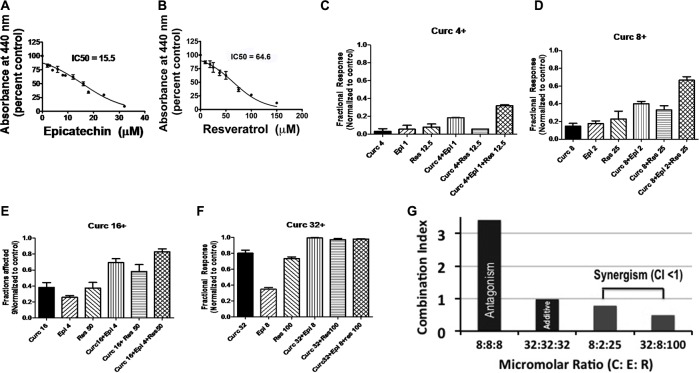
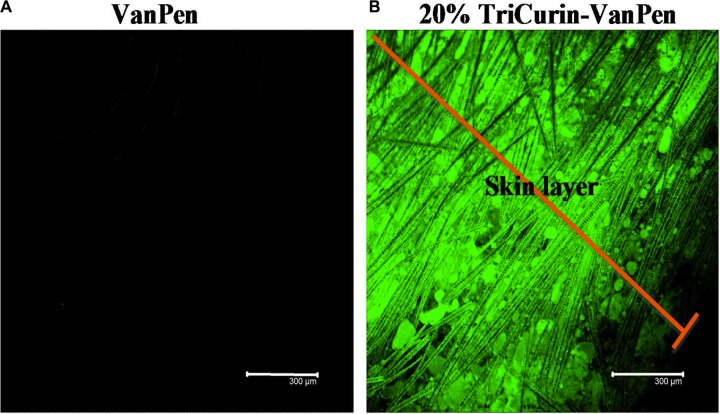
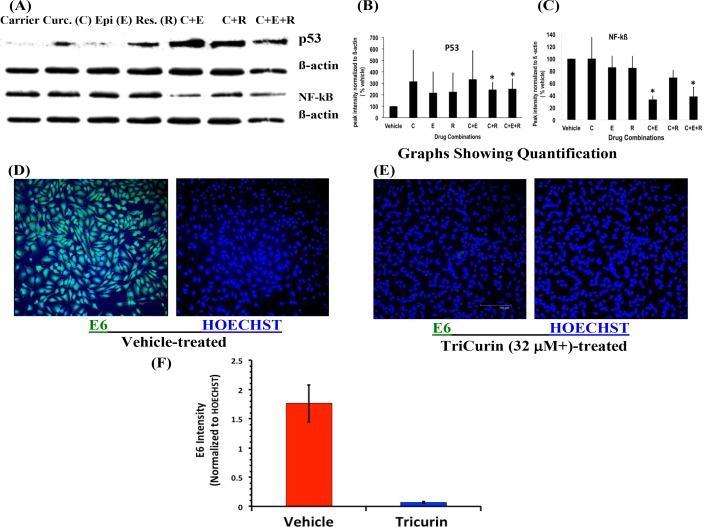
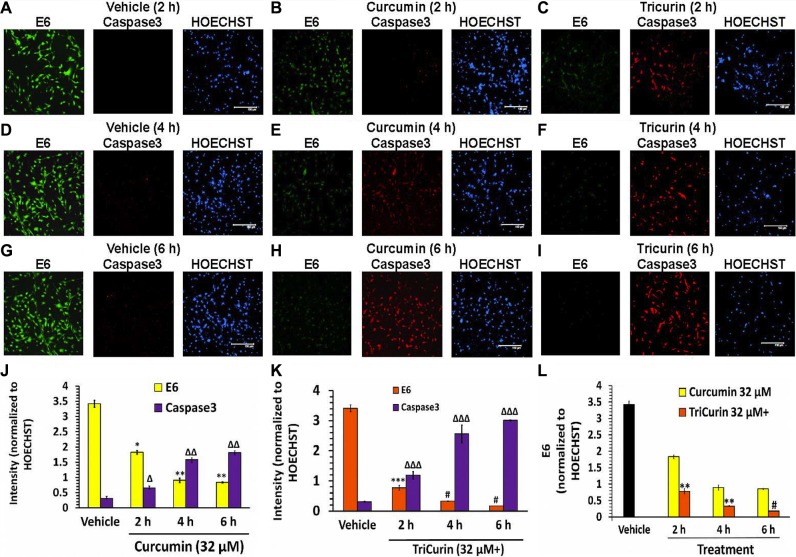
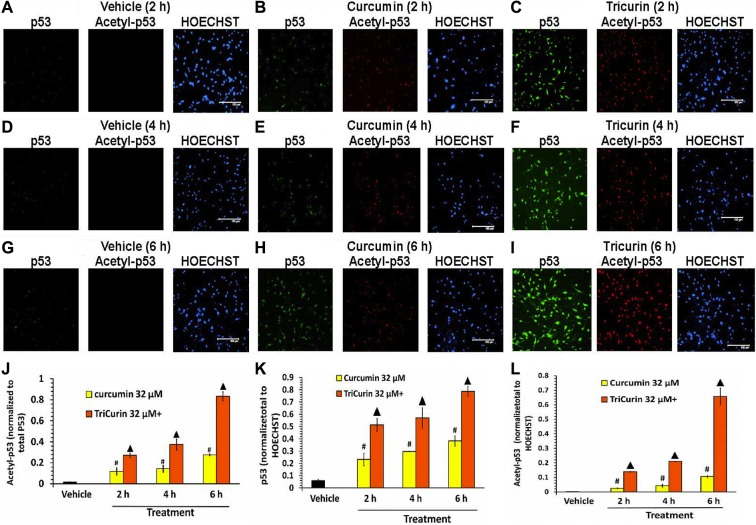
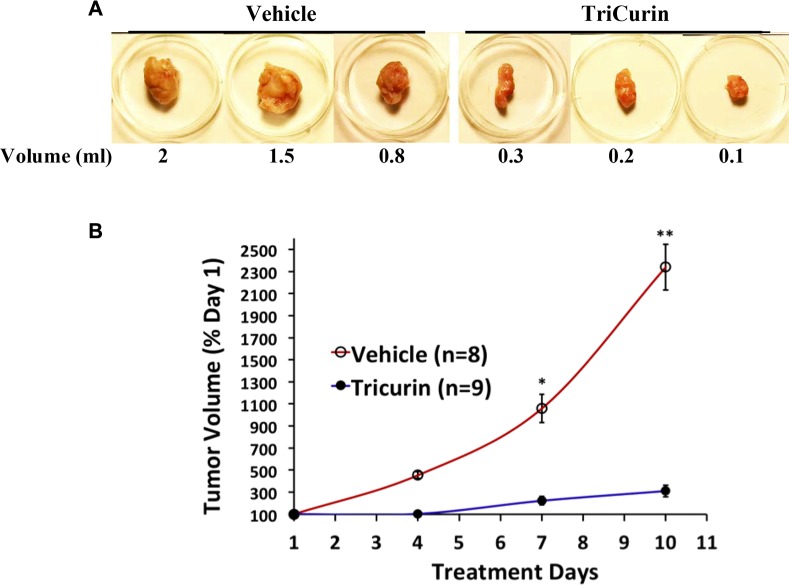
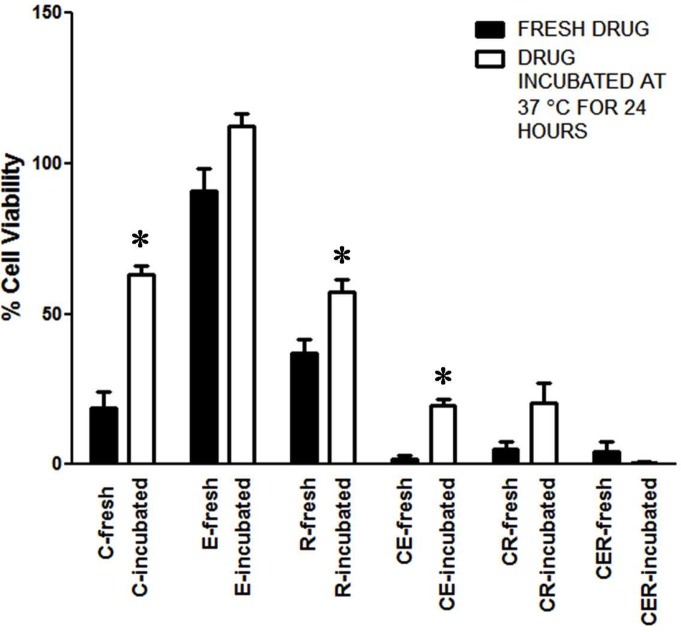
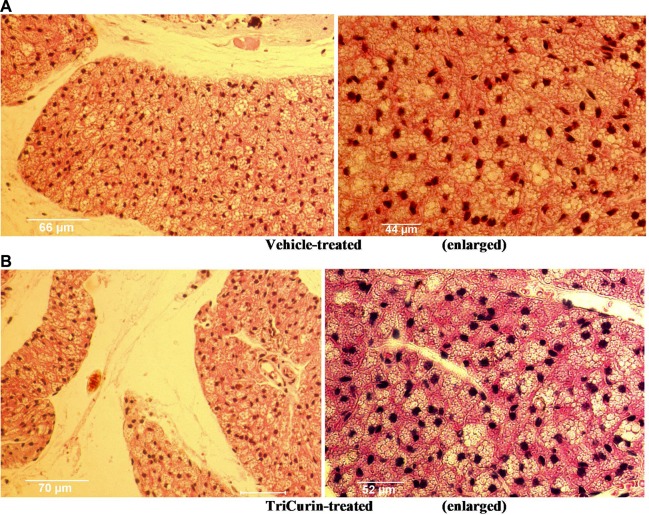
Curcumin (from curry) (C) is highly potent against cervical cancer cells (CCC), but poor bioavailability has limited its clinical use. Similar natural polyphenols resveratrol (from grapes) (R), and epicatechin gallate (from green tea) (E) also display activity against CCC. By treating CCC (HeLa) with C, E, or R, or combinations of these compounds, we computed combination indices and observed a strong synergism among C, E, and R at the unique molar ratio 4:1:12.5. This combination, named as TriCurin, rapidly down regulated HPV18 E6 and NF-kB expression while concomitantly inducing the tumor suppressor protein p53 in HeLa cells. In the mouse c-Ha-ras and HPV16 E6, E7-expressing TC-1 CCC, both C and TriCurin elicited suppression of E6, induction of both p53 and acetyl-p53 (activated p53), and activation of caspase-3, but the TriCurin-evoked changes were several-fold greater than that produced by curcumin (4.7-fold for E6 inhibition, and 2-fold, 6-fold, and 1.7-fold for the induction of p53, acetyl-p53, and active caspase-3, respectively). Consequently, TriCurin was more potent in killing TC-1 and HeLa cells. Intralesional TriCurin treatment of tumors generated in mice by subcutaneously implanting the TC-1 CCC caused an 80-90% decrease in tumor growth. The ability of C to eliminate HeLa cells was significantly stabilized when delivered as TriCurin than when delivered alone. Topical application of TriCurin dispersed in a cream base afforded efficient transfer of C across the skin. Subcutaneous TriCurin injection yielded no adverse effect in tumor-naïve healthy mice. Thus, TriCurin is a safe and promising therapeutic agent against HPV-associated disease.
姜黄素(来自咖喱)(C)对宫颈癌细胞(CCC)具有高度活性,但生物利用度低限制了其临床应用。类似的天然多酚白藜芦醇(来自葡萄)(R)和表没食子儿茶素没食子酸酯(来自绿茶)(E)也对CCC显示出活性。通过用C、E或R或这些化合物的组合处理CCC(HeLa),我们计算了联合指数,并观察到在独特的摩尔比4:1:12.5时,C、E和R之间有很强的协同作用。这种组合,命名为TriCurin,在HeLa细胞中迅速下调HPV18 E6和NF-κB表达,同时诱导肿瘤抑制蛋白p53。在小鼠c-Ha-ras和表达HPV16 E6、E7的TC-1 CCC中,C和TriCurin均引起E6抑制、p53和乙酰化p53(活化的p53)诱导以及caspase-3活化,但TriCurin引起的变化比姜黄素产生的变化大几倍(E6抑制为4.7倍,p53、乙酰化p53和活性caspase-3诱导分别为2倍、6倍和1.7倍)。因此,TriCurin在杀死TC-1和HeLa细胞方面更有效。通过皮下植入TC-1 CCC在小鼠体内产生的肿瘤进行瘤内TriCurin治疗导致肿瘤生长减少80-90%。与单独给药时相比,以TriCurin形式给药时,C消除HeLa细胞的能力显著稳定。分散在乳膏基质中的TriCurin局部应用可使C有效透过皮肤。皮下注射TriCurin对未患肿瘤的健康小鼠没有不良影响。因此,TriCurin是一种针对HPV相关疾病的安全且有前景的治疗剂。