Brandsma Inger, Fleuren Emmy D G, Williamson Chris T, Lord Christopher J
a The CRUK Gene Function Laboratory and Breast Cancer Now Toby Robins Research Centre , The Institute of Cancer Research , London , UK.
Expert Opin Investig Drugs. 2017 Dec;26(12):1341-1355. doi: 10.1080/13543784.2017.1389895. Epub 2017 Oct 14.
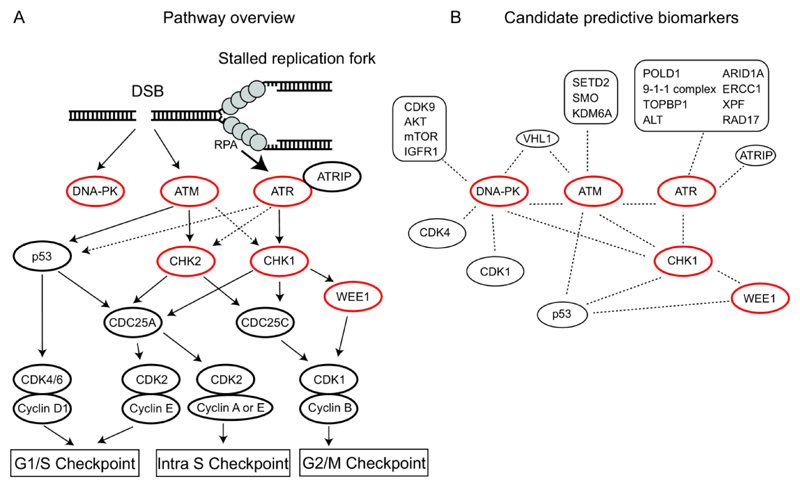
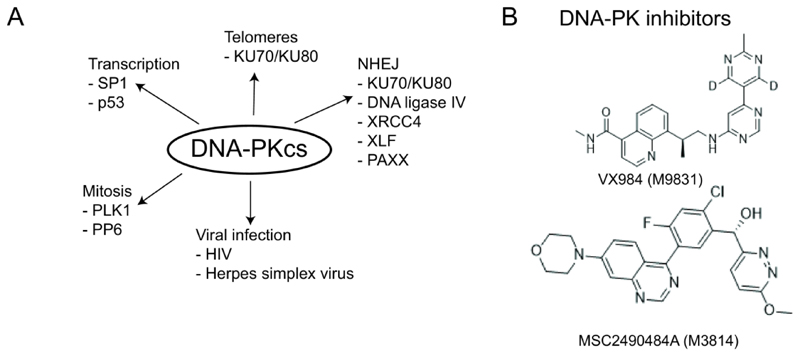
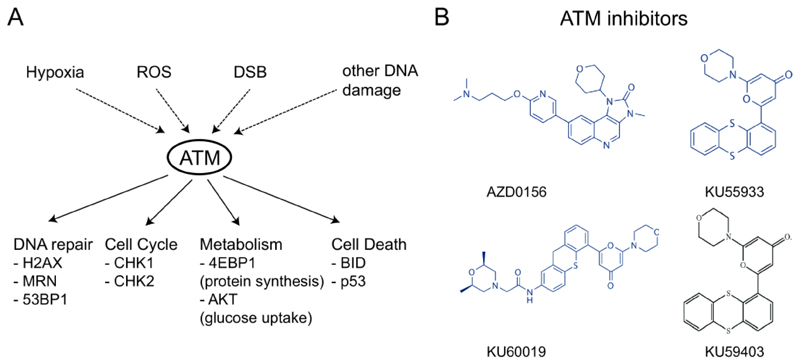
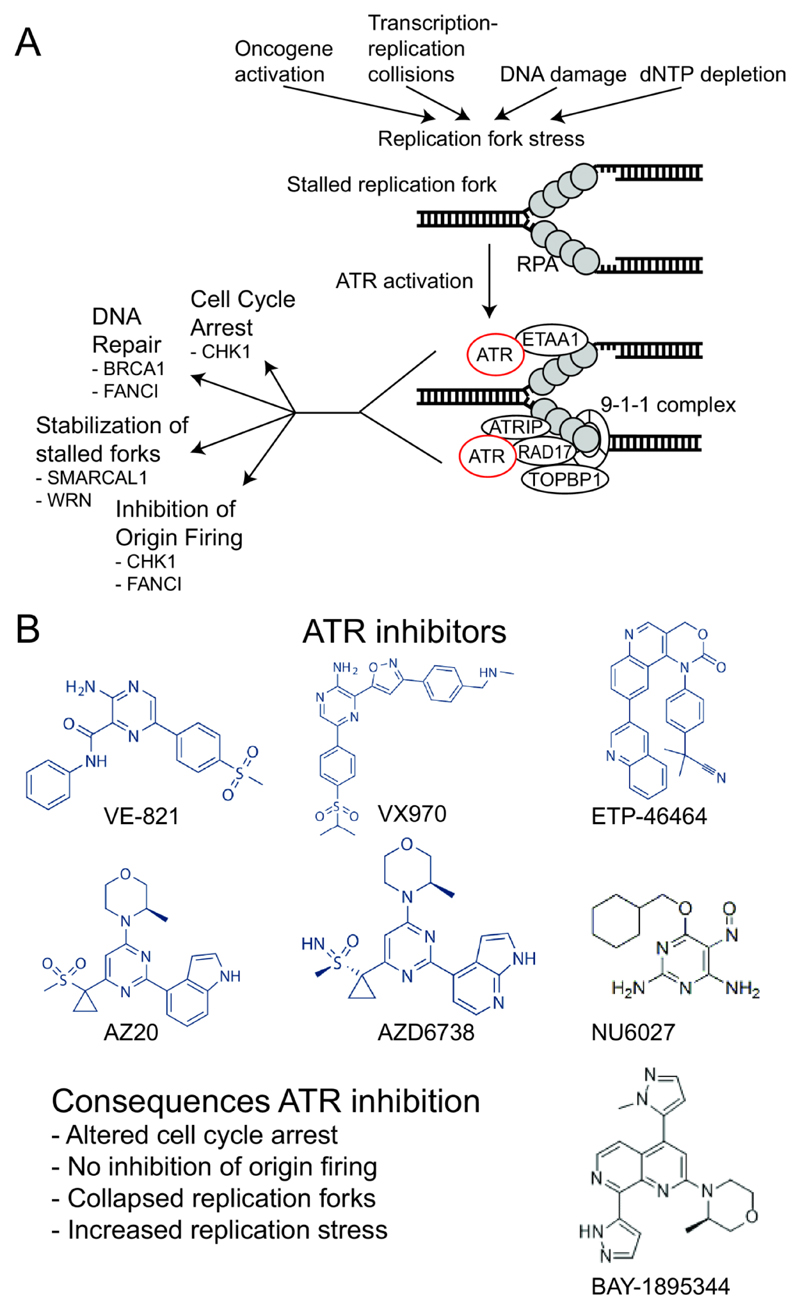
Defects in the DNA damage response (DDR) drive the development of cancer by fostering DNA mutation but also provide cancer-specific vulnerabilities that can be exploited therapeutically. The recent approval of three different PARP inhibitors for the treatment of ovarian cancer provides the impetus for further developing targeted inhibitors of many of the kinases involved in the DDR, including inhibitors of ATR, ATM, CHEK1, CHEK2, DNAPK and WEE1. Areas covered: We summarise the current stage of development of these novel DDR kinase inhibitors, and describe which predictive biomarkers might be exploited to direct their clinical use. Expert opinion: Novel DDR inhibitors present promising candidates in cancer treatment and have the potential to elicit synthetic lethal effects. In order to fully exploit their potential and maximize their utility, identifying highly penetrant predictive biomarkers of single agent and combinatorial DDR inhibitor sensitivity are critical. Identifying the optimal drug combination regimens that could used with DDR inhibitors is also a key objective.
DNA损伤反应(DDR)缺陷通过促进DNA突变推动癌症发展,但同时也提供了癌症特异性的脆弱性,可被用于治疗。最近三种不同的PARP抑制剂被批准用于治疗卵巢癌,这为进一步开发许多参与DDR的激酶的靶向抑制剂提供了动力,包括ATR、ATM、CHEK1、CHEK2、DNA-PK和WEE1的抑制剂。涵盖领域:我们总结了这些新型DDR激酶抑制剂的当前开发阶段,并描述了哪些预测性生物标志物可用于指导其临床应用。专家观点:新型DDR抑制剂在癌症治疗中展现出有前景的候选药物,并有引发合成致死效应的潜力。为了充分发挥其潜力并使其效用最大化,识别单药和联合DDR抑制剂敏感性的高渗透性预测性生物标志物至关重要。确定可与DDR抑制剂联合使用的最佳药物组合方案也是一个关键目标。