Department of Anatomy and Cell Biology, Indiana University School of Medicine, Indianapolis, IN, 46202, USA.
Spinal Cord and Brain Injury Research Group, Stark Neurosciences Research Institute. Indiana University School of Medicine, Indianapolis, IN, 46202, USA.
Sci Rep. 2017 Oct 6;7(1):12743. doi: 10.1038/s41598-017-12972-6.
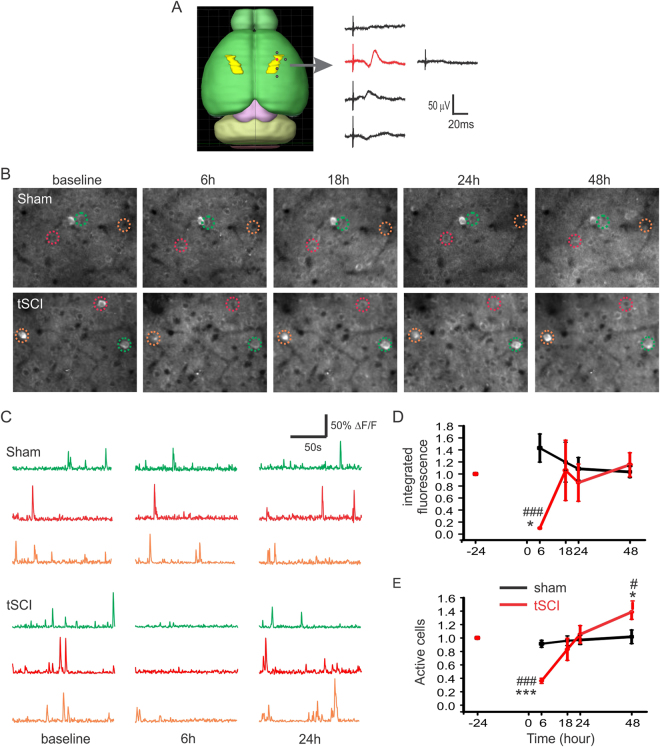
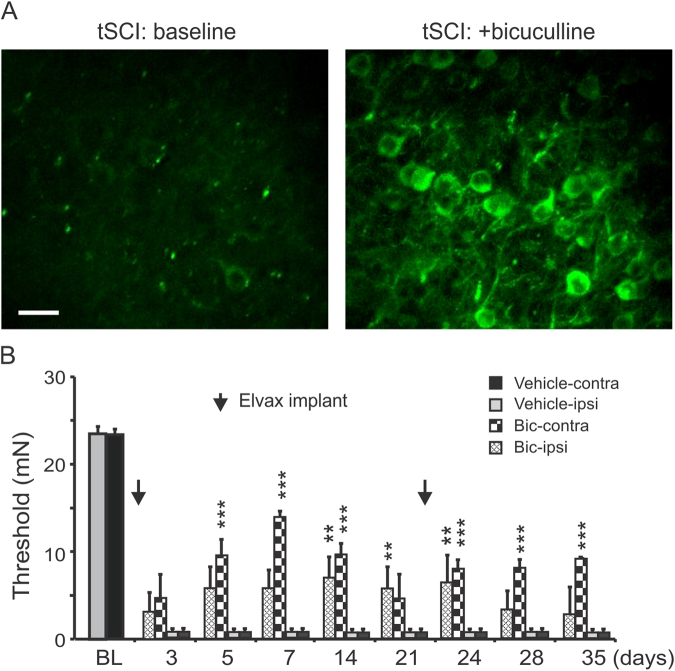
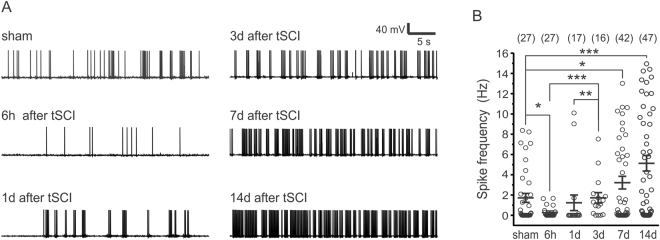
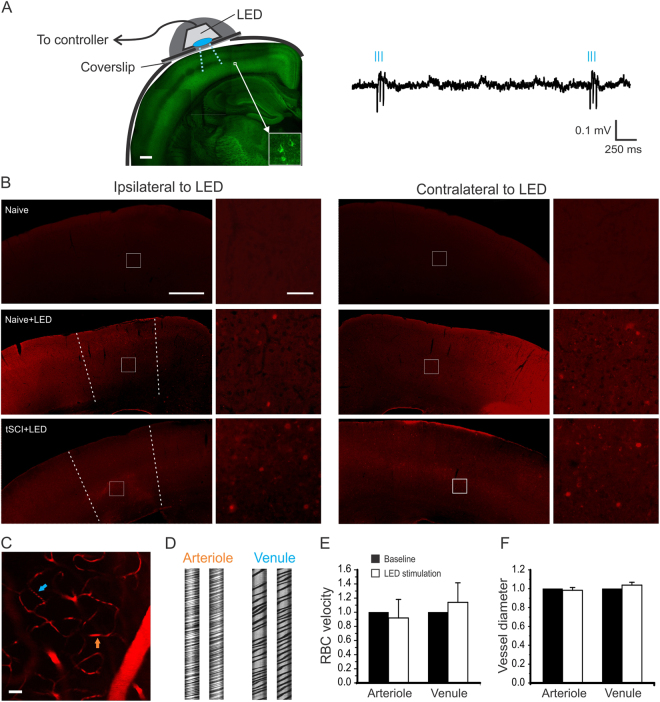
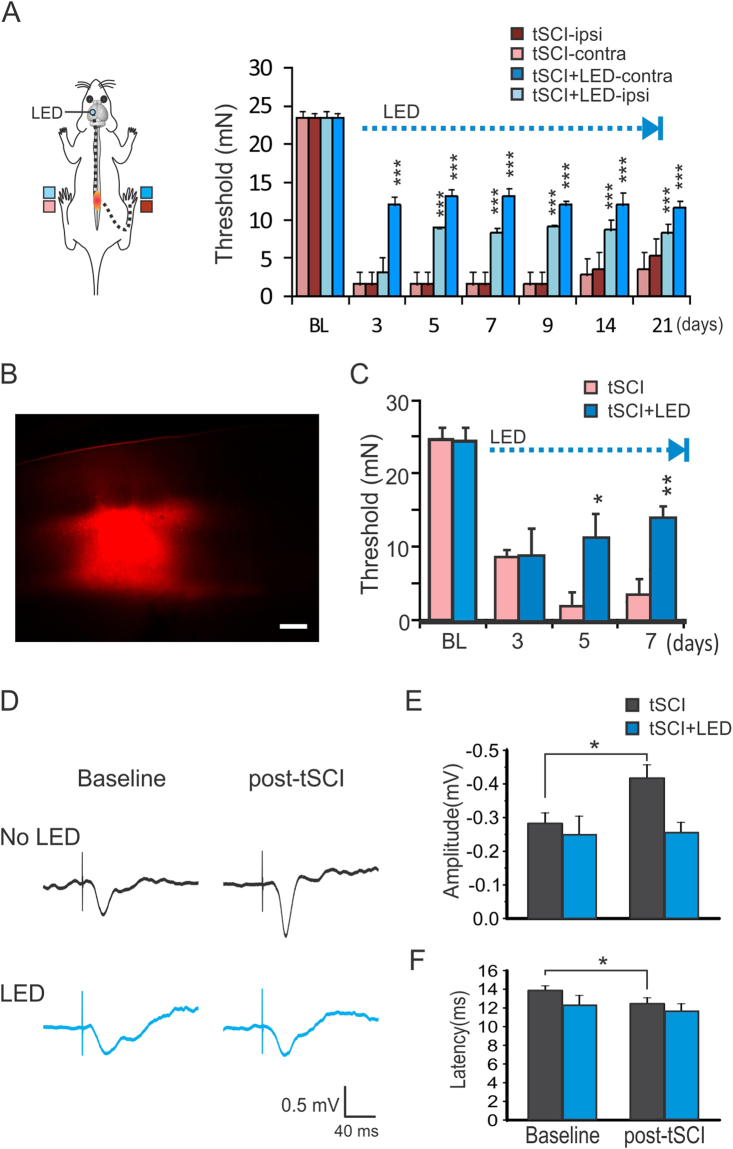
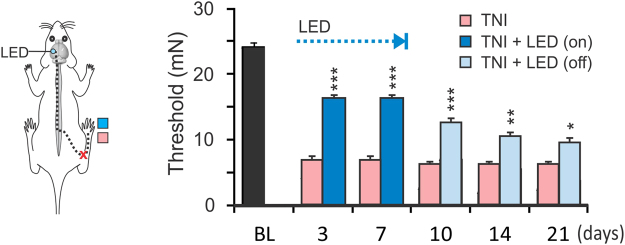
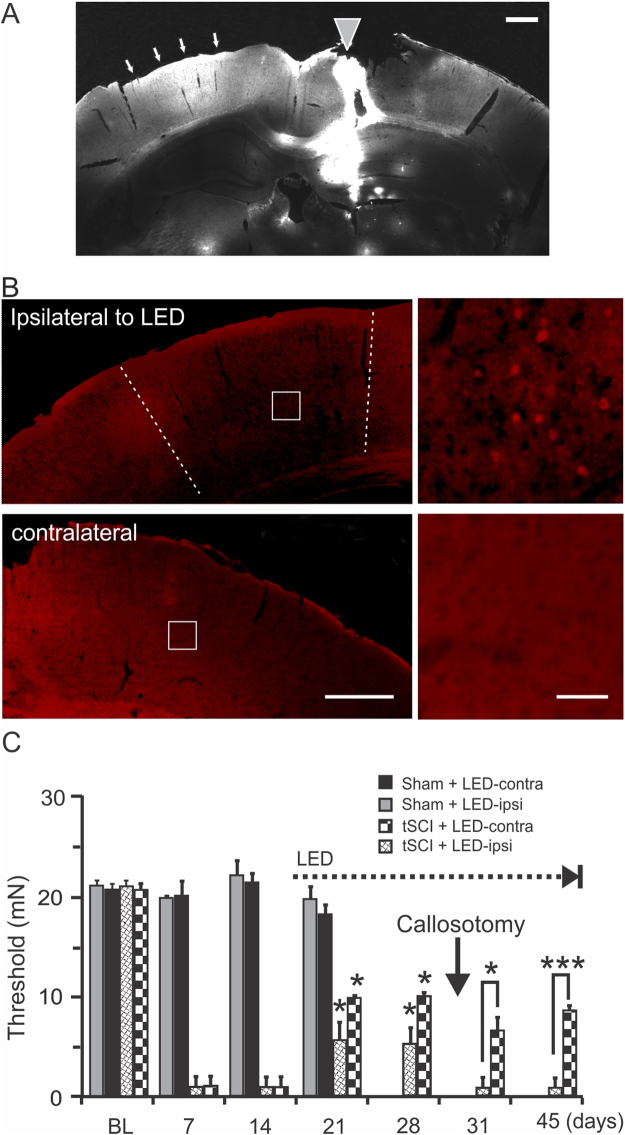
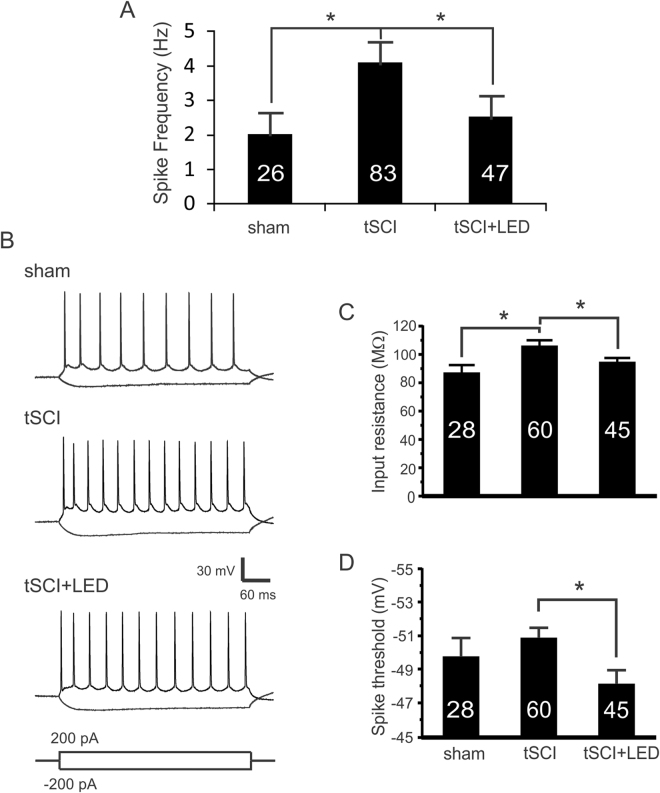
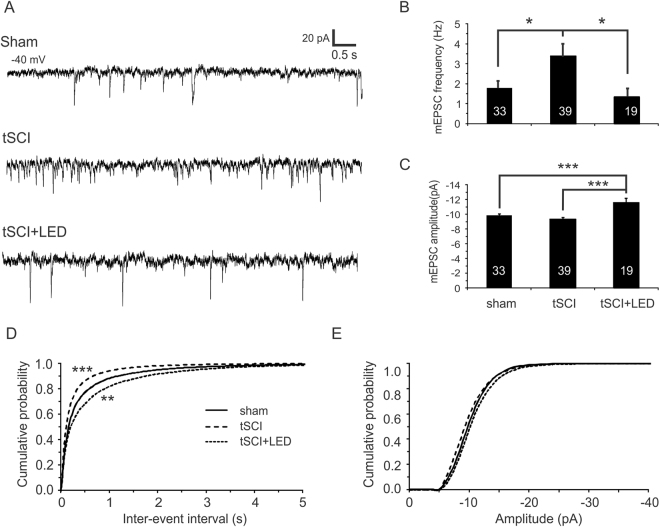
Central sensitization and network hyperexcitability of the nociceptive system is a basic mechanism of neuropathic pain. We hypothesize that development of cortical hyperexcitability underlying neuropathic pain may involve homeostatic plasticity in response to lesion-induced somatosensory deprivation and activity loss, and can be controlled by enhancing cortical activity. In a mouse model of neuropathic pain, in vivo two-photon imaging and patch clamp recording showed initial loss and subsequent recovery and enhancement of spontaneous firings of somatosensory cortical pyramidal neurons. Unilateral optogenetic stimulation of cortical pyramidal neurons both prevented and reduced pain-like behavior as detected by bilateral mechanical hypersensitivity of hindlimbs, but corpus callosotomy eliminated the analgesic effect that was ipsilateral, but not contralateral, to optogenetic stimulation, suggesting involvement of inter-hemispheric excitatory drive in this effect. Enhancing activity by focally blocking cortical GABAergic inhibition had a similar relieving effect on the pain-like behavior. Patch clamp recordings from layer V pyramidal neurons showed that optogenetic stimulation normalized cortical hyperexcitability through changing neuronal membrane properties and reducing frequency of excitatory postsynaptic events. We conclude that development of neuropathic pain involves abnormal homeostatic activity regulation of somatosensory cortex, and that enhancing cortical excitatory activity may be a novel strategy for preventing and controlling neuropathic pain.
中枢敏化和伤害感受系统的网络超兴奋性是神经性疼痛的基本机制。我们假设,神经性疼痛相关皮质兴奋性的增加可能涉及到对损伤引起的感觉剥夺和活动丧失的内稳态可塑性,并且可以通过增强皮质活动来控制。在神经性疼痛的小鼠模型中,活体双光子成像和膜片钳记录显示,感觉皮层锥体神经元的自发性放电最初减少,随后恢复并增强。单侧光遗传学刺激皮质锥体神经元可预防和减轻双侧后肢机械性超敏反应检测到的痛觉样行为,但胼胝体切开术消除了光遗传学刺激同侧而非对侧的镇痛作用,提示这种效应涉及到半球间兴奋性驱动。通过局部阻断皮质 GABA 能抑制来增强活动对痛觉样行为也有类似的缓解作用。从 V 层锥体神经元进行的膜片钳记录显示,光遗传学刺激通过改变神经元膜特性和减少兴奋性突触后事件的频率来使皮质超兴奋性正常化。我们得出结论,神经性疼痛的发展涉及到感觉皮层异常的内稳态活动调节,增强皮质兴奋性活动可能是预防和控制神经性疼痛的一种新策略。