Laurence James
The University of Manchester, UK.
Sociology. 2017 Oct;51(5):1011-1033. doi: 10.1177/0038038516641867. Epub 2016 May 10.
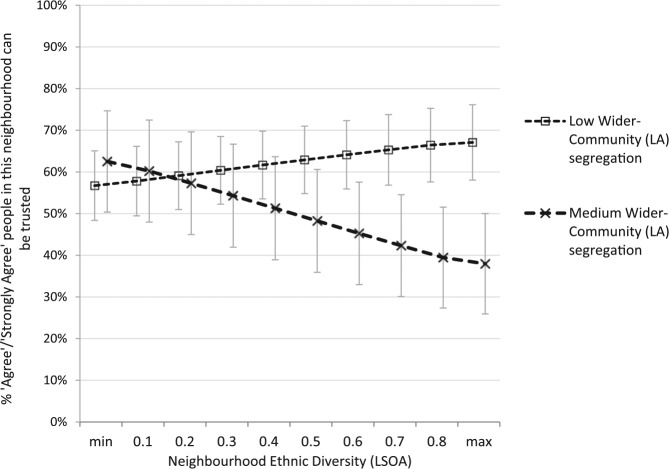
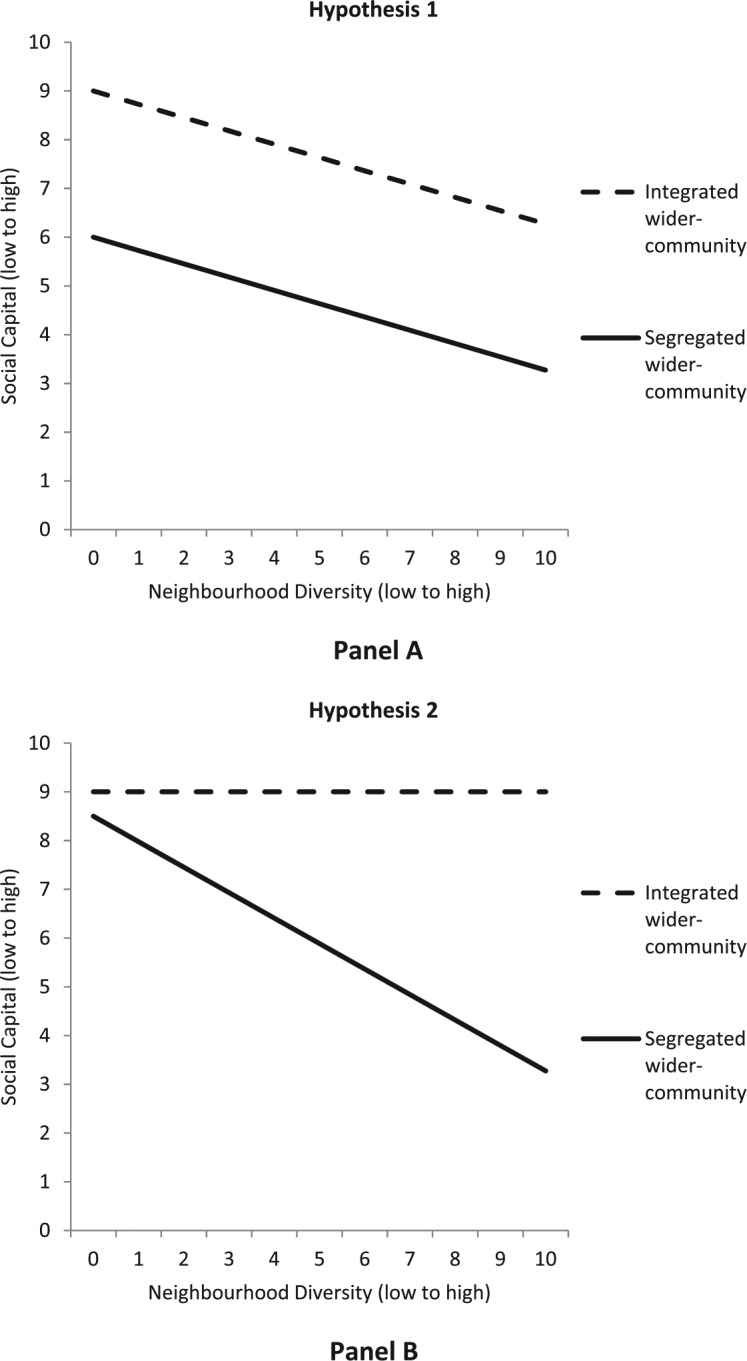
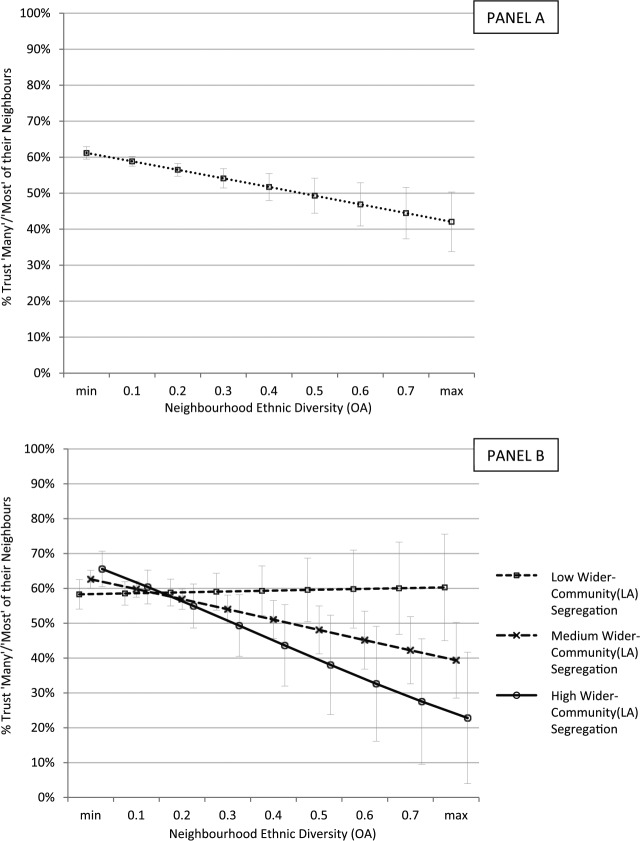
Extensive research has demonstrated that neighbourhood ethnic diversity is negatively associated with intra-neighbourhood social capital. This study explores the role of segregation and integration in this relationship. To do so it applies three-level hierarchical linear models to two sets of data from across Great Britain and within London, and examines how segregation across the wider-community in which a neighbourhood is impacts trust amongst neighbours. This study replicates the increasingly ubiquitous finding that neighbourhood diversity is negatively associated with neighbour-trust. However, we demonstrate that this relationship is highly dependent on the level of segregation across the wider-community in which a neighbourhood is nested. Increasing neighbourhood diversity only negatively impacts neighbour-trust when nested in more segregated wider-communities. Individuals living in diverse neighbourhoods nested within integrated wider-communities experience no trust-penalty. These findings show that segregation plays a critical role in the neighbourhood diversity/trust relationship, and that its absence from the literature biases our understanding of how ethnic diversity affects social cohesion.
大量研究表明,邻里的种族多样性与邻里间的社会资本呈负相关。本研究探讨了隔离与融合在这种关系中所起的作用。为此,它将三级分层线性模型应用于来自英国各地和伦敦内部的两组数据,并研究邻里所在更广泛社区的隔离如何影响邻里之间的信任。本研究重复了越来越普遍的发现,即邻里多样性与邻里信任呈负相关。然而,我们证明,这种关系高度依赖于邻里所在更广泛社区的隔离程度。只有当邻里处于隔离程度更高的更广泛社区中时,邻里多样性的增加才会对邻里信任产生负面影响。生活在融合程度更高的更广泛社区中的多样化邻里中的个人不会受到信任惩罚。这些发现表明,隔离在邻里多样性/信任关系中起着关键作用,而文献中缺乏这一点会使我们对种族多样性如何影响社会凝聚力的理解产生偏差。