Debald Manuel, Pech Thomas, Kaiser Christina, Keyver-Paik Mignon-Denise, Walgenbach-Bruenagel Gisela, Kalff Joerg C, Kuhn Walther, Walgenbach Klaus J
Department of Obstetrics and Gynecology, Centre for Integrated Oncology, University of Bonn, Bonn, Germany.
Division of Plastic and Aesthetic Surgery, University of Bonn, Sigmund-Freud-Str. 25, 53127 Bonn, Germany.
Eur J Plast Surg. 2017;40(5):447-454. doi: 10.1007/s00238-017-1311-1. Epub 2017 May 29.
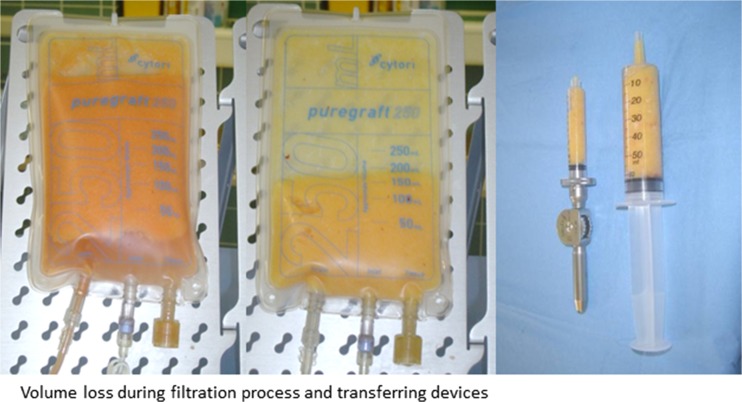
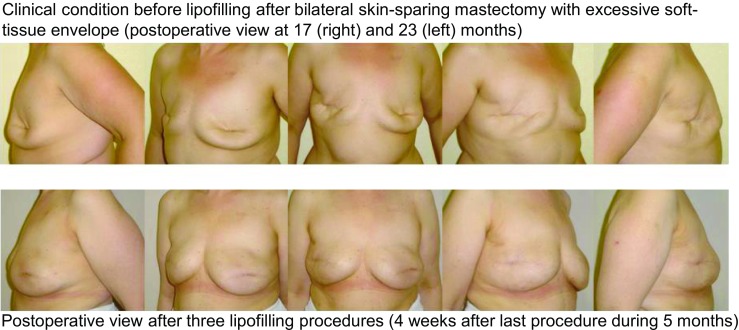
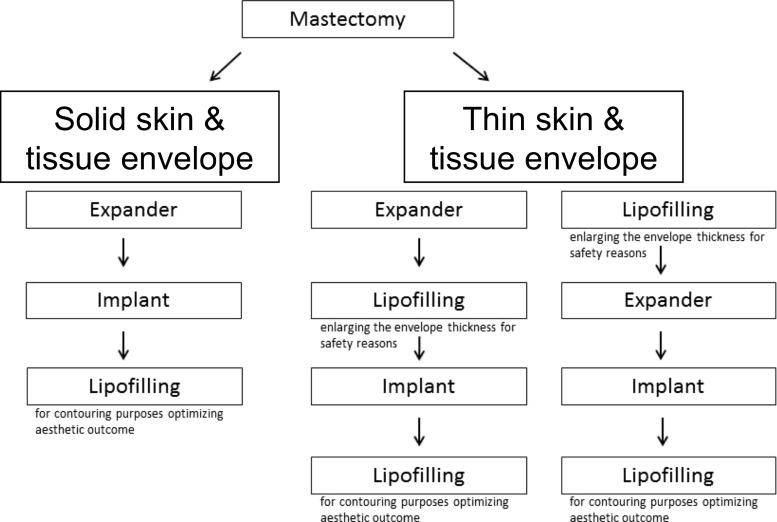
Lipofilling or autologous fat transfer is an established technique in plastic surgery. Herein, we describe the lipofilling effects after implant-based breast reconstruction in post-radiation patients and propose an algorithm for indication of lipofilling.
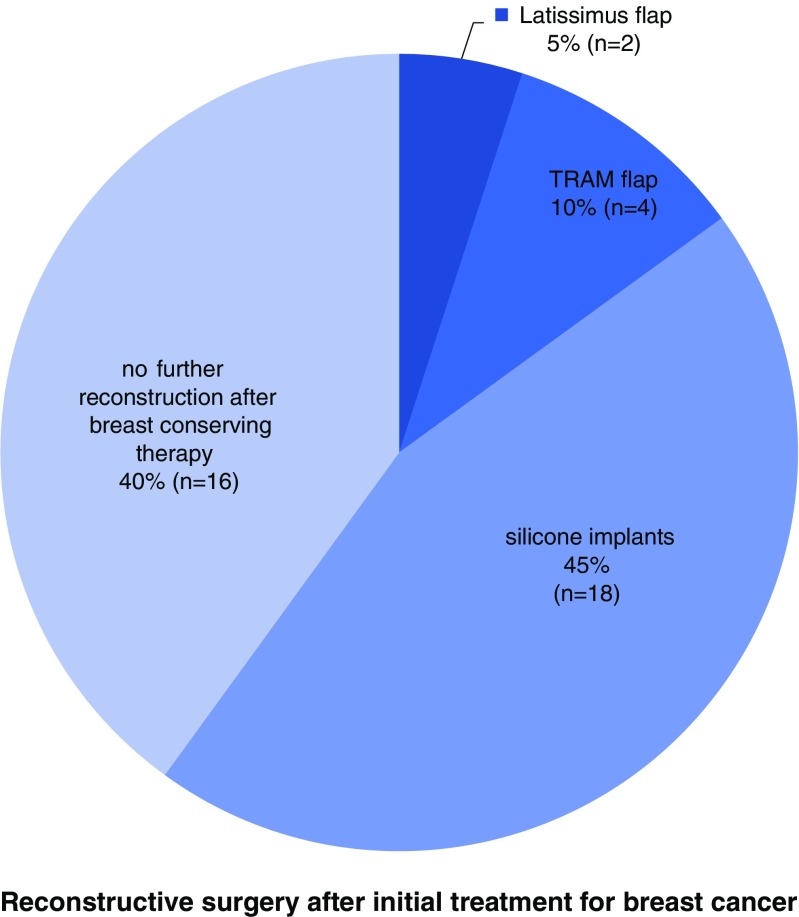
Forty patients with a history of breast cancer were included in this retrospective analysis. Patients had undergone either breast conserving therapy or mastectomy. Twenty-six patients underwent additional radiation therapy. Patients were assessed using a post-radiation skin scoring classification.
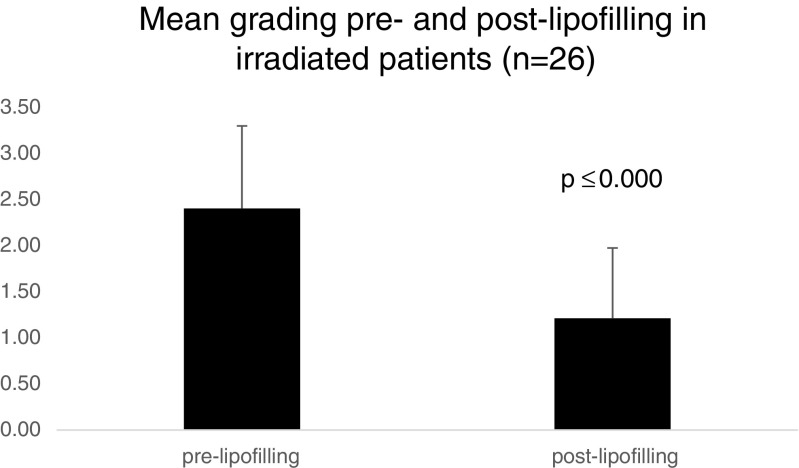
In total, 68 lipofilling procedures were analyzed. Scar release, skin softening, improved quality of life, and improvement of post-radiation findings are results of lipofilling with a closed filtration system. In all patients with post-surgical radiation, an improvement of tissue quality was observed. Staging revealed that lipofilling improved mean post-radiation skin scores of 2.40 ± 0.89 to 1.21 ± 0.76 ( ≤ 0.000). There was no recurrence of breast cancer in our study patients.
This study introduces an algorithm using lipofilling in reconstructive breast surgery and especially in post-radiation patients with low risks as well as very high acceptance in patients with various indications for this procedure. A regenerative aspect was also detectable in patients following radiation therapy and reconstruction. Lipofilling is a safe and effective procedure with a low incidence of minor complications. It is therefore a feasible method to resolve volume deficiencies and asymmetric results after oncologic breast surgery. Nevertheless, a prospective study has now been initiated focusing on the oncologic safety of lipofilling including ultrasound and radiological examinations to validate the findings of this initial study. Level of Evidence: Level IV, therapeutic study.
脂肪填充或自体脂肪移植是整形外科中一项成熟的技术。在此,我们描述了放疗后患者基于植入物的乳房重建后的脂肪填充效果,并提出了一种脂肪填充适应症算法。
本回顾性分析纳入了40例有乳腺癌病史的患者。患者均接受了保乳治疗或乳房切除术。26例患者接受了额外的放射治疗。采用放疗后皮肤评分分类对患者进行评估。
共分析了68例脂肪填充手术。采用封闭过滤系统进行脂肪填充的结果包括瘢痕松解、皮肤软化、生活质量改善以及放疗后表现的改善。在所有接受术后放疗的患者中,均观察到组织质量有所改善。分期显示,脂肪填充使放疗后平均皮肤评分从2.40±0.89改善至1.21±0.76(P≤0.000)。本研究患者中未出现乳腺癌复发情况。
本研究介绍了一种在乳房重建手术中,尤其是在低风险放疗后患者中使用脂肪填充的算法,该方法在各种适应症患者中也具有很高的接受度。放疗和重建后的患者也表现出再生方面的效果。脂肪填充是一种安全有效的手术,轻微并发症发生率低。因此,它是解决肿瘤性乳房手术后体积不足和不对称问题的一种可行方法。尽管如此,目前已启动一项前瞻性研究,重点关注脂肪填充的肿瘤学安全性,包括超声和放射学检查,以验证这项初步研究的结果。证据级别:IV级,治疗性研究。