Thomson Madeleine C, Ukawuba Israel, Hershey Christine L, Bennett Adam, Ceccato Pietro, Lyon Bradfield, Dinku Tufa
International Research Institute for Climate and Society, Palisades, New York.
Department of Environmental Health Sciences, Mailman School of Public Health, Columbia University, New York, New York.
Am J Trop Med Hyg. 2017 Sep;97(3_Suppl):32-45. doi: 10.4269/ajtmh.16-0696.
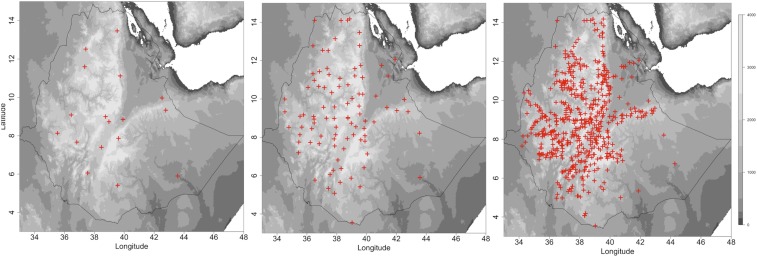
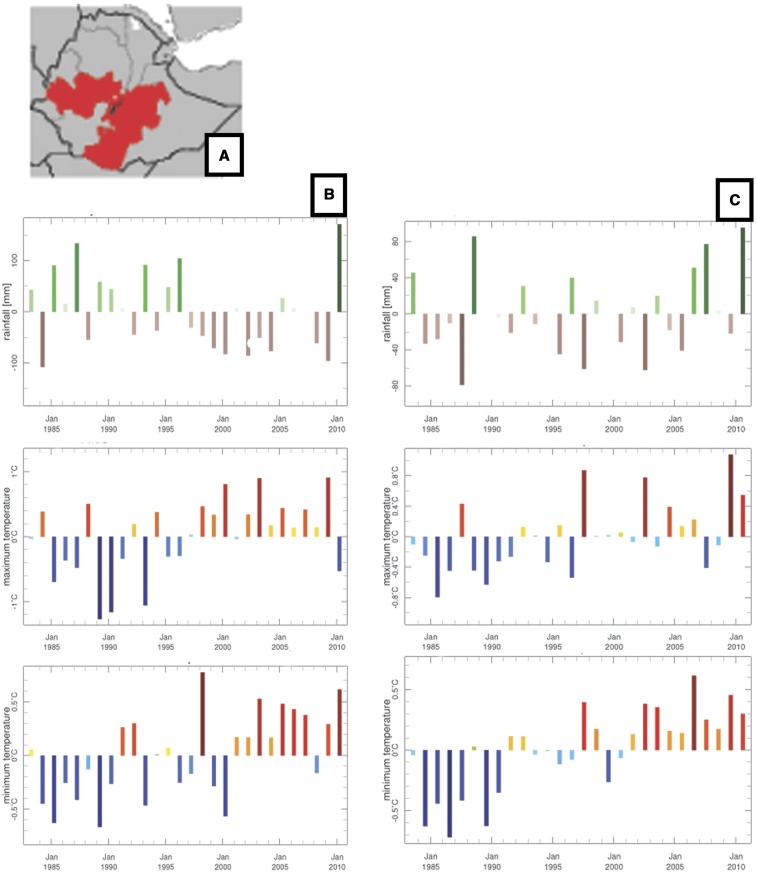
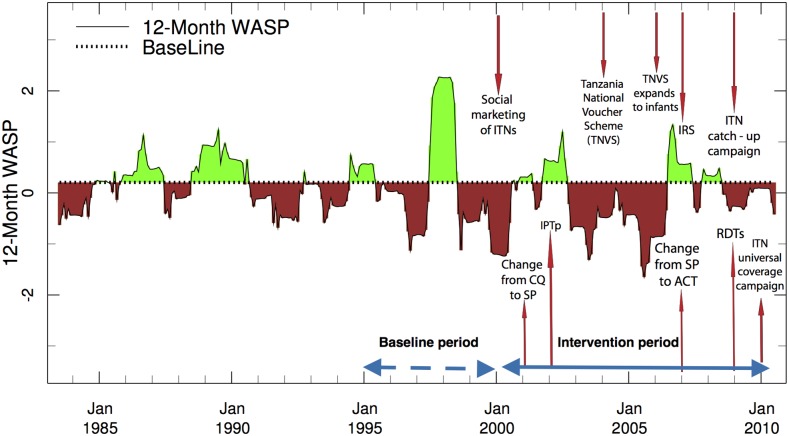
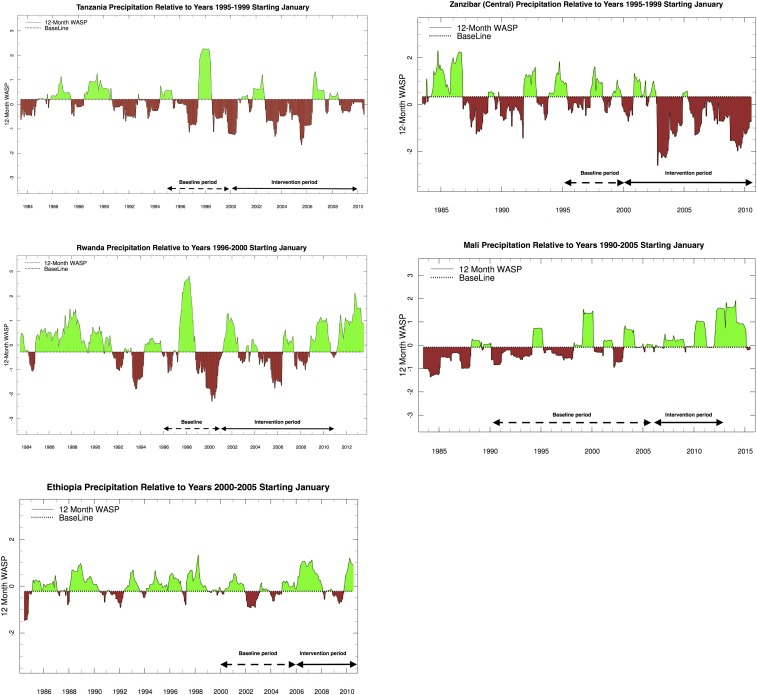
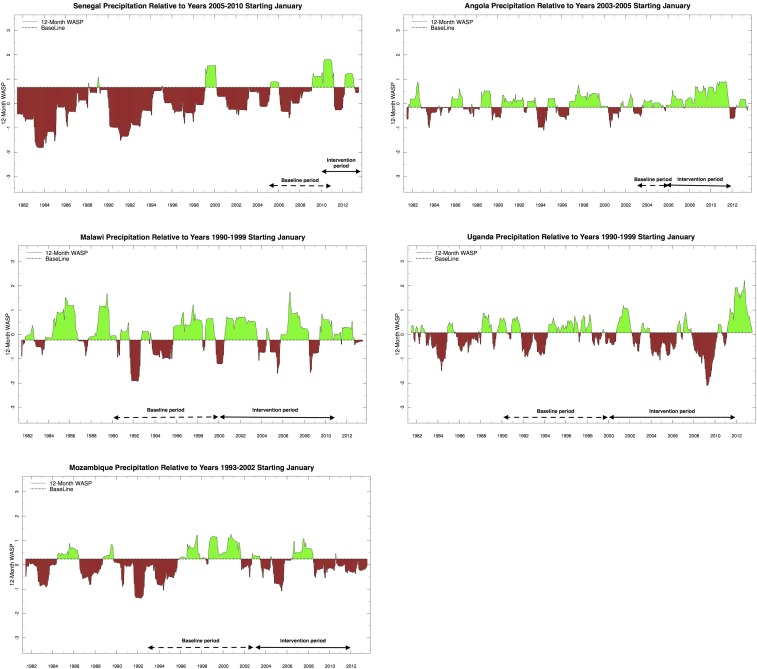
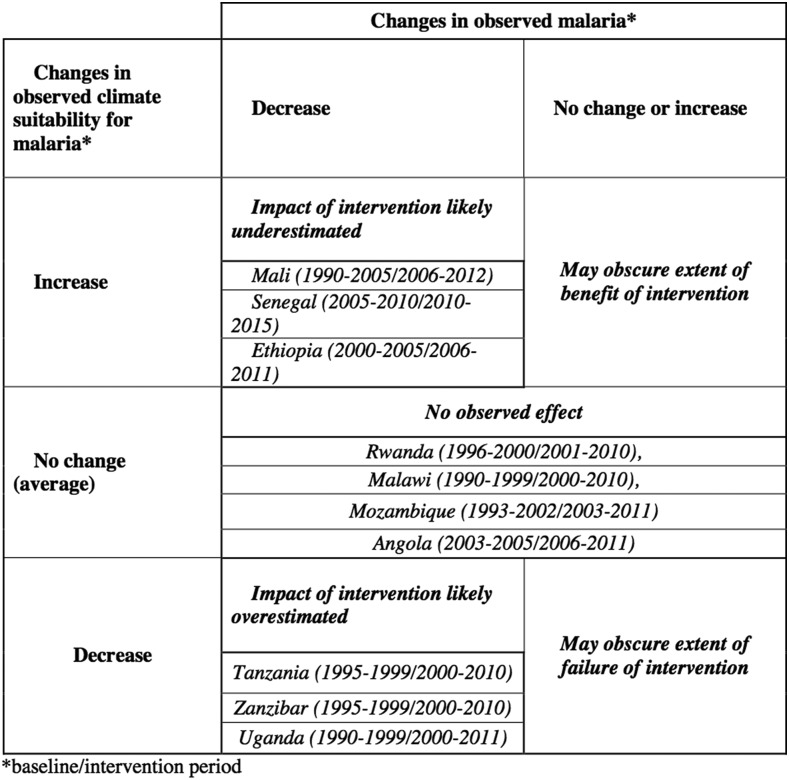
Since 2010, the Roll Back Malaria (RBM) Partnership, including National Malaria Control Programs, donor agencies (e.g., President's Malaria Initiative and Global Fund), and other stakeholders have been evaluating the impact of scaling up malaria control interventions on all-cause under-five mortality in several countries in sub-Saharan Africa. The evaluation framework assesses whether the deployed interventions have had an impact on malaria morbidity and mortality and requires consideration of potential nonintervention influencers of transmission, such as drought/floods or higher temperatures. Herein, we assess the likely effect of climate on the assessment of the impact malaria interventions in 10 priority countries/regions in eastern, western, and southern Africa for the President's Malaria Initiative. We used newly available quality controlled Enhanced National Climate Services rainfall and temperature products as well as global climate products to investigate likely impacts of climate on malaria evaluations and test the assumption that changing the baseline period can significantly impact on the influence of climate in the assessment of interventions. Based on current baseline periods used in national malaria impact assessments, we identify three countries/regions where current evaluations may overestimate the impact of interventions (Tanzania, Zanzibar, Uganda) and three countries where current malaria evaluations may underestimate the impact of interventions (Mali, Senegal and Ethiopia). In four countries (Rwanda, Malawi, Mozambique, and Angola) there was no strong difference in climate suitability for malaria in the pre- and post-intervention period. In part, this may be due to data quality and analysis issues.
自2010年以来,减疟伙伴关系(包括国家疟疾控制项目、捐助机构,如总统疟疾防治计划和全球基金)以及其他利益相关方,一直在评估扩大疟疾控制干预措施对撒哈拉以南非洲几个国家五岁以下儿童全死因死亡率的影响。该评估框架评估所部署的干预措施是否对疟疾发病率和死亡率产生了影响,并要求考虑传播的潜在非干预影响因素,如干旱/洪水或气温升高。在此,我们评估气候对总统疟疾防治计划在非洲东部、西部和南部10个优先国家/地区疟疾干预措施影响评估的可能作用。我们使用了新获得的经过质量控制的强化国家气候服务降雨和温度产品以及全球气候产品,来调查气候对疟疾评估的可能影响,并检验改变基线期是否会显著影响气候在干预措施评估中的影响这一假设。根据国家疟疾影响评估中目前使用的基线期,我们确定了三个国家/地区,其当前评估可能高估了干预措施的影响(坦桑尼亚、桑给巴尔、乌干达),以及三个国家,其当前疟疾评估可能低估了干预措施的影响(马里、塞内加尔和埃塞俄比亚)。在四个国家(卢旺达、马拉维、莫桑比克和安哥拉),干预前后气候对疟疾的适宜性没有显著差异。部分原因可能是数据质量和分析问题。