Department of Chemistry and Cosmetics, Jeju National University, Jeju 63243, Korea.
Skin Science Research Institute, Itshanbul Cosmetics Co., Chungbuk 27651, Korea.
Molecules. 2017 Oct 11;22(10):1704. doi: 10.3390/molecules22101704.
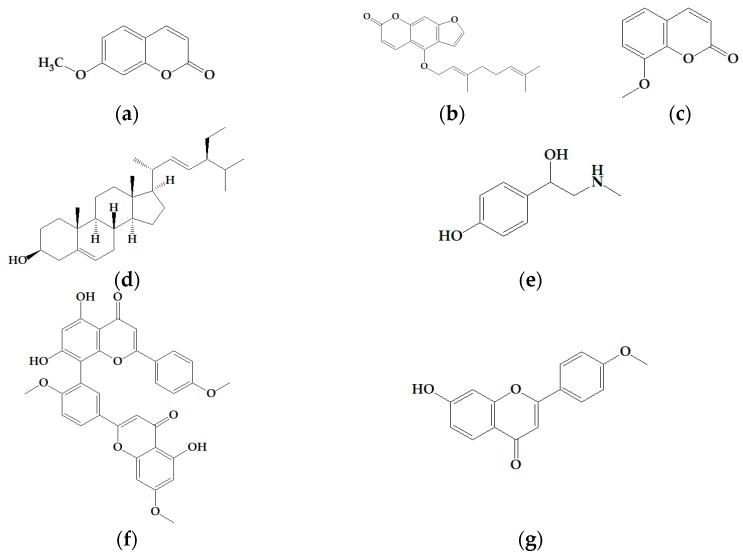
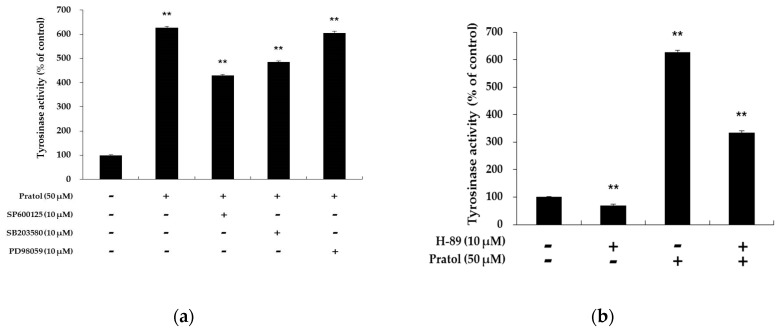
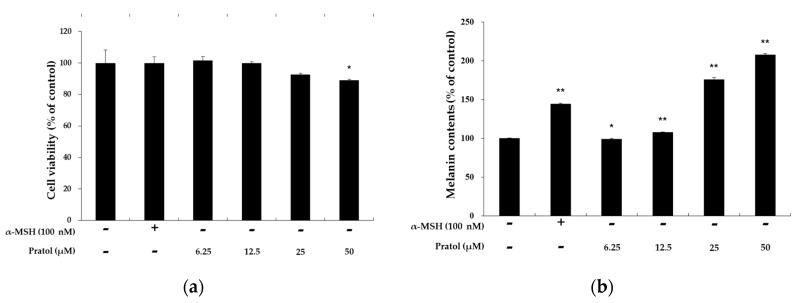
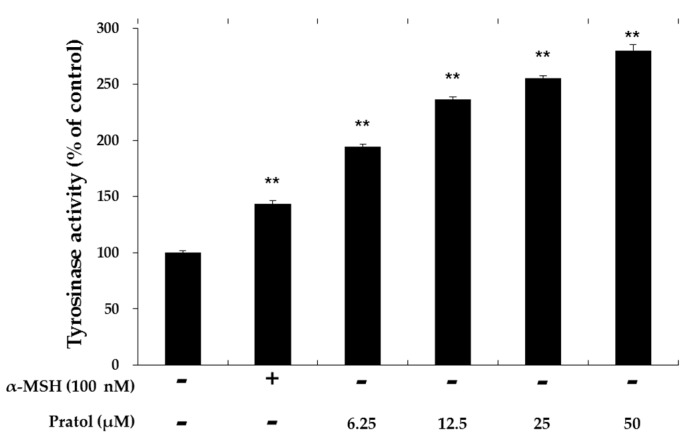
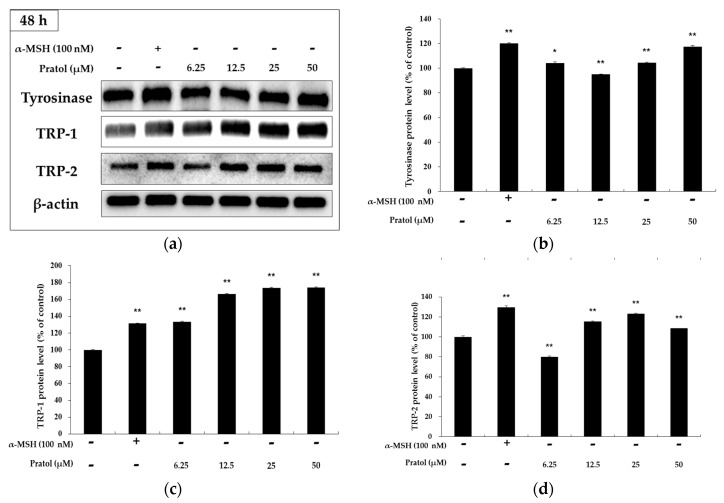
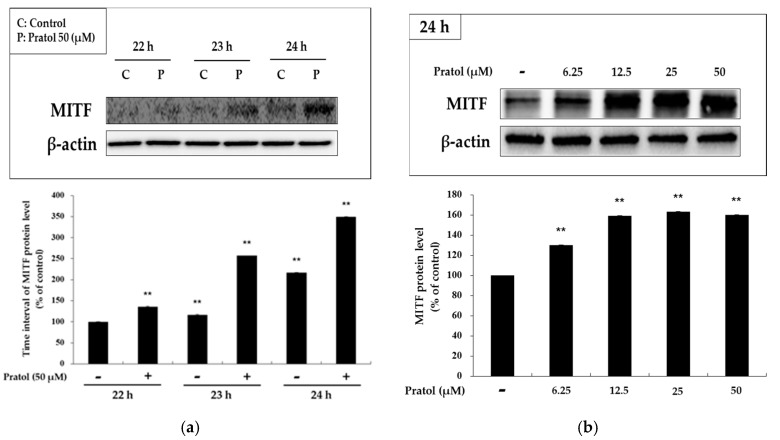
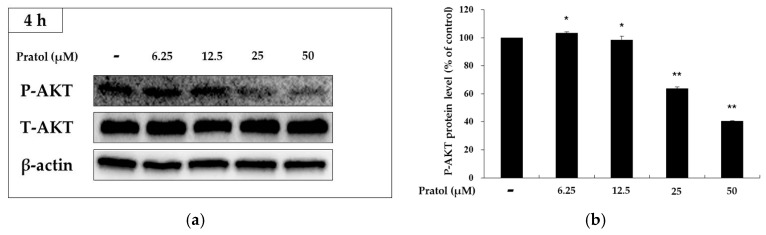
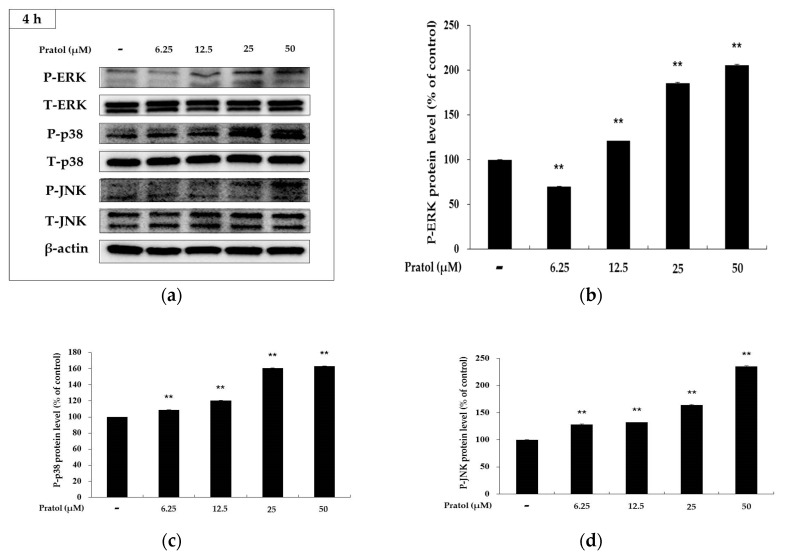
Tyrosinase is the rate-limiting enzyme critical for melanin synthesis. It controls pigmentation in the skin. Activation of tyrosinase is currently the most common approach in the development of tanning and haircare products. Pratol is a 7-hydroxy-4-methoxyflavone found in . In this study, we investigated the effects of pratol on melanogenesis. We also studied the mechanism of action of pratol in B16F10 mouse melanoma cells. The cells were treated with various concentrations (6.25, 12.5, 25, and 50 μM) of pratol to observe its effects. The results showed that pratol significantly increased melanin content and tyrosinase activity in the cells without being cytotoxic. In addition, pratol strongly increased the expression of tyrosinase and tyrosinase-related protein-1 and 2 by enhancing the expression of microphthalmia-associated transcription factor. Furthermore, pratol stimulated melanogenesis via the phosphorylation of p38, c-Jun N-terminal kinases (JNK), and extracellular signal-regulated kinase (ERK). The findings from an assay searching for the inhibitor revealed that SB203580 (a specific p38 inhibitor) or SP600125 (a p-JNK inhibitor) attenuated pratol-induced cellular tyrosinase activity whereas PD98059 (an ERK inhibitor) did not. Additionally, pratol interfered with the phosphorylation of p-AKT. We also found that pratol-induced melanogenesis was reversed by H89, which is a specific protein kinase A inhibitor. The results suggest that, owing to its multi-functional properties, pratol may be a potential tanning agent or a therapeutic agent for hair depigmentation in the cosmetic industry.
酪氨酸酶是黑色素合成的关键限速酶。它控制着皮肤的色素沉着。激活酪氨酸酶是目前开发美黑和护发产品最常用的方法。紫檀芪是一种存在于 中的 7-羟基-4-甲氧基黄酮。在这项研究中,我们研究了紫檀芪对黑色素生成的影响。我们还研究了紫檀芪在 B16F10 小鼠黑色素瘤细胞中的作用机制。用不同浓度(6.25、12.5、25 和 50 μM)的紫檀芪处理细胞,观察其作用。结果表明,紫檀芪在不具有细胞毒性的情况下,显著增加了细胞中的黑色素含量和酪氨酸酶活性。此外,紫檀芪通过增强小眼相关转录因子的表达,强烈增加了酪氨酸酶和酪氨酸酶相关蛋白-1 和 2 的表达。此外,紫檀芪通过磷酸化 p38、c-Jun N 端激酶(JNK)和细胞外信号调节激酶(ERK)刺激黑色素生成。抑制剂筛选试验的结果表明,SB203580(一种特异性 p38 抑制剂)或 SP600125(一种 p-JNK 抑制剂)减弱了紫檀芪诱导的细胞酪氨酸酶活性,而 PD98059(一种 ERK 抑制剂)则没有。此外,紫檀芪干扰了 p-AKT 的磷酸化。我们还发现,H89(一种特异性蛋白激酶 A 抑制剂)逆转了紫檀芪诱导的黑色素生成。结果表明,由于其多功能特性,紫檀芪可能是化妆品行业中潜在的美黑剂或毛发脱色治疗剂。