Park Boyeon, Hwang Hyelyeon, Lee Jina, Sohn Sung-Oh, Lee Se Hee, Jung Min Young, Lim Hyeong In, Park Hae Woong, Lee Jong-Hee
Microbiology and Functionality Research Group, World Institute of Kimchi, Gwangju 61755, Republic of Korea.
Advanced Process Technology and Fermentation Research Group, World Institute of Kimchi, Gwangju 61755, Republic of Korea.
J Ginseng Res. 2017 Oct;41(4):524-530. doi: 10.1016/j.jgr.2016.10.003. Epub 2016 Oct 10.
is a physiologically active plant widely used in traditional medicine that is characterized by the presence of ginsenosides. Rb1, a major ginsenoside, is used as the starting material for producing ginsenoside derivatives with enhanced pharmaceutical potentials through chemical, enzymatic, or microbial transformation.
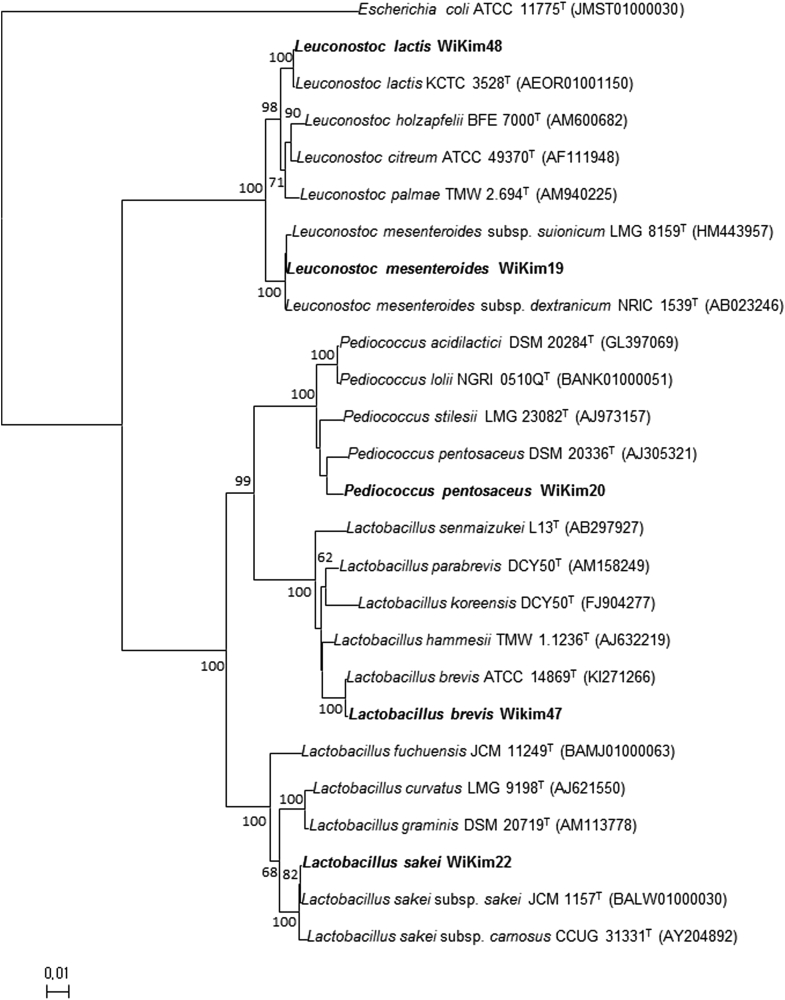
To investigate the bioconversion of ginsenoside Rb1, we prepared kimchi originated bacterial strains WiKim19, WiKim20, WiKim47 WiKim48, and WiKim49 and analyzed bioconversion products using LC-MS/MS mass spectrometer.
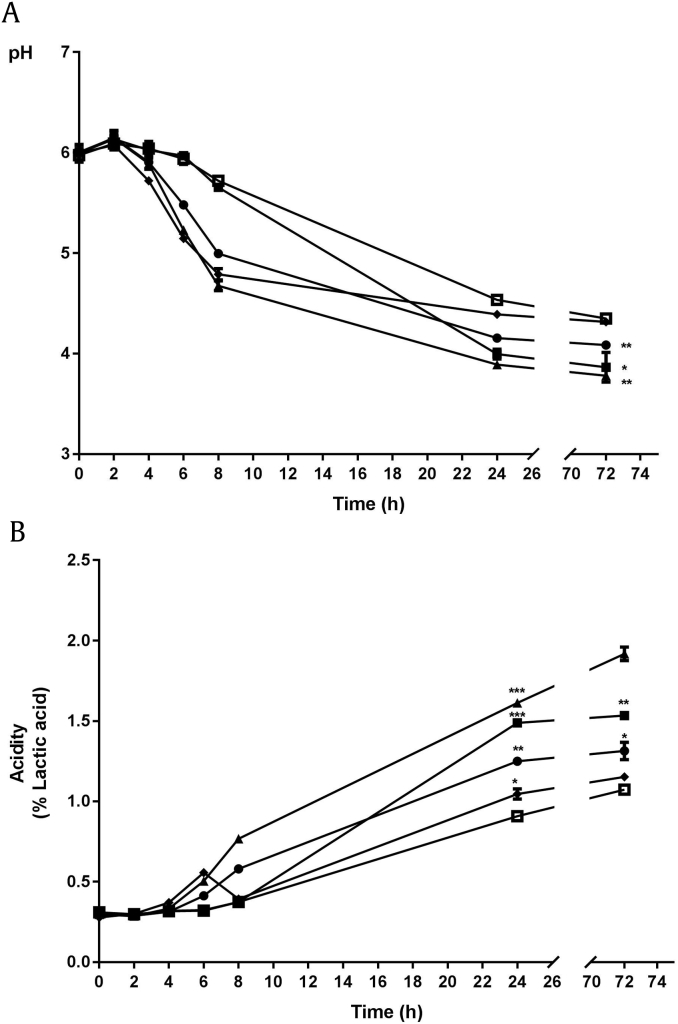
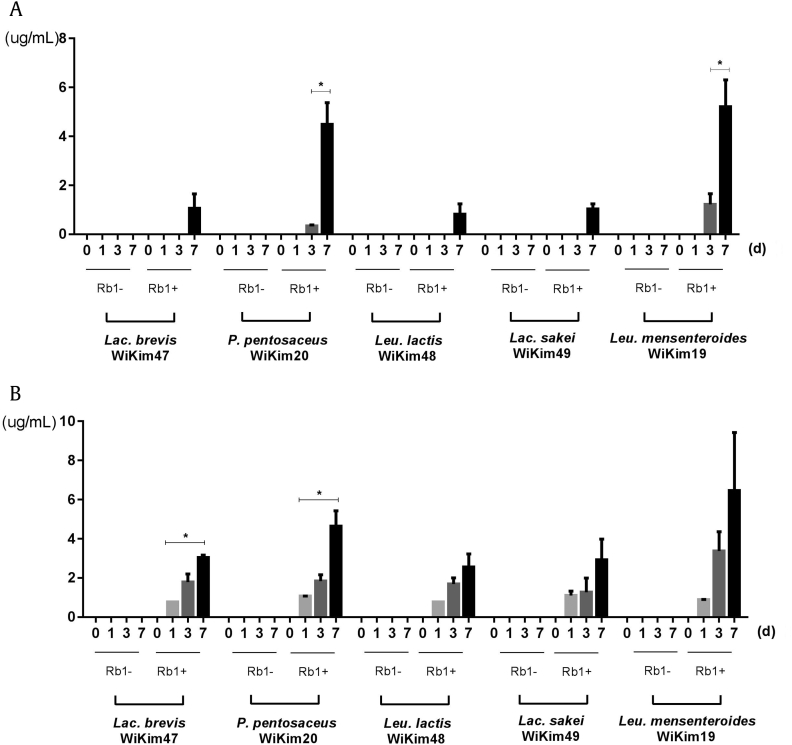
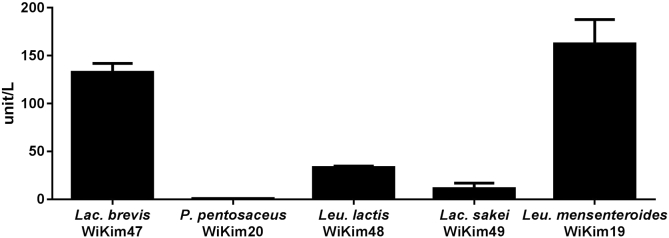
WiKim19 and WiKim20 converted ginsenoside Rb1 into the ginsenoside Rg3 approximately five times more than WiKim47 WiKim48, and WiKim49. WIKim19 showed positive correlation with β-glucosidase activity and higher transformation ability of ginsenoside Rb1 into Rg3 than the other strains whereas, WiKim20 showed an elevated production of Rb3 even with lack of β-glucosidase activity but have the highest acidity among the five lactic acid bacteria (LAB).
Ginsenoside Rg5 concentration of five LABs have ranged from ∼2.6 μg/mL to 6.5 μg/mL and increased in accordance with the incubation periods. Our results indicate that the enzymatic activity along with acidic condition contribute to the production of minor ginsenoside from lactic acid bacteria.
是一种在传统医学中广泛使用的具有生理活性的植物,其特征在于存在人参皂苷。Rb1是一种主要的人参皂苷,用作通过化学、酶促或微生物转化生产具有增强药物潜力的人参皂苷衍生物的起始原料。
为了研究人参皂苷Rb1的生物转化,我们制备了源自泡菜的细菌菌株WiKim19、WiKim20、WiKim47、WiKim48和WiKim49,并使用LC-MS/MS质谱仪分析生物转化产物。
WiKim19和WiKim20将人参皂苷Rb1转化为人参皂苷Rg3的效率比WiKim47、WiKim48和WiKim49高出约五倍。WIKim19与β-葡萄糖苷酶活性呈正相关,并且将人参皂苷Rb1转化为Rg3的能力比其他菌株更高,而WiKim20即使在缺乏β-葡萄糖苷酶活性的情况下也显示出Rb3产量升高,但在五种乳酸菌(LAB)中酸度最高。
五种乳酸菌的人参皂苷Rg5浓度范围为~2.6μg/mL至6.5μg/mL,并随培养时间增加。我们的结果表明,酶活性以及酸性条件有助于乳酸菌产生次要人参皂苷。