Vinner Gurinder K, Vladisavljević Goran T, Clokie Martha R J, Malik Danish J
Chemical Engineering Department, Loughborough University, Loughborough, United Kingdom.
Department of Infection, Immunity and Inflammation, University of Leicester, Leicester, United Kingdom.
PLoS One. 2017 Oct 12;12(10):e0186239. doi: 10.1371/journal.pone.0186239. eCollection 2017.
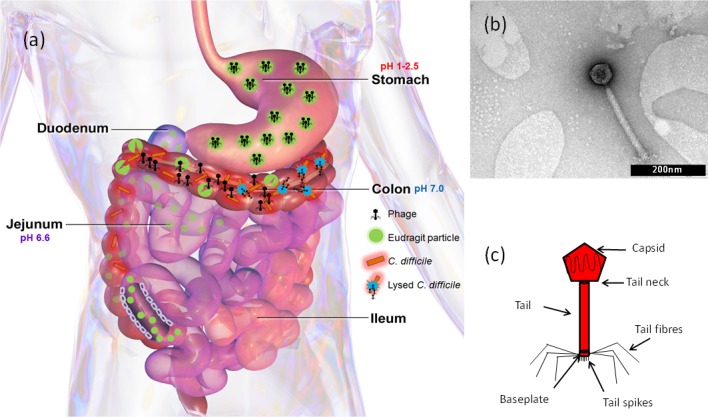
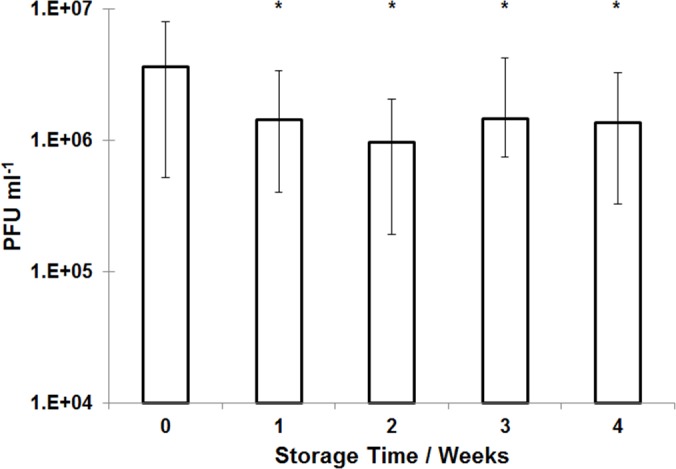
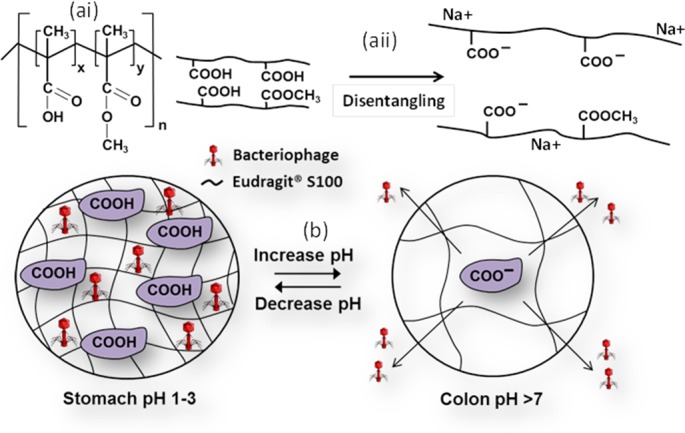
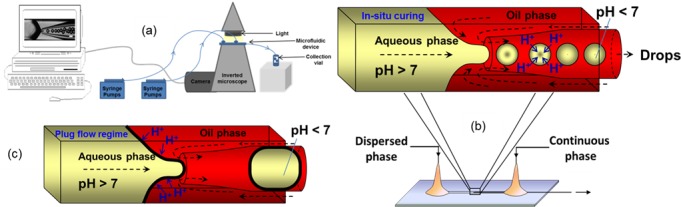
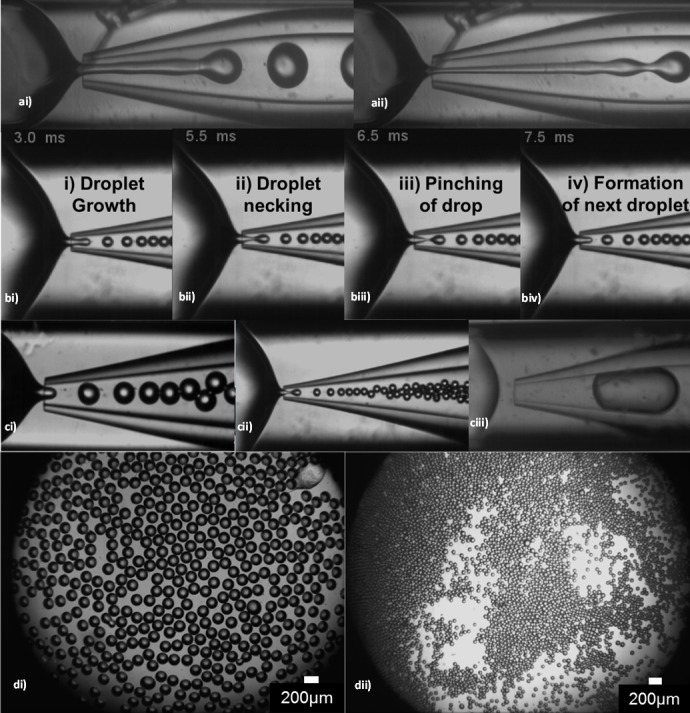
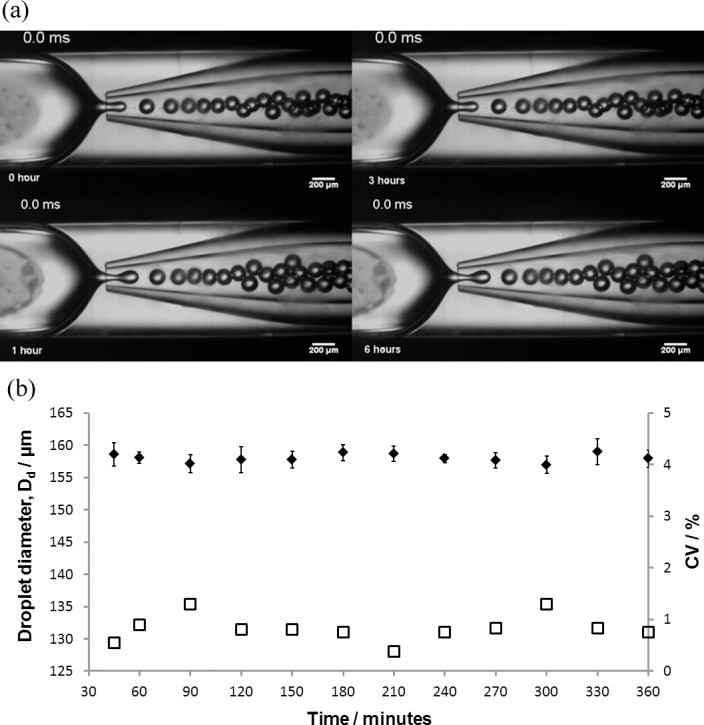
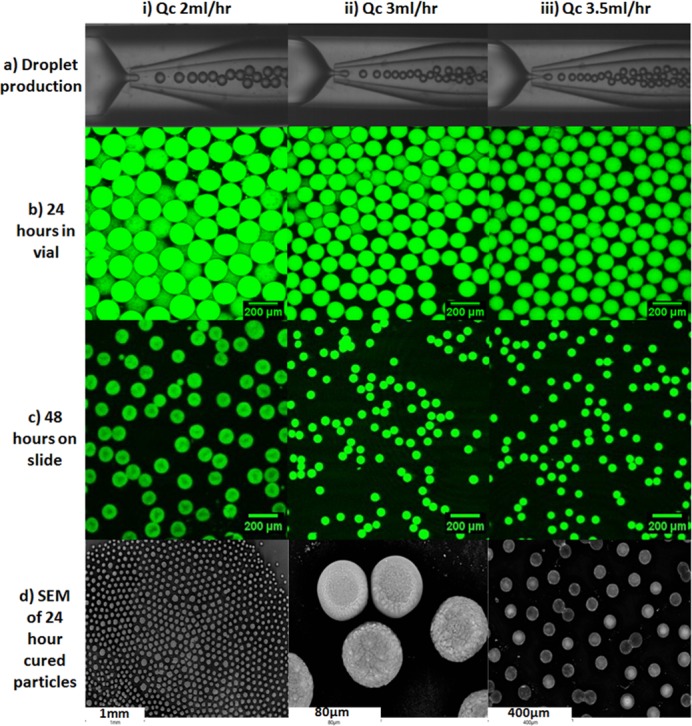
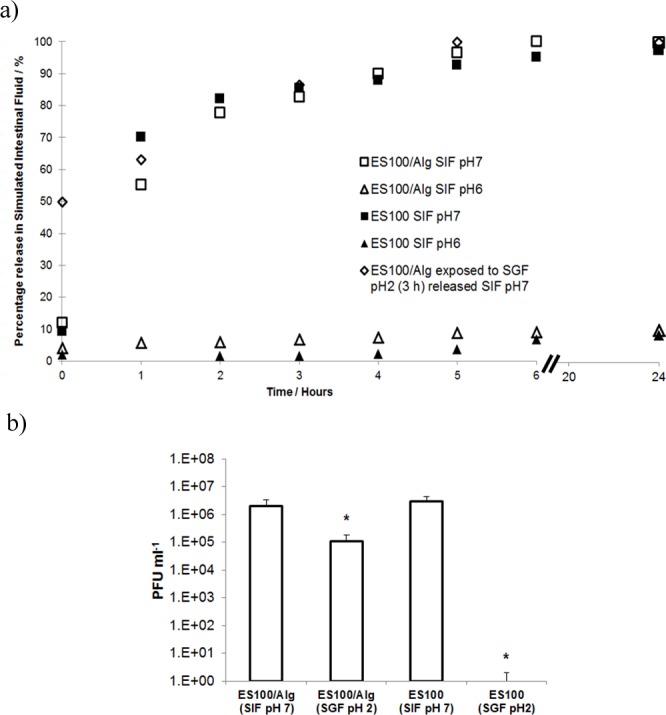
The prevalence of pathogenic bacteria acquiring multidrug antibiotic resistance is a global health threat to mankind. This has motivated a renewed interest in developing alternatives to conventional antibiotics including bacteriophages (viruses) as therapeutic agents. The bacterium Clostridium difficile causes colon infection and is particularly difficult to treat with existing antibiotics; phage therapy may offer a viable alternative. The punitive environment within the gastrointestinal tract can inactivate orally delivered phages. C. difficile specific bacteriophage, myovirus CDKM9 was encapsulated in a pH responsive polymer (Eudragit® S100 with and without alginate) using a flow focussing glass microcapillary device. Highly monodispersed core-shell microparticles containing phages trapped within the particle core were produced by in situ polymer curing using 4-aminobenzoic acid dissolved in the oil phase. The size of the generated microparticles could be precisely controlled in the range 80 μm to 160 μm through design of the microfluidic device geometry and by varying flow rates of the dispersed and continuous phase. In contrast to free 'naked' phages, those encapsulated within the microparticles could withstand a 3 h exposure to simulated gastric fluid at pH 2 and then underwent a subsequent pH triggered burst release at pH 7. The significance of our research is in demonstrating that C. difficile specific phage can be formulated and encapsulated in highly uniform pH responsive microparticles using a microfluidic system. The microparticles were shown to afford significant protection to the encapsulated phage upon prolonged exposure to an acid solution mimicking the human stomach environment. Phage encapsulation and subsequent release kinetics revealed that the microparticles prepared using Eudragit® S100 formulations possess pH responsive characteristics with phage release triggered in an intestinal pH range suitable for therapeutic purposes. The results reported here provide proof-of-concept data supporting the suitability of our approach for colon targeted delivery of phages for therapeutic purposes.
病原菌获得多重耐药性对全球人类健康构成威胁。这激发了人们对开发传统抗生素替代品的新兴趣,包括将噬菌体(病毒)作为治疗剂。艰难梭菌会引发结肠感染,用现有的抗生素治疗尤为困难;噬菌体疗法可能提供一种可行的替代方案。胃肠道内的恶劣环境会使口服的噬菌体失活。利用流动聚焦玻璃微毛细管装置,将艰难梭菌特异性噬菌体肌尾噬菌体CDKM9封装在pH响应聚合物(含或不含藻酸盐的Eudragit® S100)中。通过使用溶解在油相中的4-氨基苯甲酸进行原位聚合物固化,制备出了核心包裹有噬菌体的高度单分散核壳微粒。通过设计微流控装置的几何形状并改变分散相和连续相的流速,可将生成的微粒尺寸精确控制在80μm至160μm范围内。与游离的“裸露”噬菌体相比,封装在微粒中的噬菌体能够在pH 2的模拟胃液中耐受3小时的暴露,然后在pH 7时发生随后的pH触发的爆发释放。我们研究的意义在于证明,利用微流控系统可以将艰难梭菌特异性噬菌体配制并封装在高度均匀的pH响应微粒中。结果表明,在长时间暴露于模拟人体胃部环境的酸性溶液中时,微粒能为封装的噬菌体提供显著保护。噬菌体的封装及随后的释放动力学表明,使用Eudragit® S100配方制备的微粒具有pH响应特性,在适合治疗目的的肠道pH范围内触发噬菌体释放。此处报道的结果提供了概念验证数据,支持我们的方法适用于结肠靶向递送噬菌体用于治疗目的。