LeWinn Kaja Z, Sheridan Margaret A, Keyes Katherine M, Hamilton Ava, McLaughlin Katie A
Department of Psychiatry, University of California, San Francisco, 401 Parnassus Ave., San Francisco, 94143, USA.
Clinical Psychology Department, University of North Carolina at Chapel Hill, 235 E. Cameron Avenue, Chapel Hill, NC, 27599, USA.
Nat Commun. 2017 Oct 12;8(1):874. doi: 10.1038/s41467-017-00908-7.
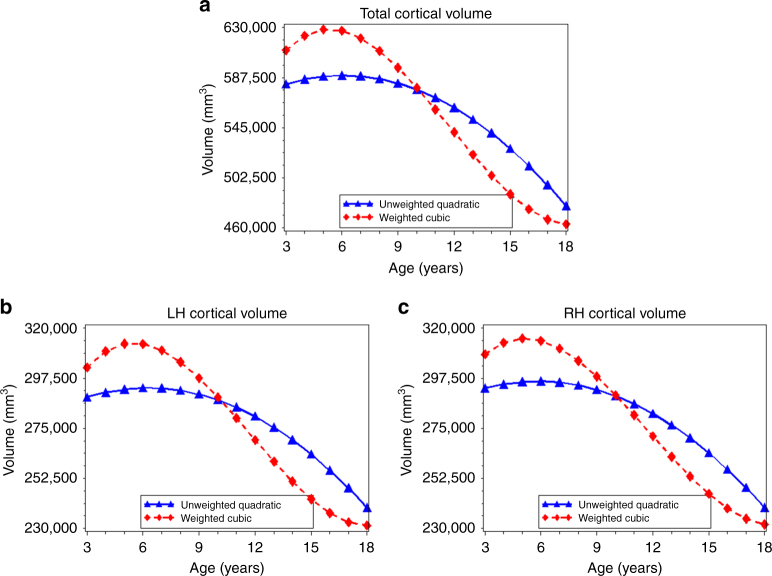
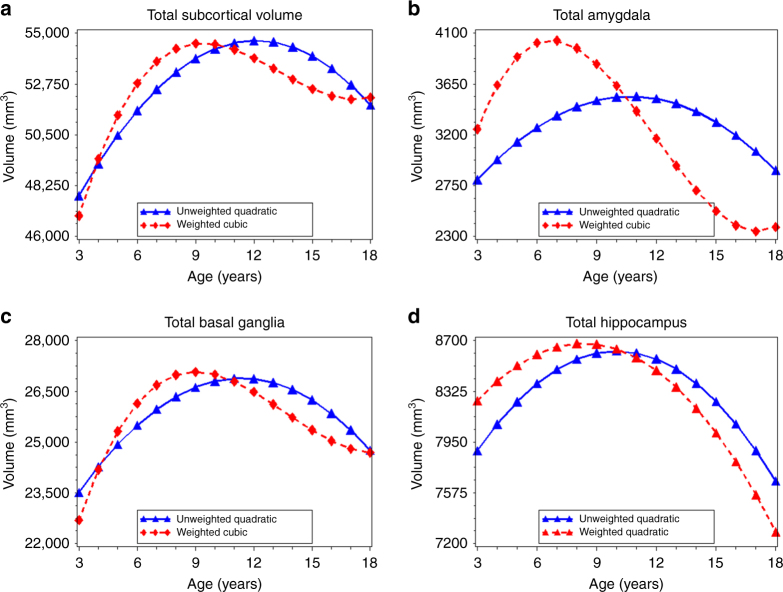
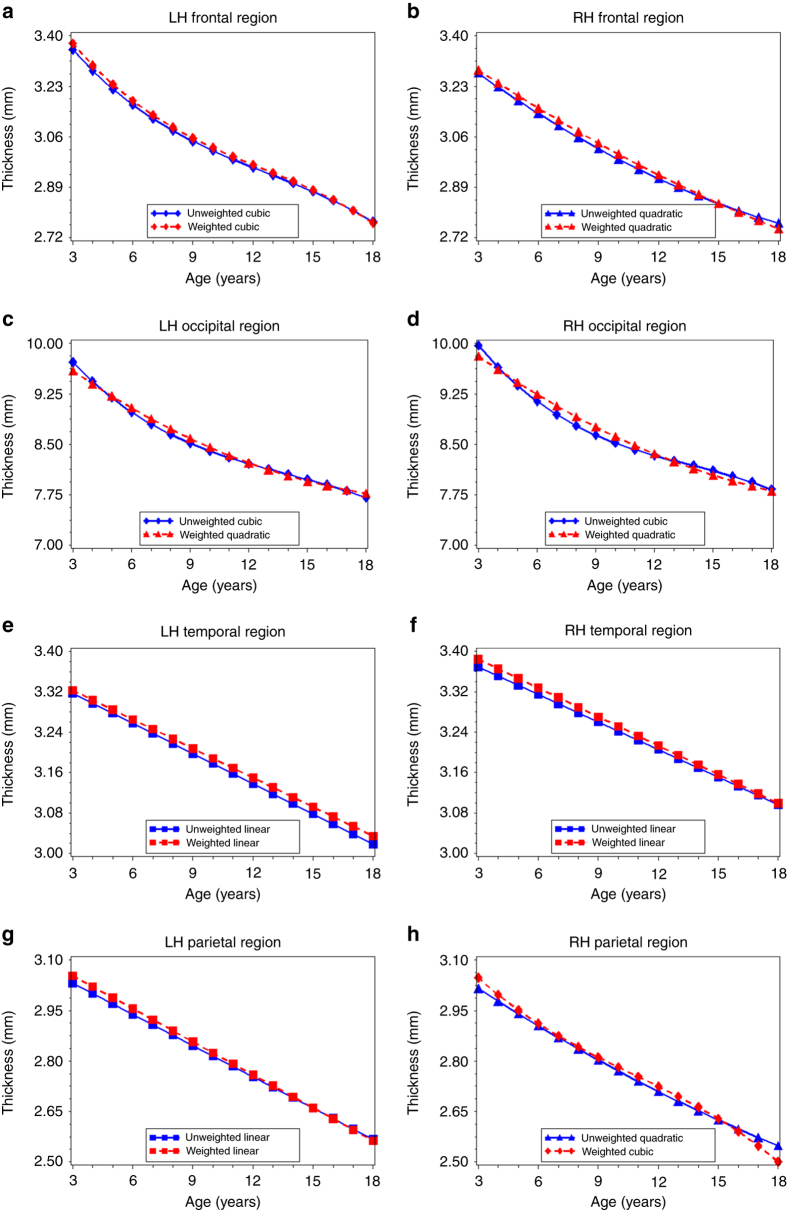
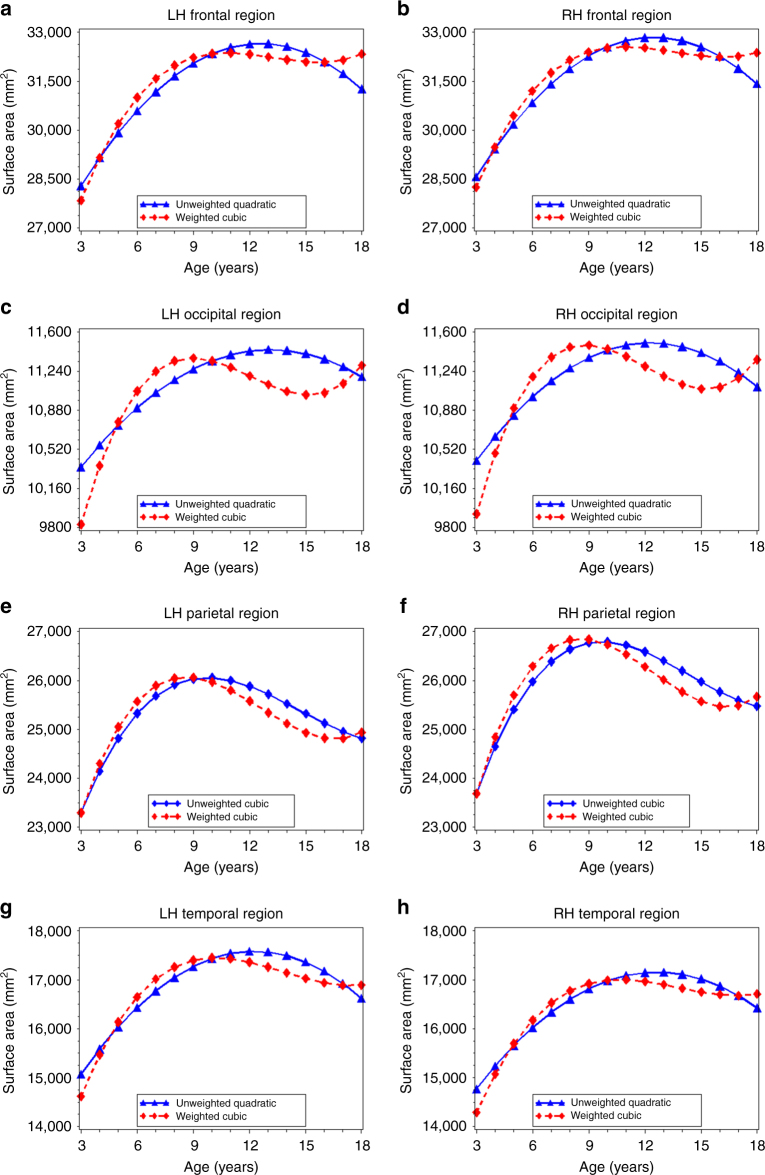
Despite calls to incorporate population science into neuroimaging research, most studies recruit small, non-representative samples. Here, we examine whether sample composition influences age-related variation in global measurements of gray matter volume, thickness, and surface area. We apply sample weights to structural brain imaging data from a community-based sample of children aged 3-18 (N = 1162) to create a "weighted sample" that approximates the distribution of socioeconomic status, race/ethnicity, and sex in the U.S. Census. We compare associations between age and brain structure in this weighted sample to estimates from the original sample with no sample weights applied (i.e., unweighted). Compared to the unweighted sample, we observe earlier maturation of cortical and sub-cortical structures, and patterns of brain maturation that better reflect known developmental trajectories in the weighted sample. Our empirical demonstration of bias introduced by non-representative sampling in this neuroimaging cohort suggests that sample composition may influence understanding of fundamental neural processes.The influence of sample composition on human neuroimaging results is unknown. Here, the authors weight a large, community-based sample to better reflect the US population and describe how applying these sample weights changes conclusions about age-related variation in brain structure.
尽管有人呼吁将人口科学纳入神经影像学研究,但大多数研究招募的样本规模小且缺乏代表性。在此,我们研究样本构成是否会影响灰质体积、厚度和表面积等全脑测量指标中与年龄相关的差异。我们对来自一个基于社区的3至18岁儿童样本(N = 1162)的脑结构成像数据应用样本权重,以创建一个“加权样本”,该样本近似于美国人口普查中的社会经济地位、种族/族裔和性别的分布。我们将这个加权样本中年龄与脑结构之间的关联与未应用样本权重的原始样本(即未加权样本)的估计值进行比较。与未加权样本相比,我们观察到皮质和皮质下结构的成熟更早,并且脑成熟模式在加权样本中更能反映已知的发育轨迹。我们在这个神经影像队列中对非代表性抽样引入的偏差进行的实证证明表明,样本构成可能会影响对基本神经过程的理解。样本构成对人类神经影像结果的影响尚不清楚。在此,作者对一个基于社区的大样本进行加权,以更好地反映美国人口,并描述应用这些样本权重如何改变关于脑结构中与年龄相关差异的结论。