Wang Xiao, Zhao Bin Jiang, Su Yue
Department of Anesthesiology, Beijing Shijitan Hospital, Capital Medical University, Beijing, China.
Clin Interv Aging. 2017 Sep 22;12:1515-1520. doi: 10.2147/CIA.S142748. eCollection 2017.
Hip fractures are associated with poor prognosis in elderly patients partly due to the high rate of postoperative complications. This study was aimed to investigate whether the surgical risk calculator is suitable for predicting postoperative complications in elderly Chinese patients with hip fractures.
The incidence of postoperative complications among 410 elderly patients with hip fractures was predicted by the surgical risk calculator and then compared with the actual value. The risk calculator model was evaluated using the following three metrics: Hosmer-Lemeshow test for the goodness-of-fit of the model, receiver operating characteristic curve (ROC) (also referred as C-statistic) for the predictive specificity and sensitivity, and the Brier's score test for predictive accuracy.
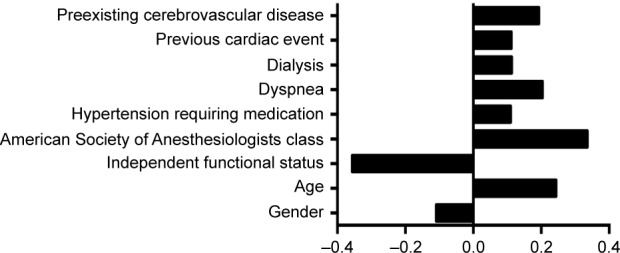
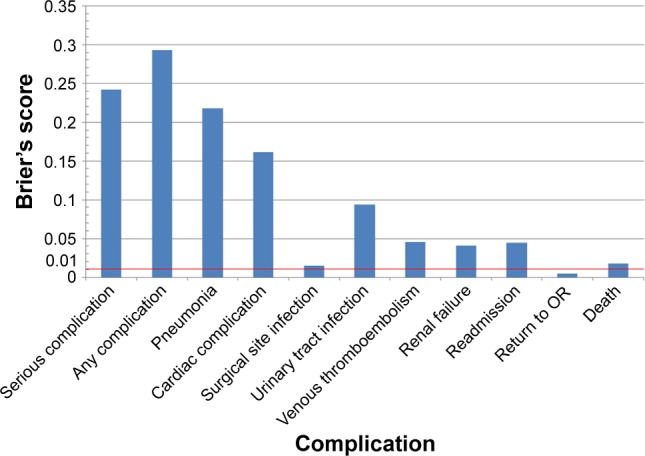
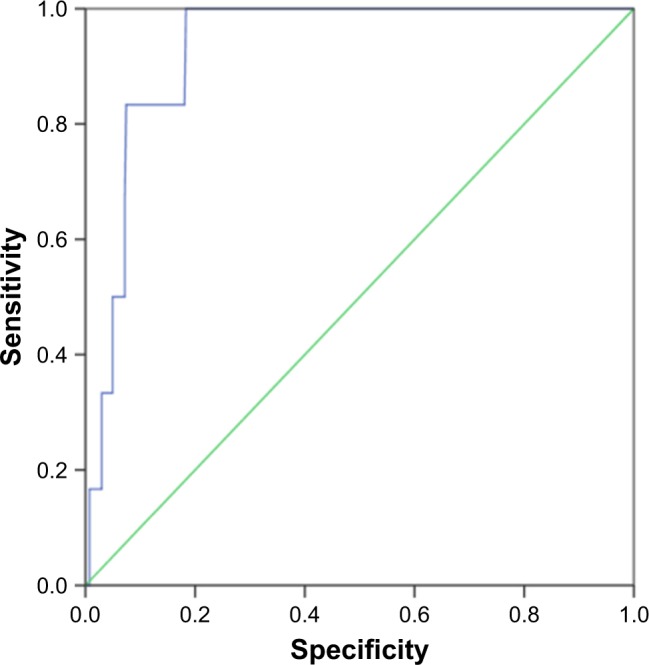
Preoperative risk factors including gender, age, preoperative functional status, American Society of Anesthesiologists grade, hypertension, dyspnea, dialysis, previous cardio-vascular history, and cerebrovascular disease were positively correlated with the incidence of postoperative complications in elderly patients with hip fractures. The predicted complication incidence rate was well matched with the actual complication rate by Hosmer-Lemeshow test. The model had high sensitivity and specificity for predicting the mortality rate of these patients with a C-statistic index of 0.931 (95% CI [0.883, 0.980]). The surgical calculator model had an accuracy of 90% for predicting the reoperation rate (Brier's score <0.01).
The surgical risk calculator could be useful for predicting mortality and reoperation in elderly patients with hip fracture. Patients and surgeons may use this simple calculator to better manage the preoperative risks.
髋部骨折与老年患者的不良预后相关,部分原因是术后并发症发生率高。本研究旨在调查手术风险计算器是否适用于预测中国老年髋部骨折患者的术后并发症。
使用手术风险计算器预测410例老年髋部骨折患者的术后并发症发生率,然后与实际值进行比较。使用以下三个指标评估风险计算器模型:用于评估模型拟合优度的Hosmer-Lemeshow检验、用于评估预测特异性和敏感性的受试者工作特征曲线(ROC)(也称为C统计量)以及用于评估预测准确性的Brier评分检验。
术前危险因素包括性别、年龄、术前功能状态、美国麻醉医师协会分级、高血压、呼吸困难、透析、既往心血管病史和脑血管疾病与老年髋部骨折患者术后并发症的发生率呈正相关。通过Hosmer-Lemeshow检验,预测的并发症发生率与实际并发症发生率匹配良好。该模型对这些患者死亡率的预测具有高敏感性和特异性,C统计量指数为0.931(95%CI[0.883,0.980])。手术计算器模型预测再次手术率的准确率为90%(Brier评分<0.01)。
手术风险计算器可用于预测老年髋部骨折患者的死亡率和再次手术率。患者和外科医生可以使用这个简单的计算器来更好地管理术前风险。