Molecular Genetics Veterinary Service (SVGM), Veterinary School, Universitat Autònoma de Barcelona, Barcelona, Spain.
Vetgenomics, Ed Eureka, Parc de Recerca UAB, Barcelona, Spain.
Microbiome. 2017 Oct 13;5(1):139. doi: 10.1186/s40168-017-0355-6.
The individual, together with its environment, has been reported as the main force driving composition and structure of skin microbiota in healthy dogs. Therefore, one of the major concerns when analyzing canine skin microbiota is the likely influence of the environment. Despite the dense fur covering, certain skin diseases exhibit differential prevalence among skin sites, dog breeds, and individuals.
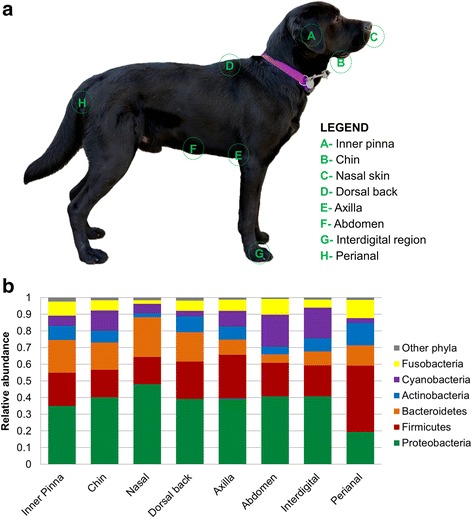
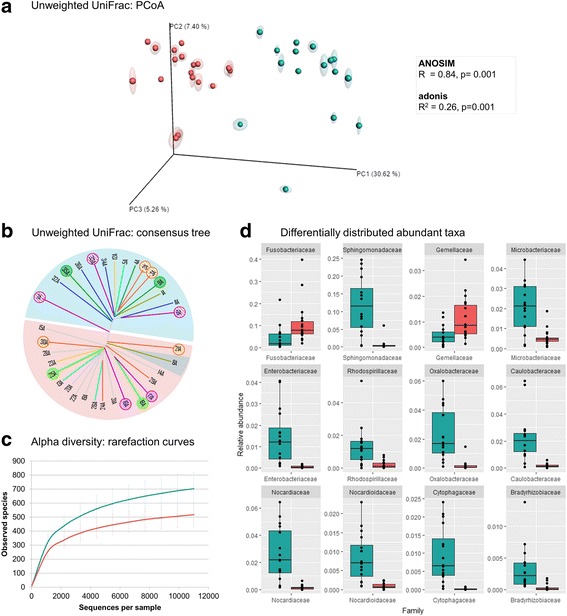
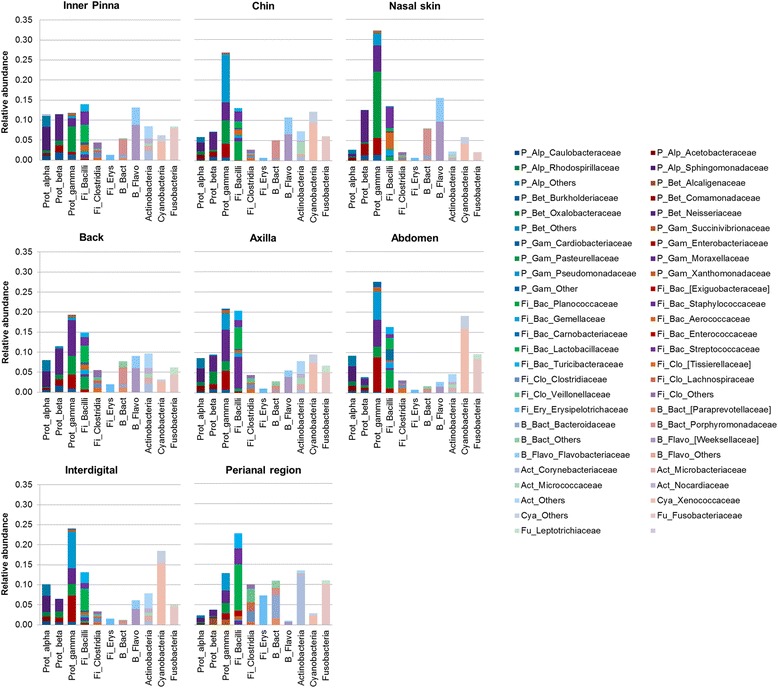
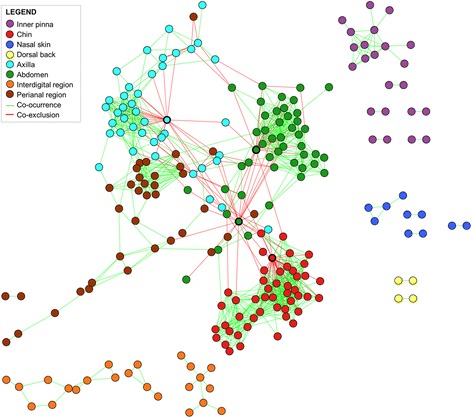
We have characterized the normal variability of dog skin microbiota in a well-controlled cohort of a large number of Golden-Labrador Retriever crossed dogs (N = 35) with similar ages, related genetic background, and a shared environment. We found that the individual drives the skin microbiota composition and structure followed by the skin site. The main bacterial classes inhabiting dog skin in this cohort are Gammaproteobacteria and Bacilli. We also detected bacteria associated to the environment on different dog skin sites that could be reflecting the different degrees of exposure of each skin site and each dog. Network analyses elucidated bacterial interactions within and between skin sites, especially in the chin, abdomen, axilla, and perianal region, with the highly shared interactions probably representing an anatomical, behavioral, or environmental component. When analyzing each skin site independently to assess host-specific factors, we found that temporality (season of birth and time spent in the kennel) affected all the skin sites and specially the inner pinna. The most abundant taxon driving this difference was Sphingomonas. We also found taxonomic differences among male and female dogs on the abdomen, axilla, and back.
We observed a large inter-individual variability and differences among skin sites. Host-specific variables, such as temporality or sex, were also shaping skin microbiota of healthy dogs, even in an environmental homogenous cohort.
个体及其环境被报道为驱动健康犬皮肤微生物组组成和结构的主要力量。因此,分析犬皮肤微生物组时的主要关注点之一是环境的可能影响。尽管有浓密的皮毛覆盖,但某些皮肤病在皮肤部位、犬种和个体之间的发病率存在差异。
我们在一个由大量年龄相似、遗传背景相关且具有共同环境的金拉布拉多犬(N=35)组成的严格控制的队列中,对犬皮肤微生物组的正常变异性进行了特征描述。我们发现个体驱动皮肤微生物组的组成和结构,其次是皮肤部位。该队列中主要的细菌类群是γ变形菌和芽孢杆菌。我们还在不同的犬皮肤部位检测到与环境相关的细菌,这可能反映了每个皮肤部位和每个犬只暴露程度的不同。网络分析阐明了皮肤部位内和之间的细菌相互作用,特别是在下巴、腹部、腋窝和肛周区域,高度共享的相互作用可能代表解剖学、行为学或环境因素。在独立分析每个皮肤部位以评估宿主特异性因素时,我们发现时间(出生季节和在犬舍中度过的时间)影响所有皮肤部位,特别是内耳。驱动这种差异的最丰富的分类群是鞘氨醇单胞菌。我们还发现腹部、腋窝和背部的雄性和雌性犬之间存在分类差异。
我们观察到个体间存在较大的变异性和皮肤部位之间的差异。宿主特异性变量,如时间或性别,也在塑造健康犬的皮肤微生物组,即使在环境均匀的队列中也是如此。