Mahmoudabady M, Lashkari M, Niazmand S, Soukhtanloo M
Department of Physiology, Faculty of Medicine, Mashhad University of Medical Sciences, Mashhad, Iran.
Neurogenic Inflammation, Research Centre, Mashhad University of Medical Sciences, Mashhad, Iran.
J Tradit Complement Med. 2017 Feb 6;7(4):501-507. doi: 10.1016/j.jtcme.2016.12.010. eCollection 2017 Oct.
There are some reports about protective effects of on the heart.
We investigated the effect of extract on cardiac function during ischemia-reperfusion (I/R) injury in the isolated rat heart.
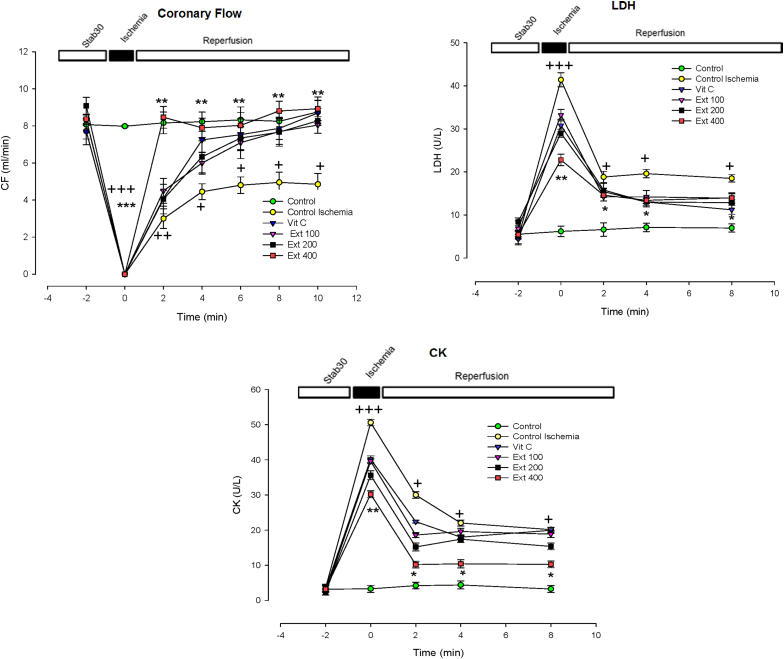
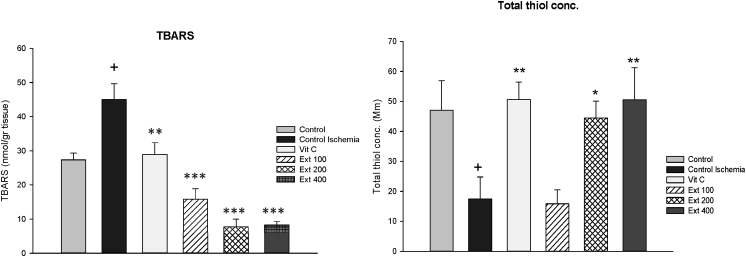
60 male Wistar rats were randomly divided into 6 groups; 1: Control group, 2: Control-ischemia (CI) 3: vitamin C (10 mg/kg), 4-6: Extract groups (E 100, E 200 and E 400 mg/kg). The animals received normal saline, vitamin C or extract orally for 4 weeks. At the end of the treatment, the hearts were subjected to in vitro I/R Injury (20 min of global ischemia, followed by 40 min of reperfusion, Langendorff's mode). Heart rate (HR) and left ventricular pressure (LVP) were measured using a pressure transducer connected to a data acquisition system. Lactate dehydrogenase (LDH) and creatine kinase (CK) activities in the effluent were measured to determine the myocardial injury degree. The malondialdehyde (MDA), total thiol groups (-SH), superoxide anion dismutase (SOD) and catalase (CAT) in myocardial tissue were detected to determine the oxidative stress degree.
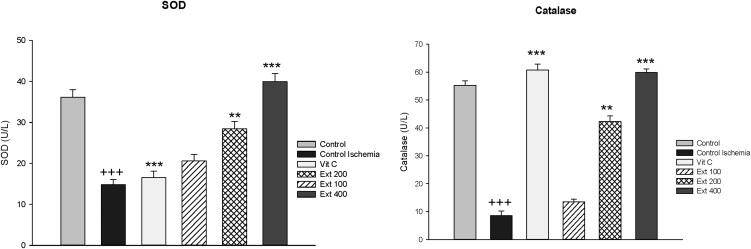
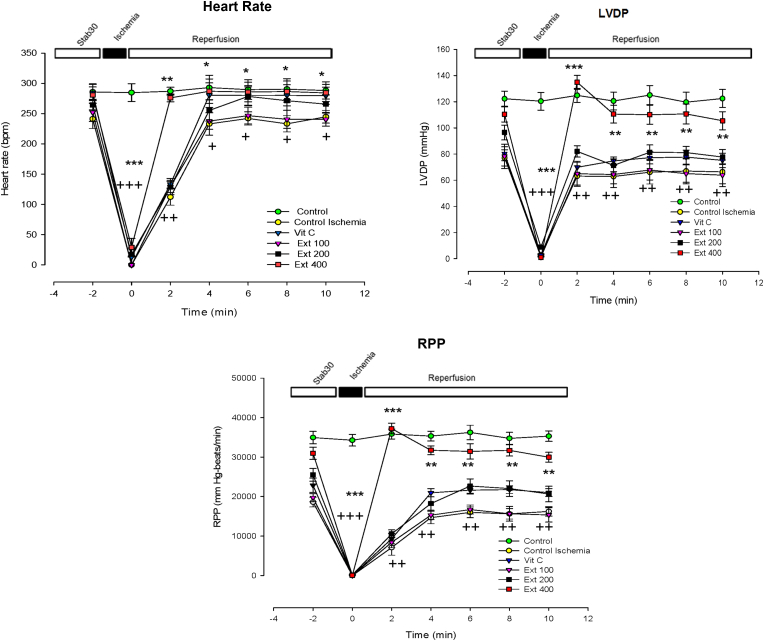
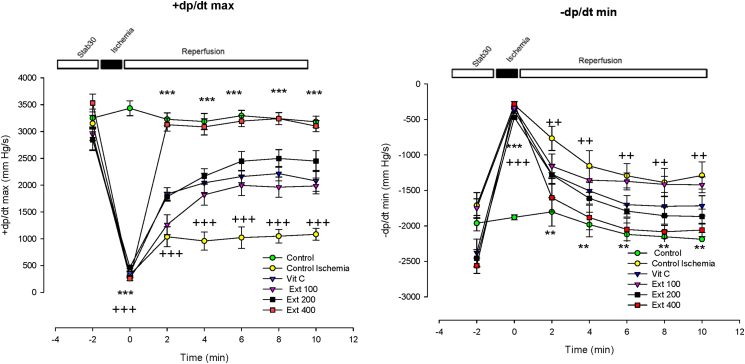
Pretreatment with significantly decreased the LDH, CK activities, and MDA level, while it increased the LVDP, ±, rate-pressure product (RPP), SH groups, SOD and CAT activities, and also the coronary artery flow.
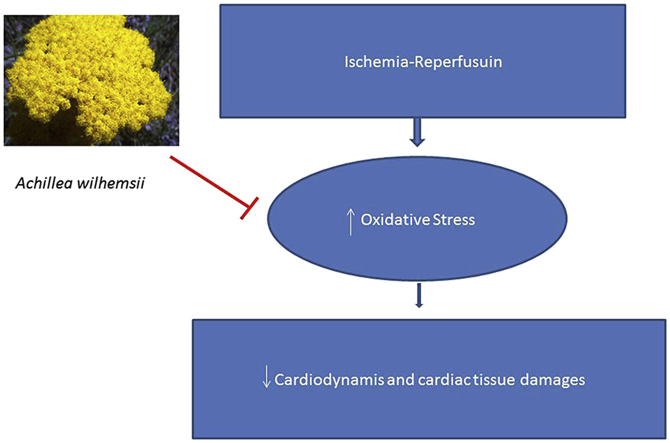
Our findings indicated that could provide protection for heart against the I/R injury which may be related to the improvement of myocardial oxidative stress states.
有一些关于[未提及物质]对心脏保护作用的报道。
我们研究了[未提及物质]提取物对离体大鼠心脏缺血再灌注(I/R)损伤期间心脏功能的影响。
60只雄性Wistar大鼠随机分为6组;1:对照组,2:对照-缺血组(CI),3:维生素C组(10mg/kg),4 - 6:提取物组(E 100、E 200和E 400mg/kg)。动物口服生理盐水、维生素C或[未提及物质]提取物4周。治疗结束时,心脏进行体外I/R损伤(全心缺血20分钟,随后再灌注40分钟,Langendorff模式)。使用连接到数据采集系统的压力传感器测量心率(HR)和左心室压力(LVP)。测量流出液中乳酸脱氢酶(LDH)和肌酸激酶(CK)活性以确定心肌损伤程度。检测心肌组织中的丙二醛(MDA)、总巯基(-SH)、超氧化物歧化酶(SOD)和过氧化氢酶(CAT)以确定氧化应激程度。
[未提及物质]预处理显著降低了LDH、CK活性和MDA水平,同时增加了LVDP、±、心率-压力乘积(RPP)、SH基团、SOD和CAT活性以及冠状动脉血流量。
我们的研究结果表明,[未提及物质]可以为心脏提供针对I/R损伤的保护,这可能与改善心肌氧化应激状态有关。