Reddivari Lavanya, Veeramachaneni D N Rao, Walters William A, Lozupone Catherine, Palmer Jennifer, Hewage M K Kurundu, Bhatnagar Rohil, Amir Amnon, Kennett Mary J, Knight Rob, Vanamala Jairam K P
Department of Plant Science, The Pennsylvania State University, University Park, Pennsylvania, USA.
Animal Reproduction and Biotechnology Laboratory, Department of Biomedical Sciences, Colorado State University, Fort Collins, Colorado, USA.
mSystems. 2017 Oct 10;2(5). doi: 10.1128/mSystems.00093-17. eCollection 2017 Sep-Oct.
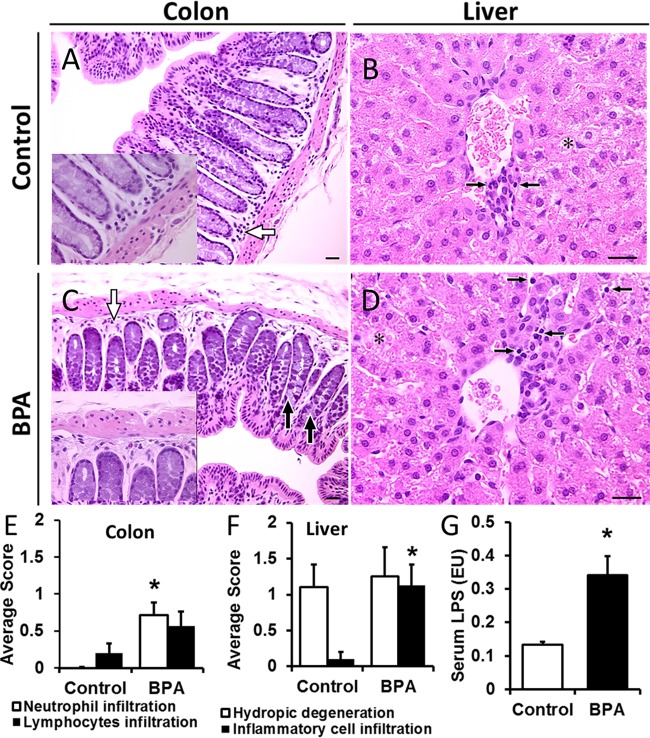
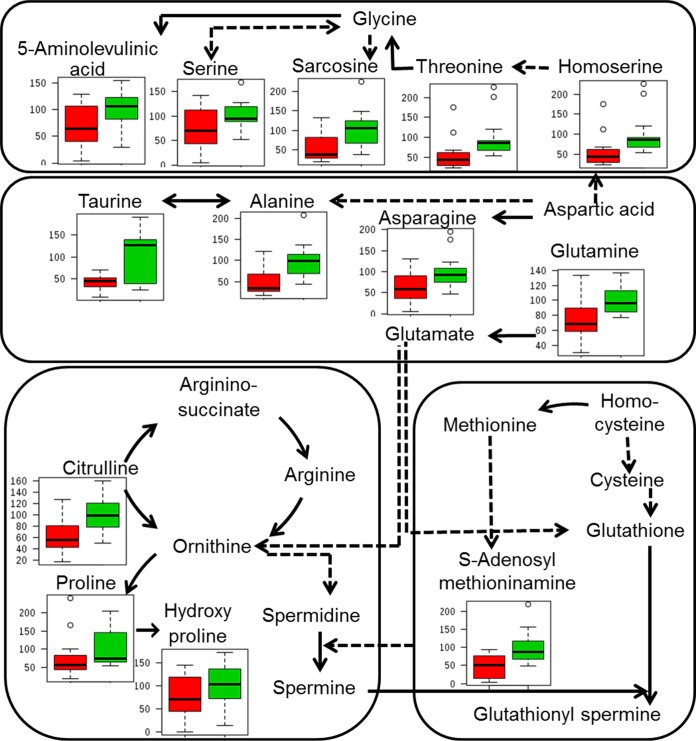
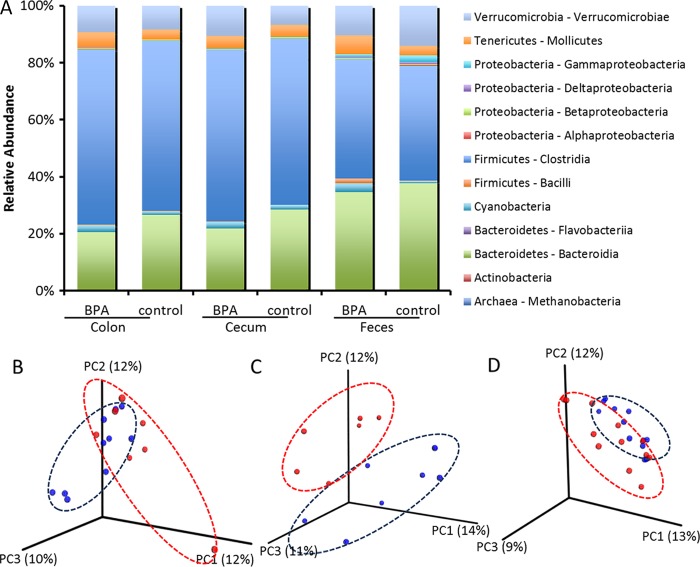
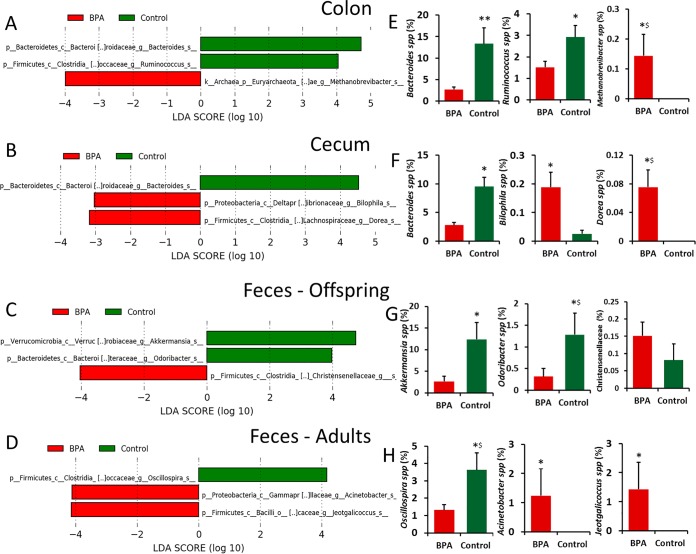
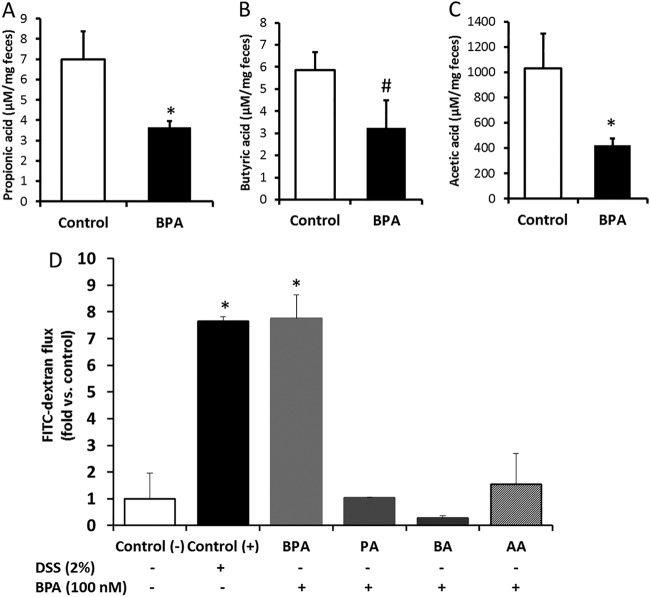
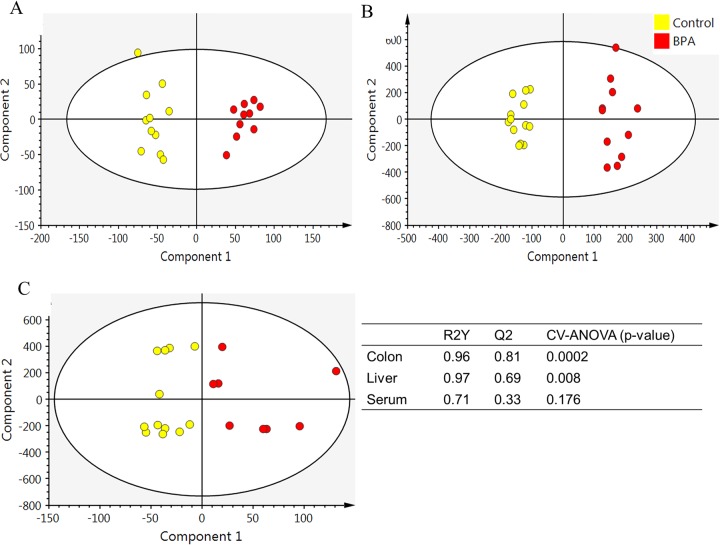
Bisphenol A (BPA) accumulates in the maturing gut and liver and is known to alter gut bacterial profiles in offspring. Gut bacterial dysbiosis may contribute to chronic colonic and systemic inflammation. We hypothesized that perinatal BPA exposure-induced intestinal (and liver) inflammation in offspring is due to alterations in the microbiome and colonic metabolome. The 16S rRNA amplicon sequencing analysis revealed differences in beta diversity with a significant reduction in the relative abundances of short-chain fatty acid (SCFA) producers such as and due to BPA exposure. Furthermore, BPA exposure reduced fecal SCFA levels and increased systemic lipopolysaccharide (LPS) levels. BPA exposure-increased intestinal permeability was ameliorated by the addition of SCFA . Metabolic fingerprints revealed alterations in global metabolism and amino acid metabolism. Thus, our findings indicate that perinatal BPA exposure may cause gut bacterial dysbiosis and altered metabolite profiles, particularly SCFA profiles, leading to chronic colon and liver inflammation. Emerging evidence suggests that environmental toxicants may influence inflammation-promoted chronic disease susceptibility during early life. BPA, an environmental endocrine disruptor, can transfer across the placenta and accumulate in fetal gut and liver. However, underlying mechanisms for BPA-induced colonic and liver inflammation are not fully elucidated. In this report, we show how perinatal BPA exposure in rabbits alters gut microbiota and their metabolite profiles, which leads to colonic and liver inflammation as well as to increased gut permeability as measured by elevated serum lipopolysaccharide (LPS) levels in the offspring. Also, perinatal BPA exposure leads to reduced levels of gut bacterial diversity and bacterial metabolites (short-chain fatty acids [SCFA]) and elevated gut permeability-three common early biomarkers of inflammation-promoted chronic diseases. In addition, we showed that SCFA ameliorated BPA-induced intestinal permeability . Thus, our study results suggest that correcting environmental toxicant-induced bacterial dysbiosis early in life may reduce the risk of chronic diseases later in life.
双酚A(BPA)在发育中的肠道和肝脏中蓄积,已知会改变后代的肠道细菌谱。肠道细菌失调可能导致慢性结肠炎症和全身炎症。我们推测,围产期双酚A暴露诱导的后代肠道(和肝脏)炎症是由于微生物群和结肠代谢组的改变所致。16S rRNA扩增子测序分析显示,由于双酚A暴露,β多样性存在差异,短链脂肪酸(SCFA)产生菌如[具体菌名1]和[具体菌名2]的相对丰度显著降低。此外,双酚A暴露降低了粪便中SCFA水平,增加了全身脂多糖(LPS)水平。添加SCFA[具体SCFA名称]可改善双酚A暴露导致的肠道通透性增加。代谢指纹图谱显示整体代谢和氨基酸代谢发生了改变。因此,我们的研究结果表明,围产期双酚A暴露可能导致肠道细菌失调和代谢物谱改变,尤其是SCFA谱改变,从而导致慢性结肠和肝脏炎症。新出现的证据表明,环境毒物可能会影响生命早期炎症引发的慢性疾病易感性。双酚A作为一种环境内分泌干扰物,可穿过胎盘并在胎儿肠道和肝脏中蓄积。然而,双酚A诱导结肠和肝脏炎症的潜在机制尚未完全阐明。在本报告中,我们展示了围产期双酚A暴露如何改变兔子的肠道微生物群及其代谢物谱,从而导致结肠和肝脏炎症以及后代血清脂多糖(LPS)水平升高所测量的肠道通透性增加。此外,围产期双酚A暴露导致肠道细菌多样性和细菌代谢物(短链脂肪酸[SCFA])水平降低以及肠道通透性升高,这是炎症引发的慢性疾病的三个常见早期生物标志物。此外,我们还表明SCFA改善了双酚A诱导的肠道通透性。因此,我们的研究结果表明,在生命早期纠正环境毒物诱导的细菌失调可能会降低后期患慢性疾病的风险。