Shapiro Lillian L M, Whitehead Shelley A, Thomas Matthew B
The Pennsylvania State University Department of Entomology and Center for Infectious Disease Dynamics, University Park, Pennsylvania, United States of America.
PLoS Biol. 2017 Oct 16;15(10):e2003489. doi: 10.1371/journal.pbio.2003489. eCollection 2017 Oct.
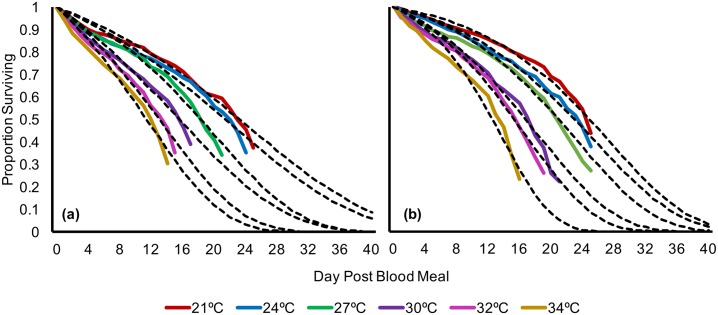
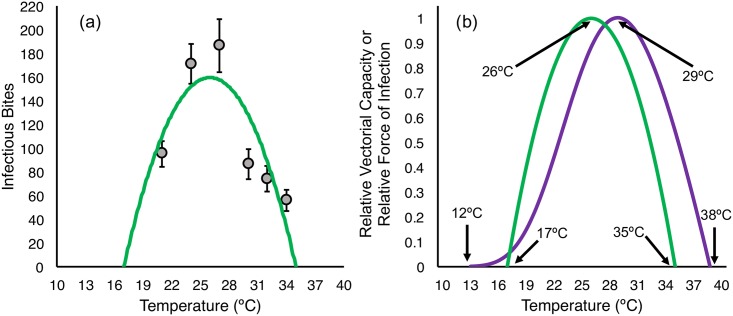
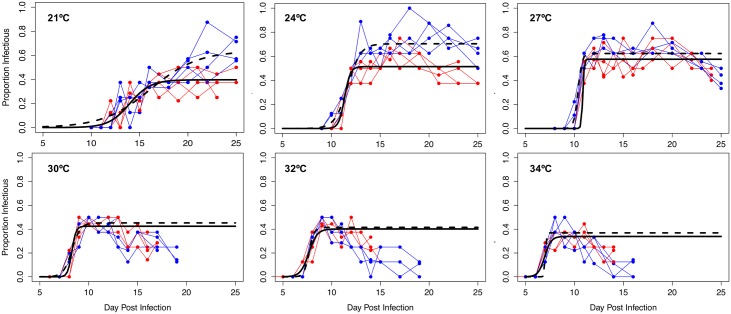
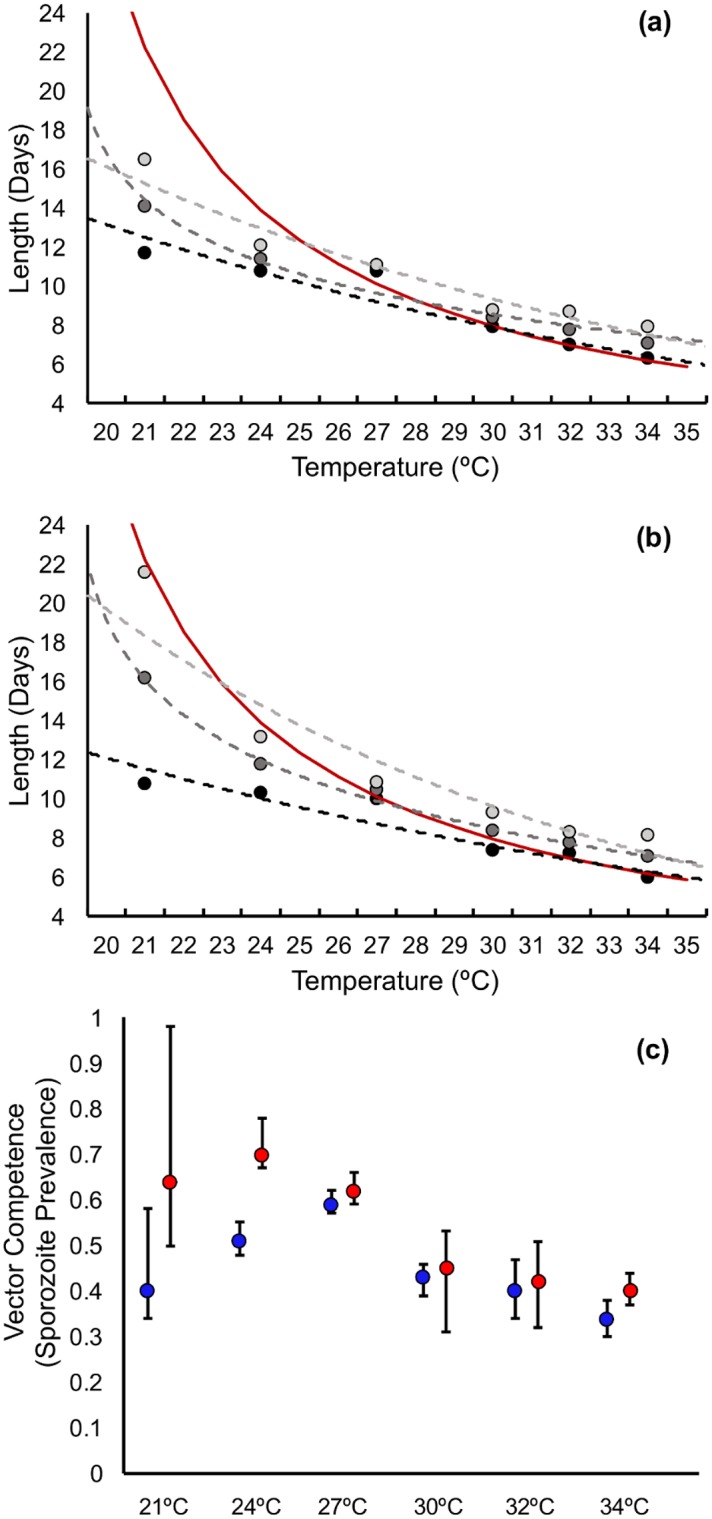
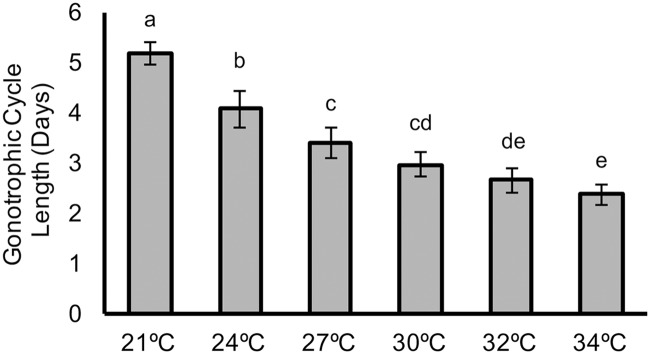
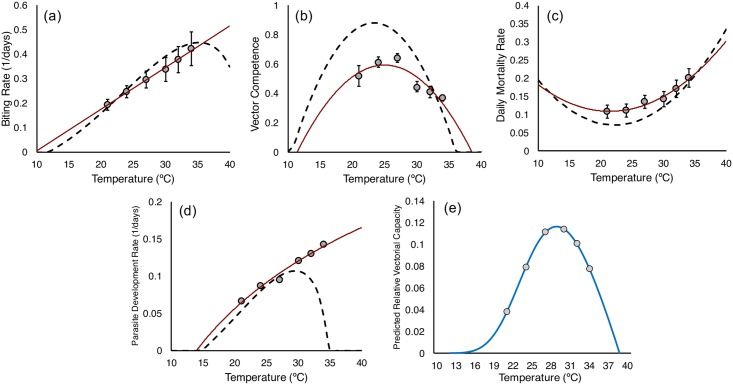
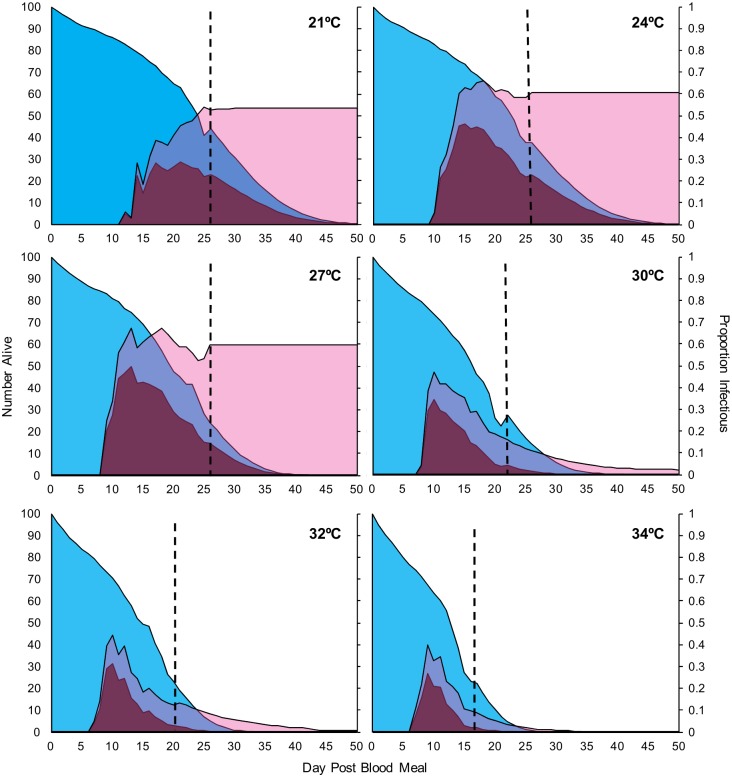
Malaria transmission is known to be strongly impacted by temperature. The current understanding of how temperature affects mosquito and parasite life history traits derives from a limited number of empirical studies. These studies, some dating back to the early part of last century, are often poorly controlled, have limited replication, explore a narrow range of temperatures, and use a mixture of parasite and mosquito species. Here, we use a single pairing of the Asian mosquito vector, An. stephensi and the human malaria parasite, P. falciparum to conduct a comprehensive evaluation of the thermal performance curves of a range of mosquito and parasite traits relevant to transmission. We show that biting rate, adult mortality rate, parasite development rate, and vector competence are temperature sensitive. Importantly, we find qualitative and quantitative differences to the assumed temperature-dependent relationships. To explore the overall implications of temperature for transmission, we first use a standard model of relative vectorial capacity. This approach suggests a temperature optimum for transmission of 29°C, with minimum and maximum temperatures of 12°C and 38°C, respectively. However, the robustness of the vectorial capacity approach is challenged by the fact that the empirical data violate several of the model's simplifying assumptions. Accordingly, we present an alternative model of relative force of infection that better captures the observed biology of the vector-parasite interaction. This model suggests a temperature optimum for transmission of 26°C, with a minimum and maximum of 17°C and 35°C, respectively. The differences between the models lead to potentially divergent predictions for the potential impacts of current and future climate change on malaria transmission. The study provides a framework for more detailed, system-specific studies that are essential to develop an improved understanding on the effects of temperature on malaria transmission.
众所周知,疟疾传播受到温度的强烈影响。目前对于温度如何影响蚊子和寄生虫生活史特征的理解,源于数量有限的实证研究。这些研究中有些可追溯到上世纪初,往往控制不佳、重复次数有限、探索的温度范围狭窄,且使用了多种寄生虫和蚊子种类。在此,我们使用亚洲病媒蚊子斯氏按蚊与人类疟原虫恶性疟原虫的单一配对,对一系列与传播相关的蚊子和寄生虫特征的热性能曲线进行全面评估。我们表明,叮咬率、成虫死亡率、寄生虫发育率和病媒能力对温度敏感。重要的是,我们发现与假定的温度依赖关系存在质和量的差异。为探究温度对传播的总体影响,我们首先使用相对病媒能力的标准模型。这种方法表明传播的最适温度为29°C,最低和最高温度分别为12°C和38°C。然而,病媒能力方法的稳健性受到实证数据违反该模型若干简化假设这一事实的挑战。因此,我们提出了一种相对感染力的替代模型,该模型能更好地捕捉观察到的病媒 - 寄生虫相互作用生物学。此模型表明传播的最适温度为26°C,最低和最高温度分别为17°C和35°C。模型之间的差异导致对当前和未来气候变化对疟疾传播潜在影响的预测可能存在分歧。该研究为更详细的、针对特定系统的研究提供了框架,这些研究对于更好地理解温度对疟疾传播的影响至关重要。