Kittichai Veerayuth, Koepfli Cristian, Nguitragool Wang, Sattabongkot Jetsumon, Cui Liwang
Mahidol Vivax Research Unit, Faculty of Tropical Medicine, Mahidol University, Bangkok, Thailand.
The Walter and Eliza Hall Institute of Medical Research, Parkville, Victoria, Australia.
PLoS Negl Trop Dis. 2017 Oct 16;11(10):e0005930. doi: 10.1371/journal.pntd.0005930. eCollection 2017 Oct.
Plasmodium vivax transmission in Thailand has been substantially reduced over the past 10 years, yet it remains highly endemic along international borders. Understanding the genetic relationship of residual parasite populations can help track the origins of the parasites that are reintroduced into malaria-free regions within the country.
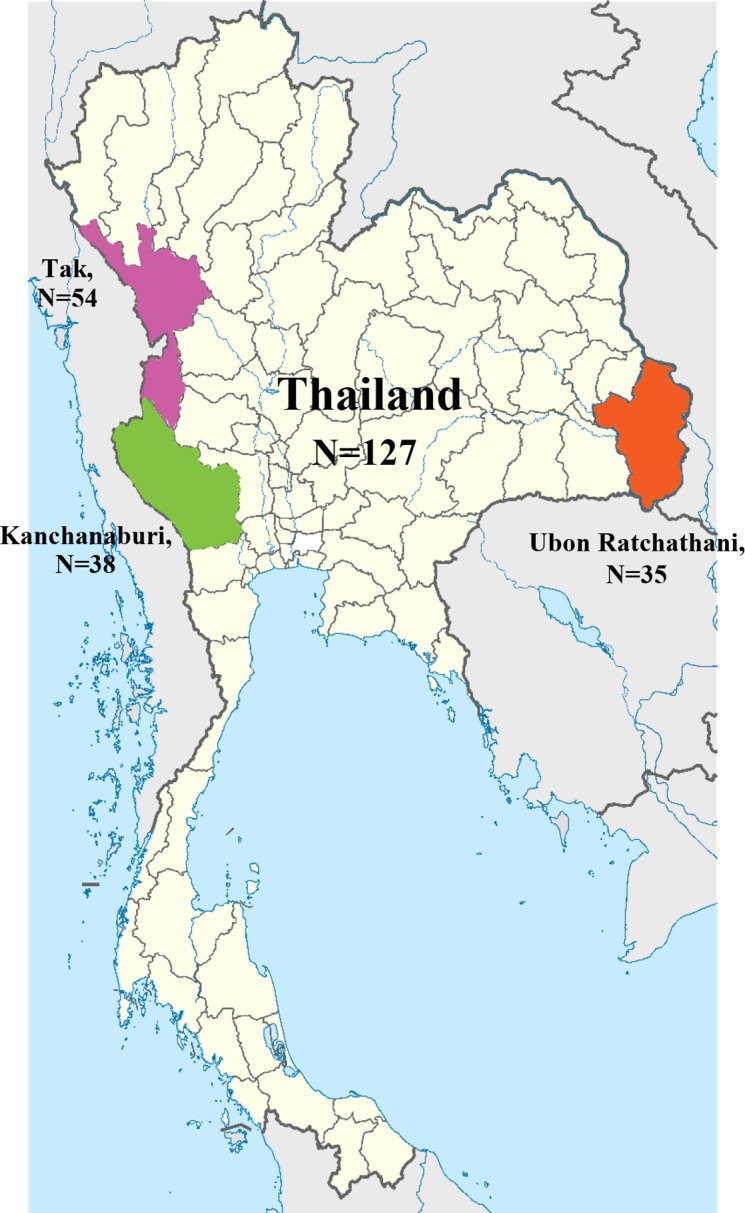
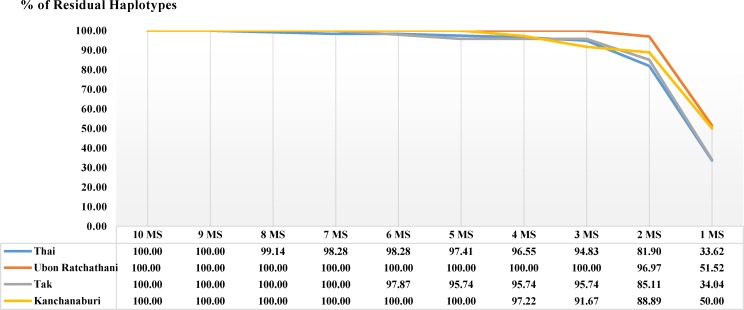
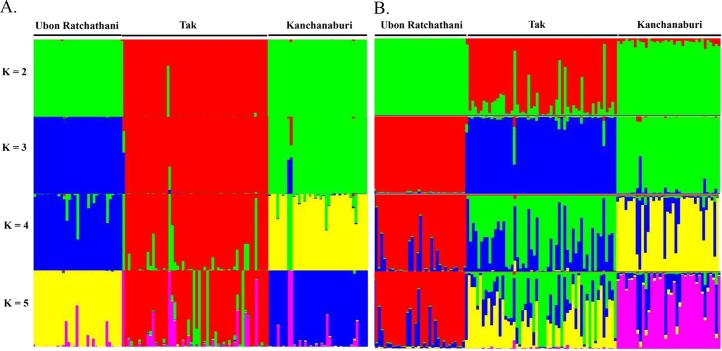
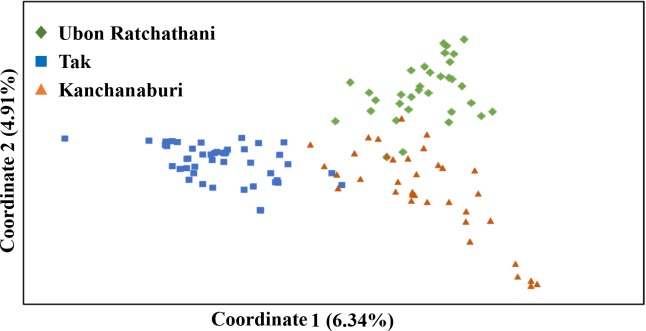
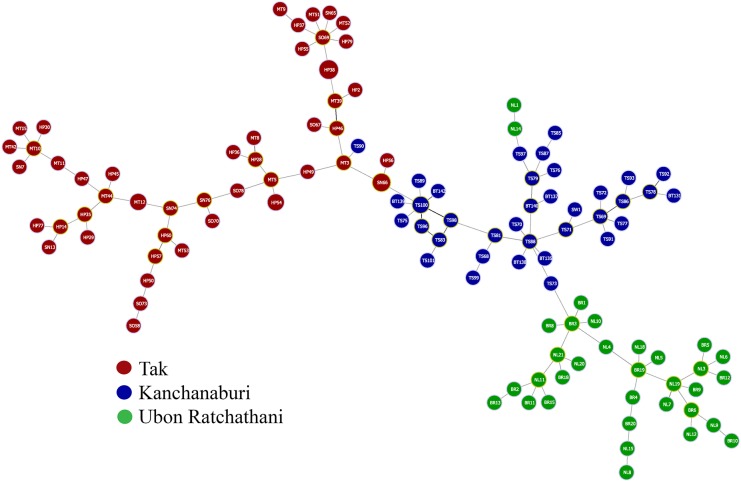
METHODOLOGY/RESULTS: A total of 127 P. vivax isolates were genotyped from two western provinces (Tak and Kanchanaburi) and one eastern province (Ubon Ratchathani) of Thailand using 10 microsatellite markers. Genetic diversity was high, but recent clonal expansion was detected in all three provinces. Substantial population structure and genetic differentiation of parasites among provinces suggest limited gene flow among these sites. There was no haplotype sharing among the three sites, and a reduced panel of four microsatellite markers was sufficient to assign the parasites to their provincial origins.
CONCLUSION/SIGNIFICANCE: Significant parasite genetic differentiation between provinces shows successful interruption of parasite spread within Thailand, but high diversity along international borders implies a substantial parasite population size in these regions. The provincial origin of P. vivax cases can be reliably determined by genotyping four microsatellite markers, which should be useful for monitoring parasite reintroduction after malaria elimination.
在过去10年里,泰国间日疟原虫的传播已大幅减少,但在国际边境地区仍然高度流行。了解残留寄生虫种群的遗传关系有助于追踪重新引入该国无疟疾地区的寄生虫的来源。
方法/结果:使用10个微卫星标记对来自泰国西部两个省份(来兴府和北碧府)和东部一个省份(乌汶府)的总共127株间日疟原虫分离株进行基因分型。遗传多样性很高,但在所有三个省份都检测到了近期的克隆扩增。省份间寄生虫的大量种群结构和遗传分化表明这些地点之间的基因流动有限。三个地点之间没有单倍型共享,一组简化的四个微卫星标记足以将寄生虫归属于其省份来源。
结论/意义:省份间显著的寄生虫遗传分化表明泰国境内寄生虫传播已成功中断,但国际边境地区的高多样性意味着这些地区有大量的寄生虫种群。通过对四个微卫星标记进行基因分型可以可靠地确定间日疟原虫病例的省份来源,这对于监测疟疾消除后寄生虫的重新引入应该是有用的。