Department of Biomedical Engineering, Columbia University, New York 10032, USA; Department of Chemistry, Materials and Chemical Engineering "G Natta", Politecnico di Milano, Milano, Italy.
Department of Biomedical Engineering, Columbia University, New York 10032, USA.
Biomaterials. 2018 Jan;150:150-161. doi: 10.1016/j.biomaterials.2017.10.020. Epub 2017 Oct 10.
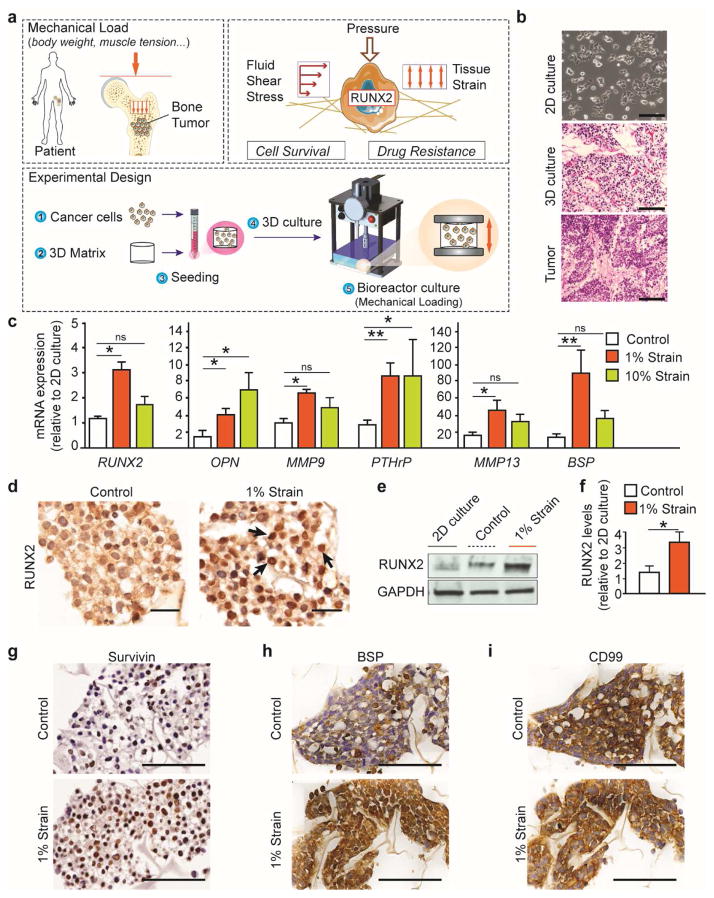
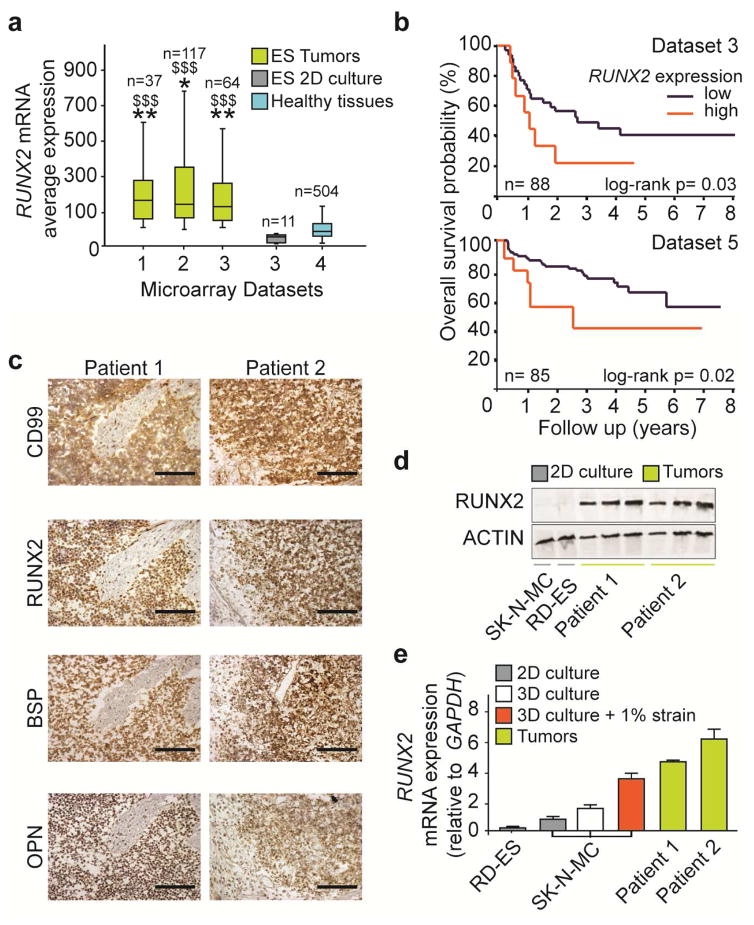
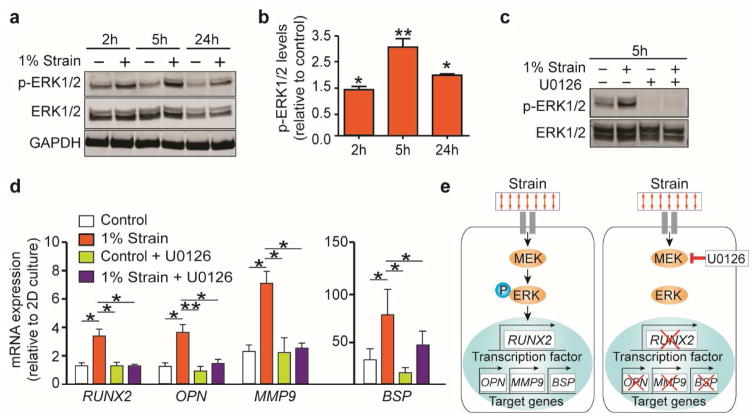
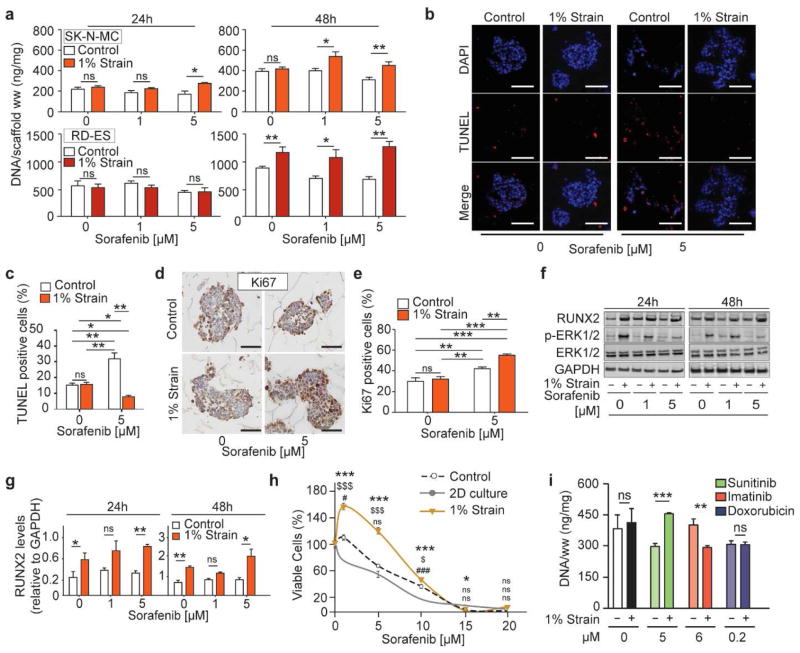
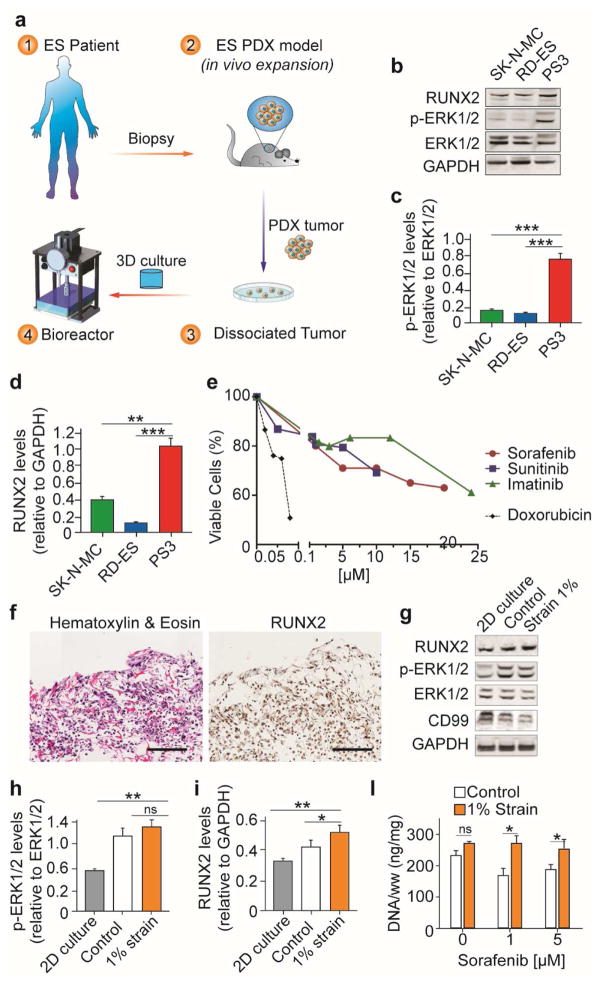
Predictive testing of anticancer drugs remains a challenge. Bioengineered systems, designed to mimic key aspects of the human tumor microenvironment, are now improving our understanding of cancer biology and facilitating clinical translation. We show that mechanical signals have major effects on cancer drug sensitivity, using a bioengineered model of human bone sarcoma. Ewing sarcoma (ES) cells were studied within a three-dimensional (3D) matrix in a bioreactor providing mechanical loadings. Mimicking bone-like mechanical signals within the 3D model, we rescued the ERK1/2-RUNX2 signaling pathways leading to drug resistance. By culturing patient-derived tumor cells in the model, we confirmed the effects of mechanical signals on cancer cell survival and drug sensitivity. Analyzing human microarray datasets, we showed that RUNX2 expression is linked to poor survival in ES patients. Mechanical loadings that activated signal transduction pathways promoted drug resistance, stressing the importance of introducing mechanobiological cues into preclinical tumor models for drug screening.
抗癌药物的预测性测试仍然是一个挑战。生物工程系统旨在模拟人类肿瘤微环境的关键方面,现在正在提高我们对癌症生物学的理解,并促进临床转化。我们使用人类骨肉瘤的生物工程模型表明,机械信号对癌症药物敏感性有重大影响。在生物反应器中,在三维(3D)基质中对尤文肉瘤(ES)细胞进行研究,该生物反应器提供机械加载。在 3D 模型中模拟类似于骨骼的机械信号,我们挽救了导致耐药性的 ERK1/2-RUNX2 信号通路。通过在模型中培养患者来源的肿瘤细胞,我们证实了机械信号对癌细胞存活和药物敏感性的影响。通过分析人类基因表达数组数据集,我们表明 RUNX2 表达与 ES 患者的不良预后相关。激活信号转导通路的机械载荷促进了耐药性,这强调了在临床前肿瘤模型中引入机械生物学线索进行药物筛选的重要性。